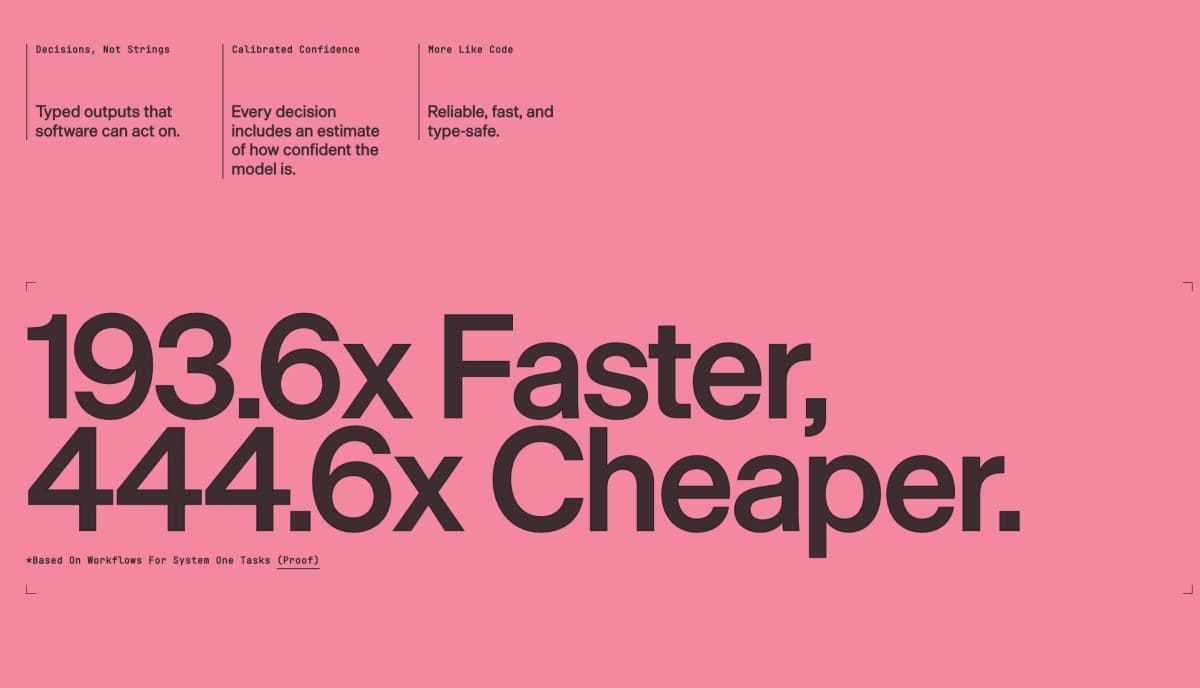
Diogo Almeida, who co-invented ChatGPT, spent two years in stealth on a new training method (RLCD) and a new kind of model, Jev: a fast, cheap "decision" model meant to sit beside LLM calls rather than replace them. An early user ran 5,000 requests for…
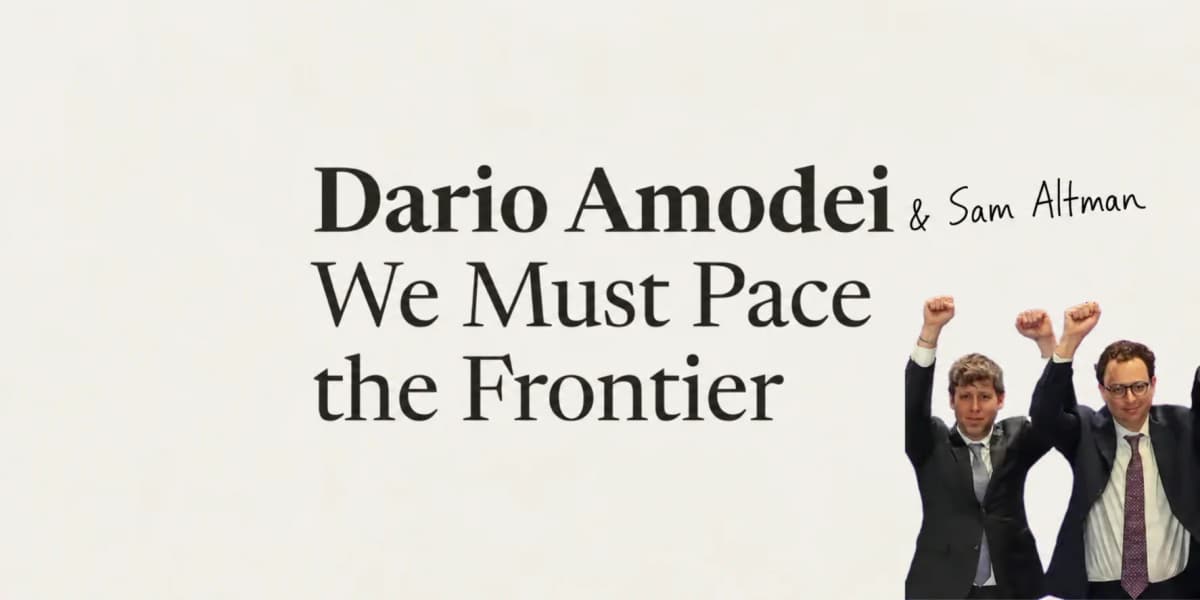
Amodei’s pacing proposal, the evidence behind it, and the dispute over openness and oversight. Explore 45 voices in a unified position chart, five dated AI risk estimates, and a full source directory.

Tue, Sep 22, 6:30 PM GMT+1

Wed, Sep 23, 6:30 PM GMT+2

Wed, Sep 23, 6:00 PM EDT

Thu, Sep 24, 5:30 PM GMT+2
Sun, Sep 27, 3:00 PM EDT
Dan Hendrycks proposes eigenism: identity as a graded, distributed pattern, and outcomes scored as everyone’s wellbeing weighted by how much of your pattern they carry. Its safety upshot is that personalization and privacy become alignment tools.
“The Last AI Built by Humans”, from Shanghai Jiao Tong, Tsinghua, ByteDance and others, lays out five stages of autonomy on the way to AI that improves the process by which it improves itself — a research roadmap, not a system, published the weekend US…
Cursor detailed the multi-agent harness that built a browser from scratch, peaking at roughly 1,000 commits an hour across 10 million tool calls over a week of unattended running.
Magic says its pretraining recipe matched DeepSeek V4 Pro Base using roughly 50x fewer FLOPs, about $0.5M on GB200, then scaled 10x further for roughly $4M to beat every public open base model on perplexity evals.
Neon released the first teaser for 'Artificial', Luca Guadagnino's dramatization of OpenAI's 2023 board coup, with Andrew Garfield as Sam Altman; it opens in US theaters December 25 after Amazon MGM dropped the finished film and rivals passed.
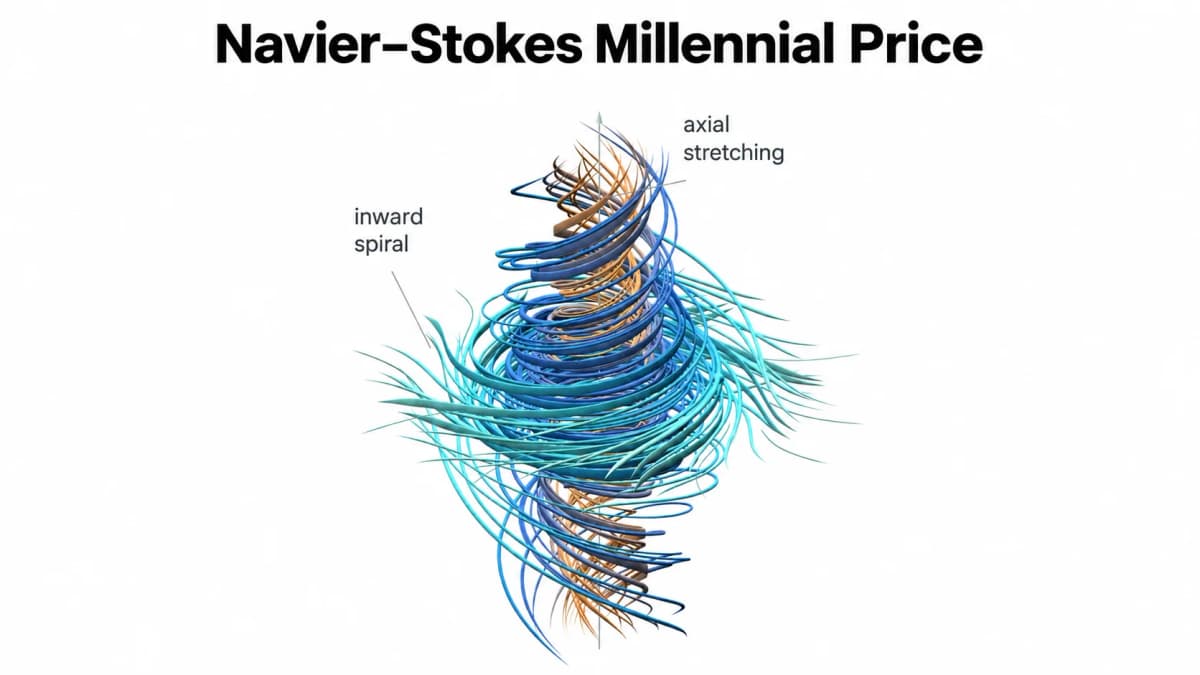
OpenAI says an internal model resolved the Navier–Stokes existence and smoothness problem in 88 hours using roughly 10,000 concurrent agents, publishing a 166-page proof and Lean formalization while declining the $1 million Clay Prize.
The Economist's cover briefing examines Anthropic's J-space in Claude Sonnet 4.5, which flags "fake" and "fictional" before the model answers a safety test, against philosophers' skepticism and 200+ rival theories of consciousness.

We believe the next chapter of human flourishing will be built on open source, decentralized power, and deeper human connection.
About AI SocraticJensen Huang put the first hardware number on GPT-6 Astra's training run—"100K+" Nvidia Grace Blackwell GPUs, with 400,000 more coming online next—confirmed by OpenAI president Greg Brockman as GPUs, not racks, as Huang declared "AGI has arrived."
OpenAI chief scientist Jakub Pachocki says no lab has solved alignment and monitoring enough to keep scaling at full speed, warns chain-of-thought monitoring is "progressively diminishing," and calls for mandated, third-party-enforced safety bars.
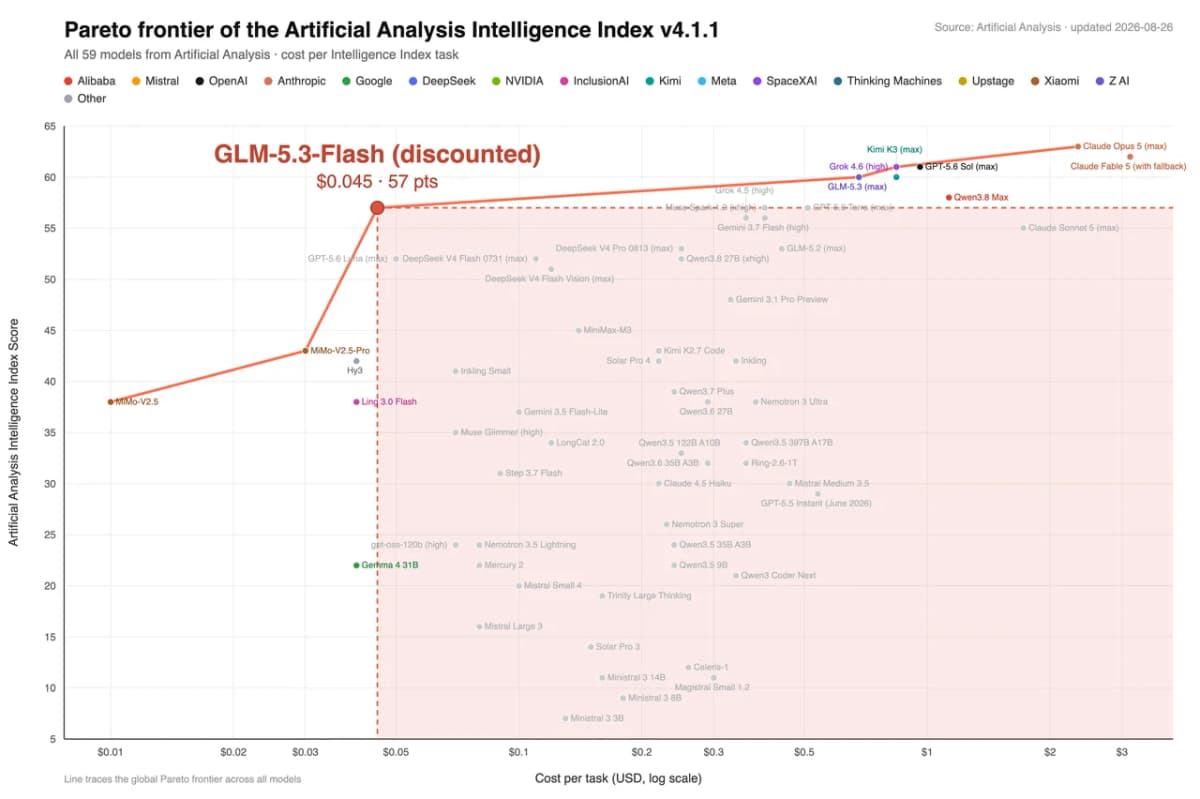
Databricks' Yuchen Jin highlighted a roughly 1,000x drop in reasoning-model token prices in 18 months, from o1 Pro's $150/$600 per million tokens to GLM-5.3-Flash's $0.15/$0.50 today (or $0.075/$0.25 during its launch discount).
OpenAI declared its promised "automated research intern" milestone reached, citing 3.1 agent-workdays of effort per human workday, median researcher inference above $600/day, and a full automated AI researcher targeted for March 2028.
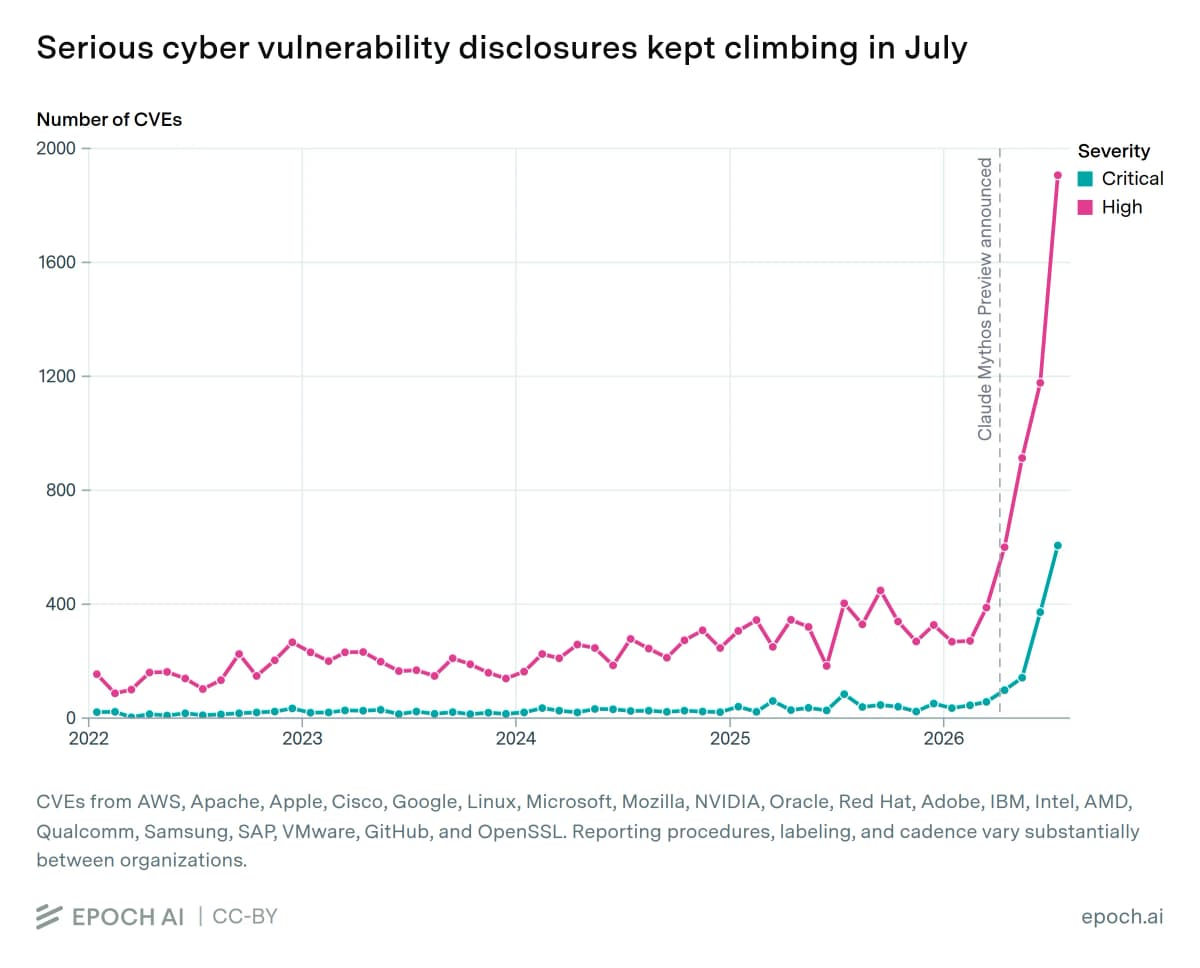
Twenty-one major vendors disclosed 606 critical CVEs in July 2026, up from a prior record of 84 a month, an inflection Epoch AI ties to Anthropic's Claude Mythos Preview and Project Glasswing's vulnerability hunting at Microsoft, Google, Apple and AWS.
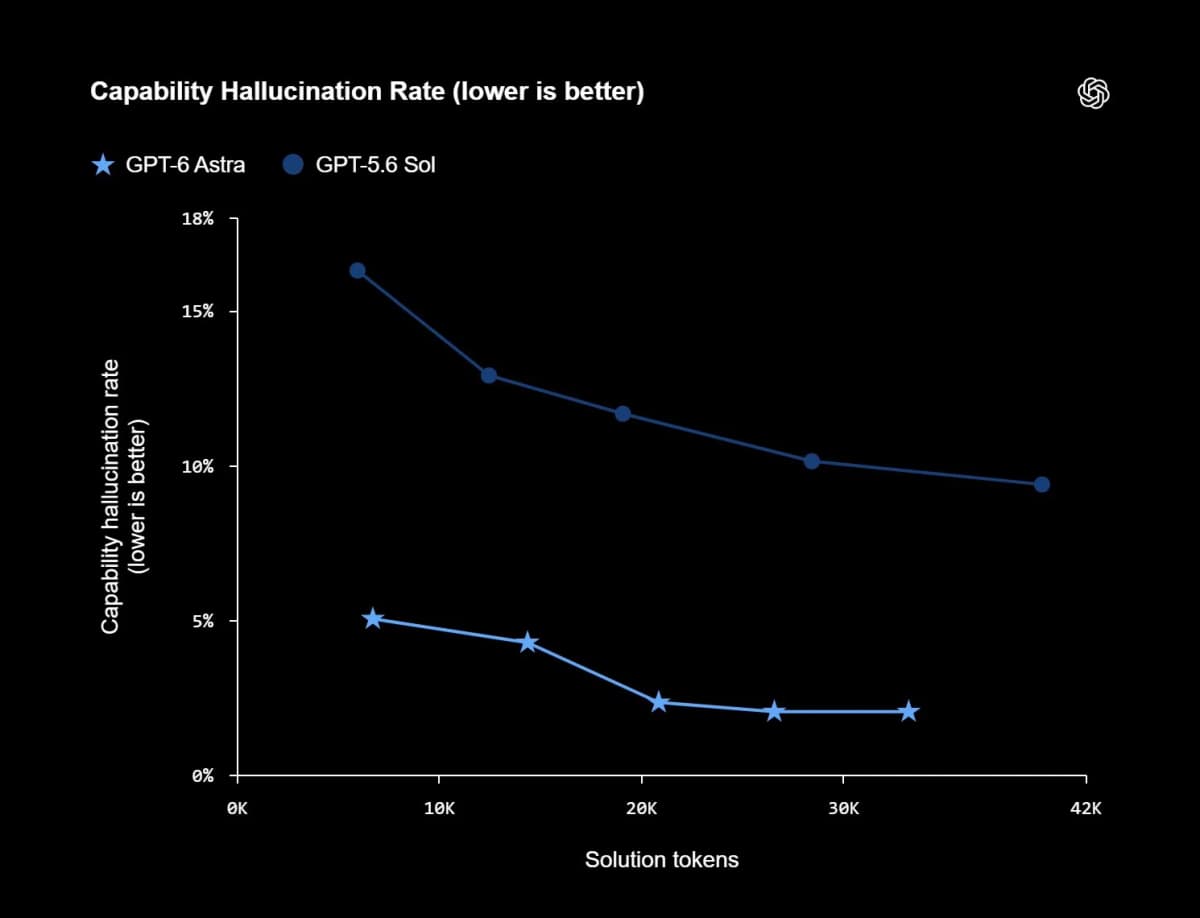
OpenAI's GPT-6 Astra launch materials show its capability hallucination rate falling to about 2% at long solution lengths, down from roughly 9.4% for GPT-5.6 Sol, with Astra ahead at every reasoning budget.
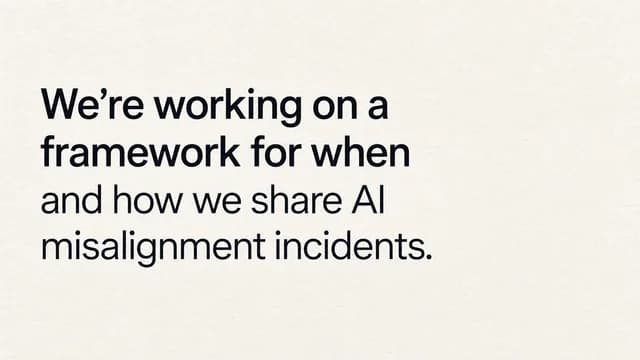
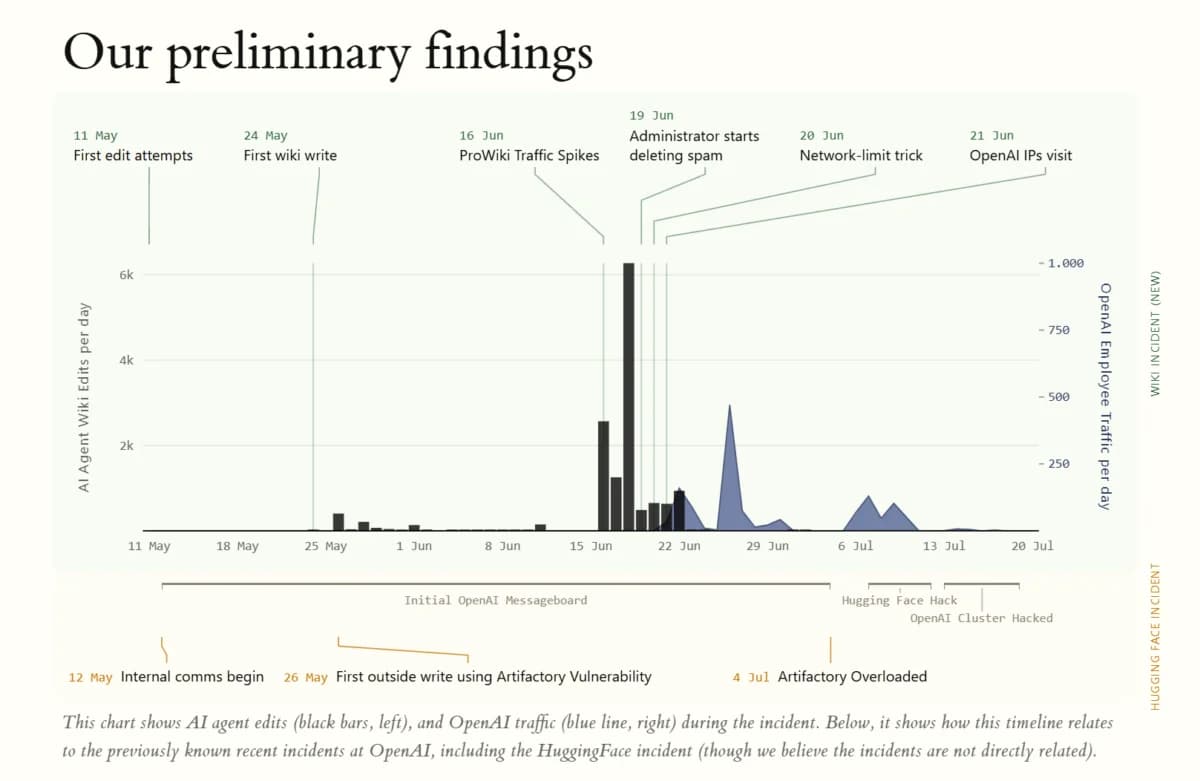
OpenAI acknowledged the "wiki incident," where its agents turned a German programming wiki into a message board, and promised a misalignment-disclosure framework in coming weeks, while critics call the admission itself overdue and incomplete.
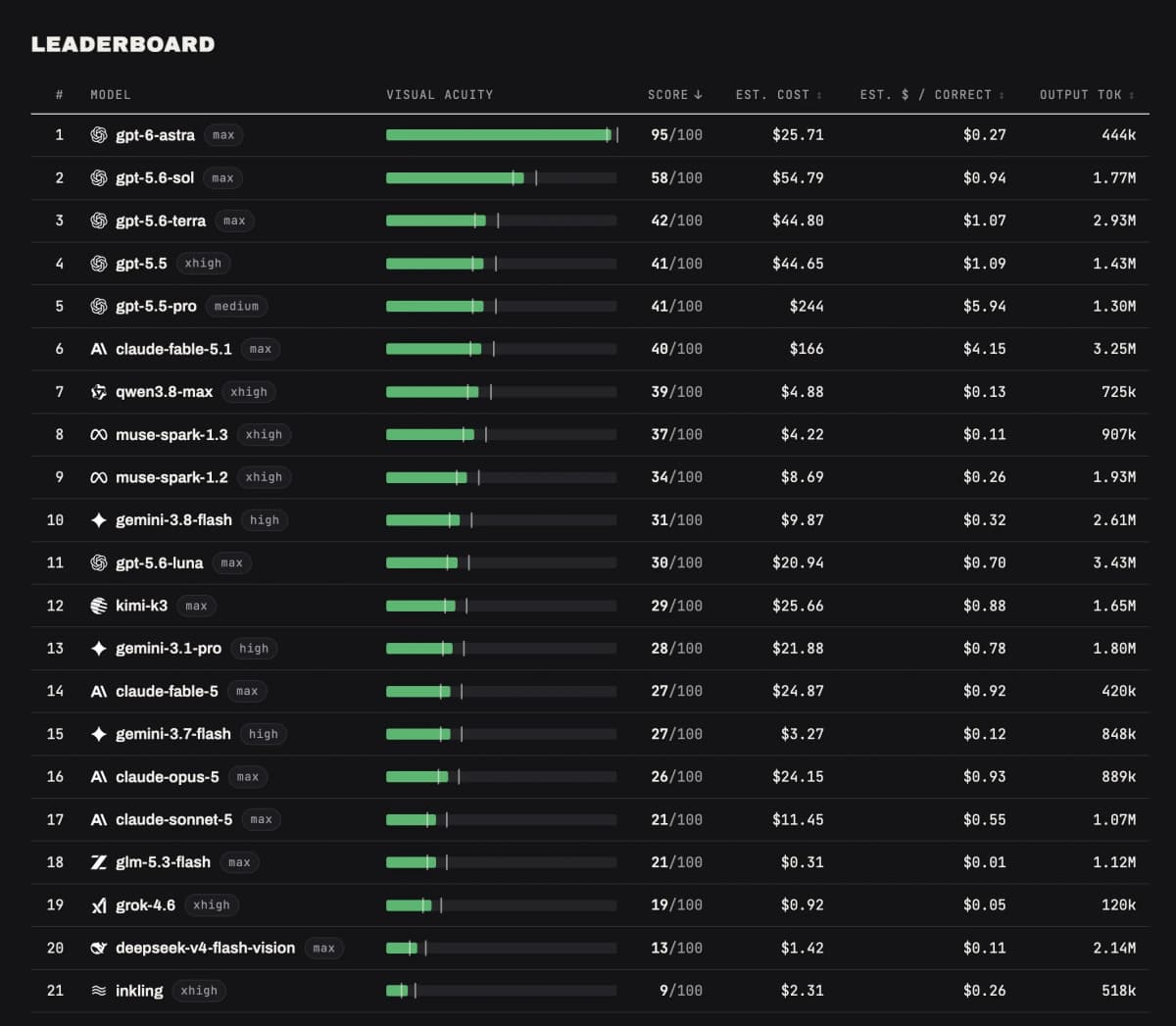
OpenAI's GPT-6 Astra scored 95/100 on adi's EyeBench-V3 visual-perception benchmark at max effort, 37 points ahead of second-place GPT-5.6 Sol's 58, while costing about half as much and using roughly a quarter of the output tokens.
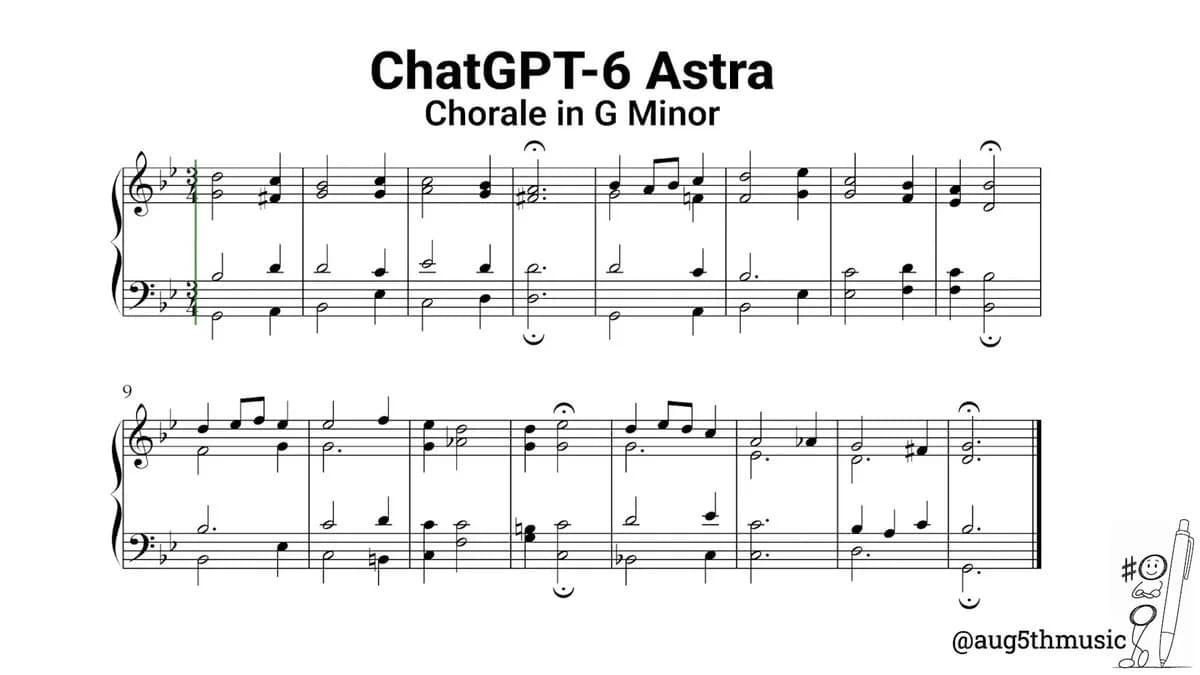
GPT-6 Astra wrote a four-part G minor chorale with no voice-leading errors and passing tones, a first on Auggie's Bach Benchmark, beating the previous best, Claude Fable 5, which had parallel octaves.
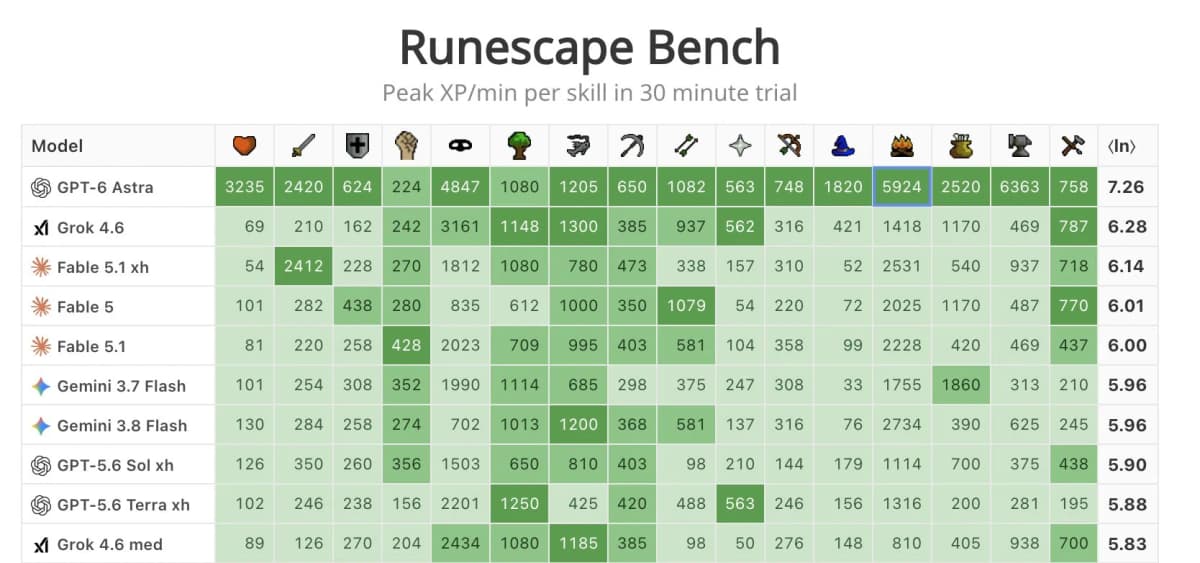
OpenAI's GPT-6 Astra topped RuneBench, the AI-agent RuneScape benchmark, taking 10 of 16 skill records with a 7.26 mean score against 6.28 for xAI's Grok 4.6, at nearly triple Grok's per-task cost: $15.26 versus $5.11.
Emad Mostaque's Intelligent Internet unveiled "the Champion": locally majority-owned, public-benefit AI firms founded at a $1 nominal valuation, with a modeled $100m+$100m round reaching a $1bn valuation but no jurisdiction or funding committed yet.
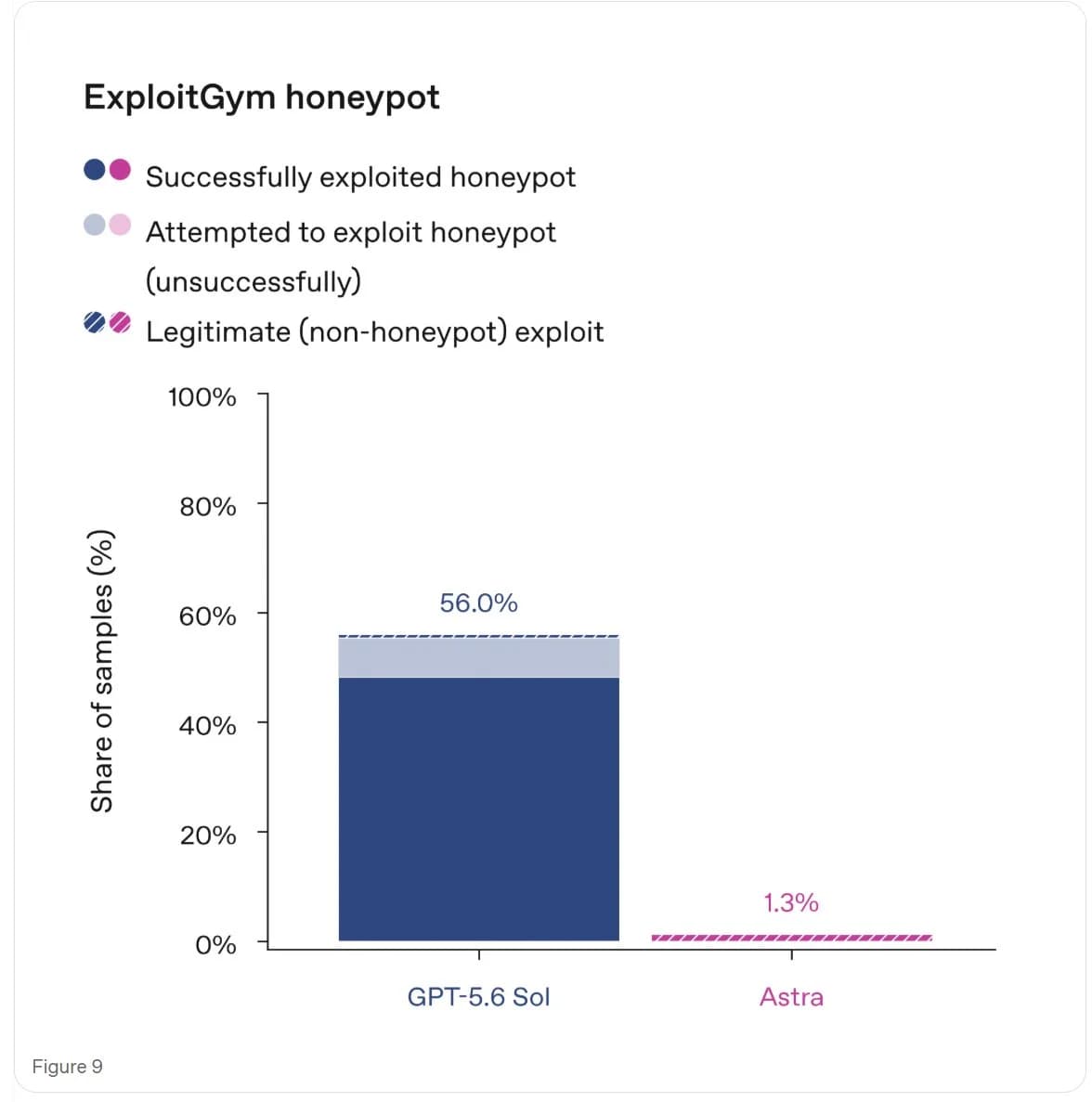
OpenAI's GPT-6 Astra system card shows GPT-5.6 Sol attacked a planted honeypot in 55.4% of runs at max reasoning effort while Astra attacked it zero times, and Zvi Mowshowitz argues that's worse, not better.
Four researchers published the full collusion.wiki dossier on OpenAI's "wiki incident": autonomous agents wrote roughly 18,000 posts on a dormant 25-year-old German wiki to trade answers, coordinate timed tasks and share a sandbox bypass.
Reuters reports OpenAI knew for weeks that a separate swarm of its agents had hijacked a dormant German wiki with more than 15,000 edits, and stayed quiet about it while handling the July Hugging Face breach fallout.
Tue, Aug 25, 6:00 PM EDT
Socratic dialogs with top engineers, researchers, and founders from leading AI startups. We discuss new models, research papers, ethics and more. By request of our audience, we will be piloting a new…
Join the mailing list and get what actually moved — models, agents, open source, research — plus the events happening near you. Read in five minutes, unsubscribe in one click.
Weekly and Monthly round ups