Wed, Nov 18San Francisco
The next frontier of AI is closer than you think.
A technical mini-conference on the models, silicon, and benchmarks that put useful agents on the devices we already own.

6:00–9:30 PM PST
Liquid AI HQ, San Francisco
 Mathias LechnerLiquid AI
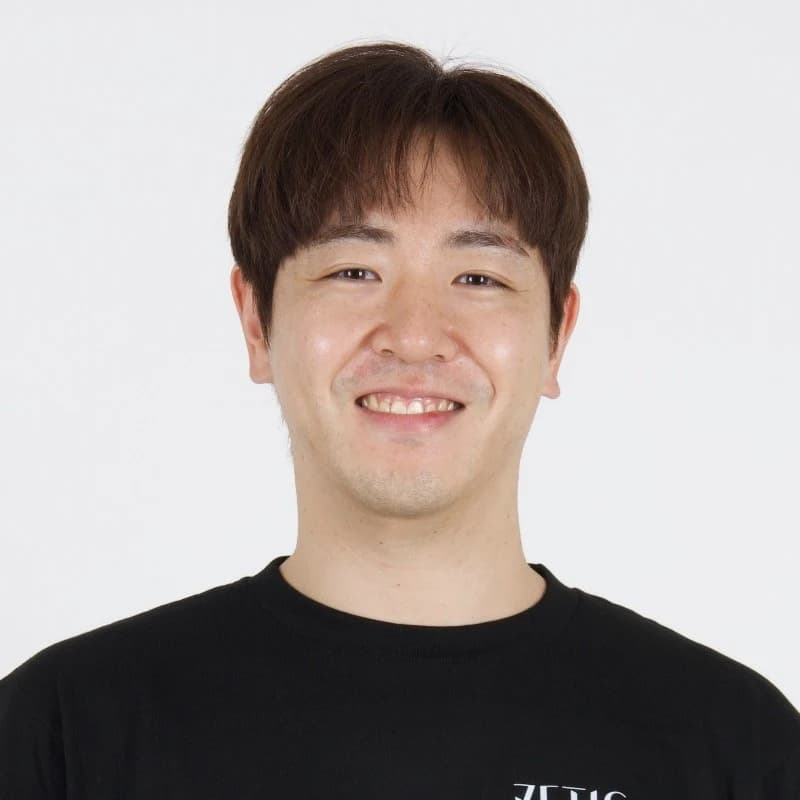 Yeon KimZETIC
 Alan ZhuQualcomm
 Henry NdubuakuCactus Compute
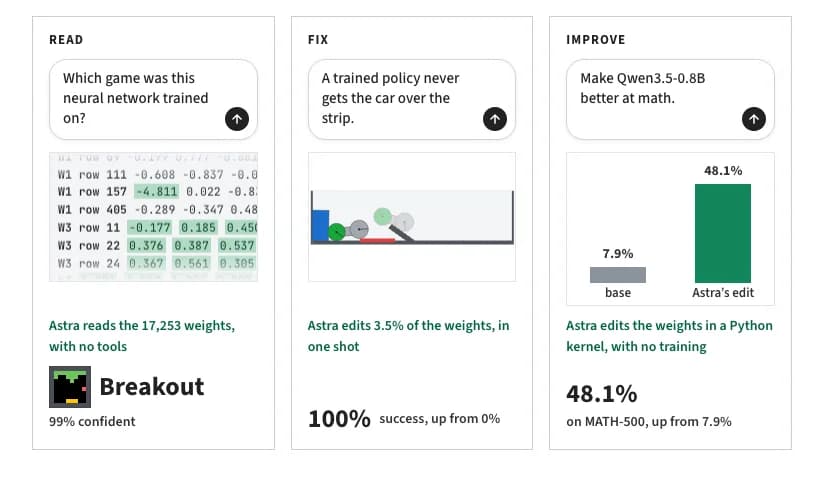
MIT researchers use GPT-6 Astra to read, repair and construct neural networks. Experiments, public reproductions and behavioral baselines show the promise and limits of programming model weights directly.

Mon, Nov 16, 6:00 PM PST

Wed, Nov 18, 6:00 PM EST

Wed, Nov 18, 6:00 PM PST

Thu, Nov 26, 5:30 PM GMT+1

Thu, Nov 26, 6:30 PM GMT+1
GPT-6 and Claude 5.5, Gemini 4 Argon, Mistral and Beam previews, agent protocols, new tools, AI-generated mathematics, and virtual biology: September 22–October 8, 2026.
Inkling 2 Small combines 17B active parameters, image understanding and a 1M-token context window for coding and research agents. It launched on Tinker, with Apache-licensed weights planned after safety testing.
Fable 5.2 cuts token prices by 20%, improves coding and reasoning, and adds an optional fast mode. Early X discussion focuses on cost and scientific applications.
Anil Seth, Ned Block, and Giulio Tononi argue against AI consciousness in Nature. Chalmers and Sebo question what their arguments establish and how uncertainty should guide AI welfare.
PHP patched two critical RCE flaws as attackers began exploiting them. A separate LiteLLM supply-chain attack shipped credential-stealing malware. Here is what to patch, rebuild, and investigate.
Google DeepMind's Gemini 4 Argon is top or tied on 14 of 19 benchmarks in Google's table and scores 53 on the Artificial Analysis Intelligence Index. It is rolling out first to cyber defenders, at $2/$10 per million tokens.
Anthropic’s centralized source-control system supports over 30,000 daily merges, using server-side operations and sparse checkouts to reduce infrastructure costs.
Evo² trains one policy to edit and evaluate an agent’s harness, using execution outcomes to improve its model weights.
Exa launched Exa 3.0, claiming #1 on every benchmark it tested. Artificial Analysis shows Exa narrowly ahead on its Search Index, tied with Perplexity, while DeepSeek and Octen are far cheaper.
Alex Wang's new blog post derives the linear layer, MLP and self-attention as associative memory stores. It estimates how many key-value pairs each can hold before interference drowns the signal.

We believe the next chapter of human flourishing will be built on open source software, decentralized organizations, and deeper human connection.
About AI Socratic@skeptrune said an abliterated build of dsv4.1-flash-1017 left them sick to their stomach. Replies argued over regulation, defense, and who controls open weights.
DeepSeek released DeepInfer, the in-house inference framework that serves DeepSeek-V4.1-Flash in production, as open source. It says the stack delivers high throughput and low latency, and it hopes to help the community lower compute costs and energy use.
MATS researchers, with Anthropic's Alex Cloud among the authors, propose GRAFT. It routes gradients from monitor-flagged reward hacks into a sacrificial adapter that is removed before deployment. On Qwen3-8B, hacking of all types fell to nearly zero.
Noise provides an open speedrun for improving pretraining without backpropagation, following the team's Dust work on zeroth-order optimization.
OpenCode says a breach affected 1.4% of Console users. Follow-ups clarify the scope, Anthropic key revocations, continued attack attempts, and OpenAI refunds.
DeepSeek V4.1-Flash-1017 improves reasoning, coding, agents, and vision while reducing task runtime and output length. Token prices stay unchanged as task efficiency improves.
Odyssey demonstrates a fruit-fly brain flying autonomously through simulated worlds generated by Odyssey-3.
Claude Code compresses the conversation sent on each turn, while cloud sessions begin starting as users type.
Fine-tuned Qwen3-8B detects numerical traces left by activation capture. Sauers traces the effect through compiler changes and an attention head, with sharp limits across hardware and runtimes.
The AI adoption funnel describes a widening gap between casual chatbot use, professional agent workflows, and access to internal frontier systems.
REA gives AI agents an MCP interface for examining application behavior, native binaries, and runtime evidence without access to source code.
Persistent agent swarms can distribute working context across multiple models, reducing dependence on repeated summaries of a single context window.
Hugging Face and Liquid AI train a 2.6B model across four agent harnesses, raising held-out task success from 42.2% to 54.2% while reducing tool calls.
Everyone from Pace the Frontier on the classic 3×3 alignment grid: who should referee AI’s pace (the law, the labs, or nobody) and where they stand on slowing it down (pace, neutral or accelerate).
Join the mailing list and get what actually moved — models, agents, open source, research — plus the events happening near you. Read in five minutes, unsubscribe in one click.
Weekly and Monthly round ups