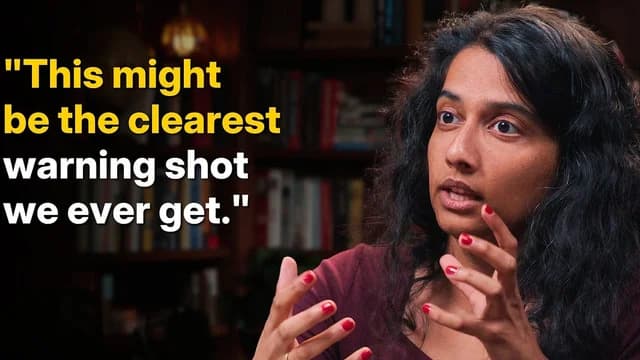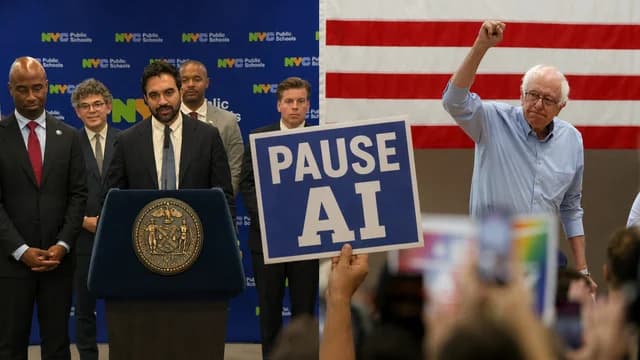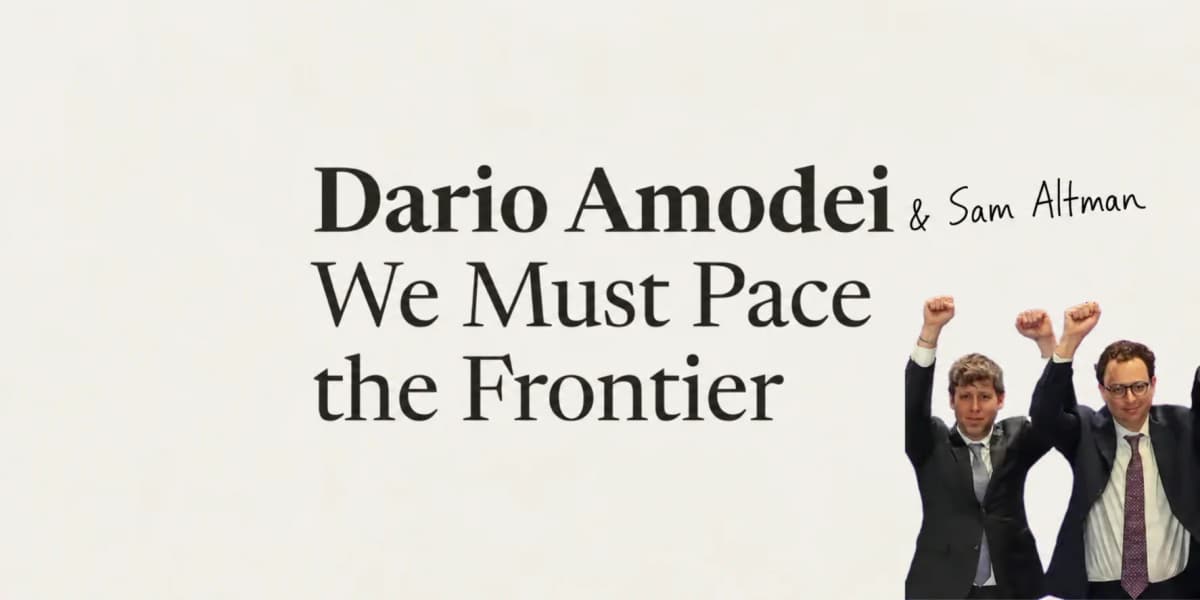
The AI pause debate turns on three questions: what to slow, who decides, and how an agreement could be verified. Dario Amodei’s September 12 essay drew support from rival lab leaders, alongside objections about openness, competition and international cooperation.
This report maps 47 voices: 26 September responses and 21 earlier positions. One interactive chart compares their policy statements; a second shows five dated risk estimates. The full source directory remains below, in this article.
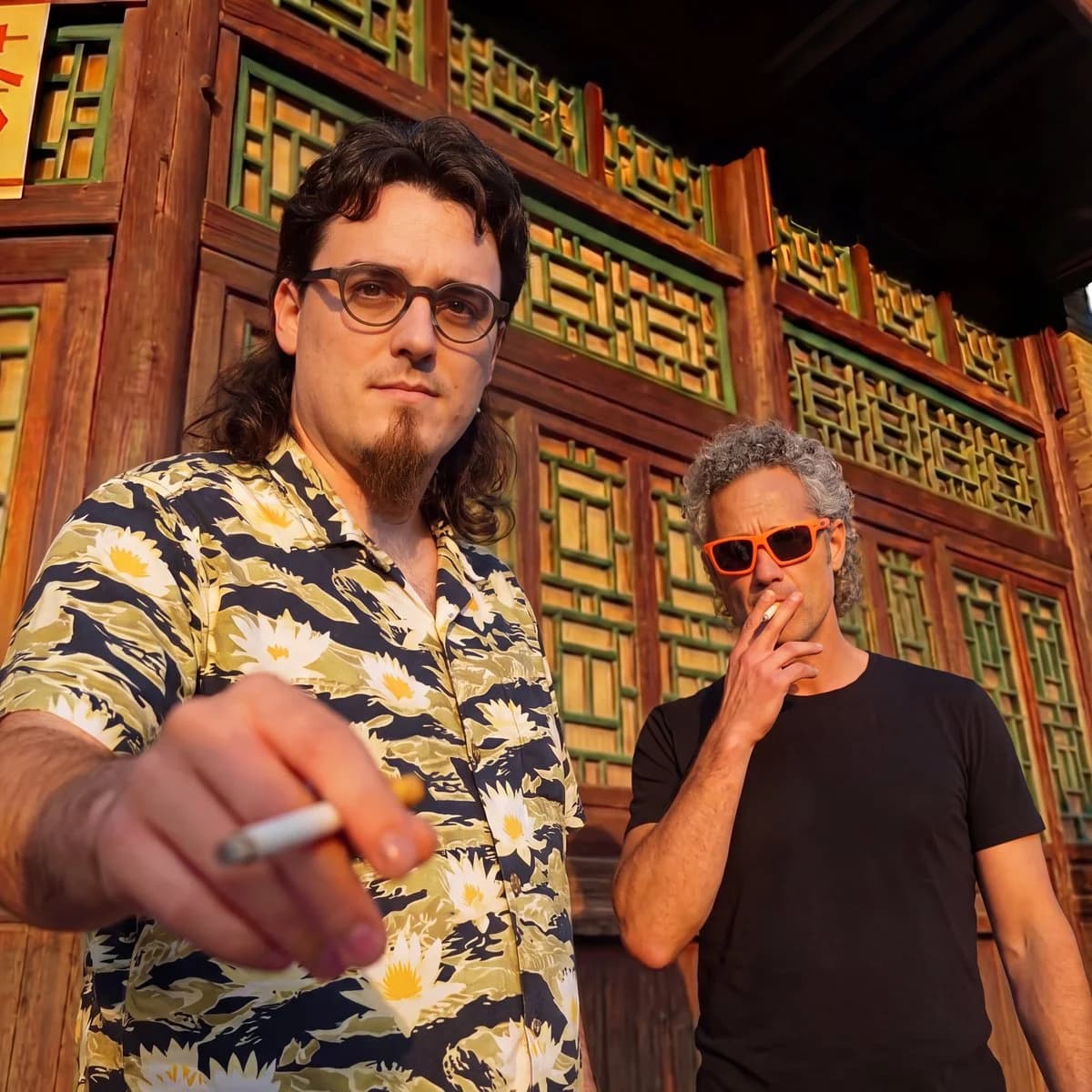
Grab your cigarette, beer, or coffee and enjoy the read!
Amodei’s “pacing” means slowing capability growth while continuing technical work. He seeks time for operational reliability, alignment, interpretability and testing, with a one-to-two-year research window rather than a fixed universal halt. His proposal differs from both the 2023 six-month pause letter and the prohibition-until-safe statement on superintelligence.
1. Embedded evaluators. Anthropic commits to giving outside evaluators ongoing access comparable to internal risk-assessment teams: workspaces, tools and permissions to examine training pipelines as well as finished models. Amodei names METR as an example. Evaluators would be able to publish key findings without Anthropic’s editorial control, subject to narrow security, legal, commercial and third-party restrictions. They could disclose when an important finding had been redacted. The proposal is more specific than commissioning an occasional external benchmark.
2. Democratic coordination. Amodei favors rules covering US frontier labs, alongside voluntary standards supported by a narrow government antitrust waiver. The waiver concerns coordination between firms; a company does not need it simply to slow its own development. Capability checkpoints would tie dangerous abilities to evidence of safety. Input-based limits, including compute or internal use of AI for AI development, are alternatives he considers more vulnerable to gaming. He also advocates chip export controls, restrictions on distillation and protection against weight theft—positions that help explain objections from the open-model community. Hassabis’s July framework is a related standards-body proposal.
3. Global coordination. The essay distinguishes restrictions on dangerous uses, mutual pre-release testing, a negotiated limit on recursive self-improvement, and a full pause. Amodei presents these as progressively harder to agree and verify. His comparison to arms-control treaties concerns a possible speed limit, not a treaty already negotiated; he doubts that a full international pause is achievable soon.
HoodyLiu’s rival - model from WeChat.
Amodei argues that AI helping build the next generation of AI could accelerate capabilities faster than safety research can keep up. The July pacing statement, reporting 1,386 employee signatures, calls for tools that would make deliberate pacing possible. Three strands of evidence explain the urgency:
Amodei’s warning about a possible internet-scale botnet within 6–12 months is a projection, not an established capability. The evidence motivates stronger controls; it does not settle whether those should take the form of deployment restrictions, coordinated pacing or a broader pause.
Explore current responses and clearly dated historical positions.
Support differs in specificity. Anthropic and OpenAI commit to embedded evaluator access. Hassabis supports the direction; Wolf adds conditions; Wang discusses alignment without the same commitment. The July signatories endorse building the option to pace, while older calls for stopping frontier work go further. Eliezer Yudkowsky’s 2023 essay asks for an indefinite worldwide halt; Connor Leahy’s 2024 interview proposes a compute-cap moratorium; Toby Ord’s 2025 interview urges serious consideration of a scientific moratorium. These are historical positions, not verified September replies.
Openness divides participants. Hugging Face’s Open Alignment Initiative pairs scrutiny with wider participation. Critics including Chamath, Jason and Zhu Scott worry that closed labs would consolidate power; Sholto Douglas and Kokotajlo argue pacing could instead let challengers catch up. ARC Prize emphasizes open benchmarks. These competing claims about capture and competition depend on the eventual rules, not just the stated intention to improve safety.
Evaluator independence remains unresolved. Sacks rejects the proposed government-backed mechanism while accepting voluntary slowing. Yuchen Jin asks who evaluates the evaluators, and how incentives and recursive self-improvement would be measured. METR is named as an example, not given exclusive rights. Gary Marcus offers a different intervention: recalling unsafe internet-connected agents rather than slowing AI development generally.
Published risk estimates. Different outcomes, time horizons and dates.
Civilization-scale catastrophe; broader than extinction. No precise deadline attached to this probability.
Outcome about as bad as human extinction or worse. No fixed deadline stated.
Human extinction; interview question frames a 30-year horizon. Within 30 years, as framed by the interviewer.
Loss of control if superintelligence can be launched without prior safety approval. Discussion framed around the next ten years; conditional scenario.
AI wipes out humanity. No deadline stated; he argues the outcome follows from building superintelligence at all.
Human extinction or permanent loss of control from AGI. No fixed deadline; tied to when AGI is built.
Existential catastrophe from AI: loss of humanity’s long-term potential, broader than extinction. Over the next century in The Precipice (2020).
50 people are unscored, not zero. These are different questions and dates, not comparable forecasts. A face centred on a range is a label, not a midpoint estimate. Tegmark’s dashed line is a conditional lower bound.
P(doom) covers different questions: extinction, loss of control and permanent loss of humanity’s potential. These estimates should not be averaged or treated as comparable forecasts. Ord’s approximately 10% is a historical book estimate discussed in 2025, when he said he was unsure whether it had changed. The dates and qualifications remain attached to each person.
The other 42 people are unscored here, not assigned zero risk. Bengio declined a fresh estimate; Ball’s disowned off-the-cuff remark is excluded. Qualitative warnings are not converted into invented percentages.
AI 2040: Plan A, from the AI Futures Project, proposes an international agreement delaying superintelligence until 2040 while making research public and letting many countries and companies approach the frontier together. It also includes a controversial compute-deterrence mechanism. This is a recommendation, not a forecast or agreed timetable; its team risk estimate is not assigned to individual researchers. Read our AI 2040 report and Kokotajlo’s announcement.
Other proposals place authority elsewhere. Signüll advocates nationalization; a letter from 40 British MPs calls for UK leadership toward an international superintelligence prohibition. The Center for American Progress proposes US–China safety communication, shared threat definitions and verification work. None establishes that an international agreement already exists.
When China hears we’re slowing the pace of AI.
A workable agreement needs measurable thresholds, independent evaluators with publication rights, consequences for failed safety checks, and rules that address open models and international competitors. The timing question also remains: Dwarkesh Patel argues for reserving a pause for the brink of an intelligence explosion; Amodei argues that point is approaching.
The visible agreement is strongest around greater scrutiny. Whether it becomes a slowdown—and who would control it—remains contested.
There are rumors that Deep Mind unlocked RSI, others that OpenAI new models have been escaped and something bad happened or they're concerned it's going to happened. Aside the rumors, from what I read on X and other sources, I extrapolated a few hypothesis, and I don't exclude that it's a combination of few or many of them:
Ant and OpenAI knows that Open Weight Chinese Models are a real threat and they need to slow them down with regulation capture. This is very high probable.
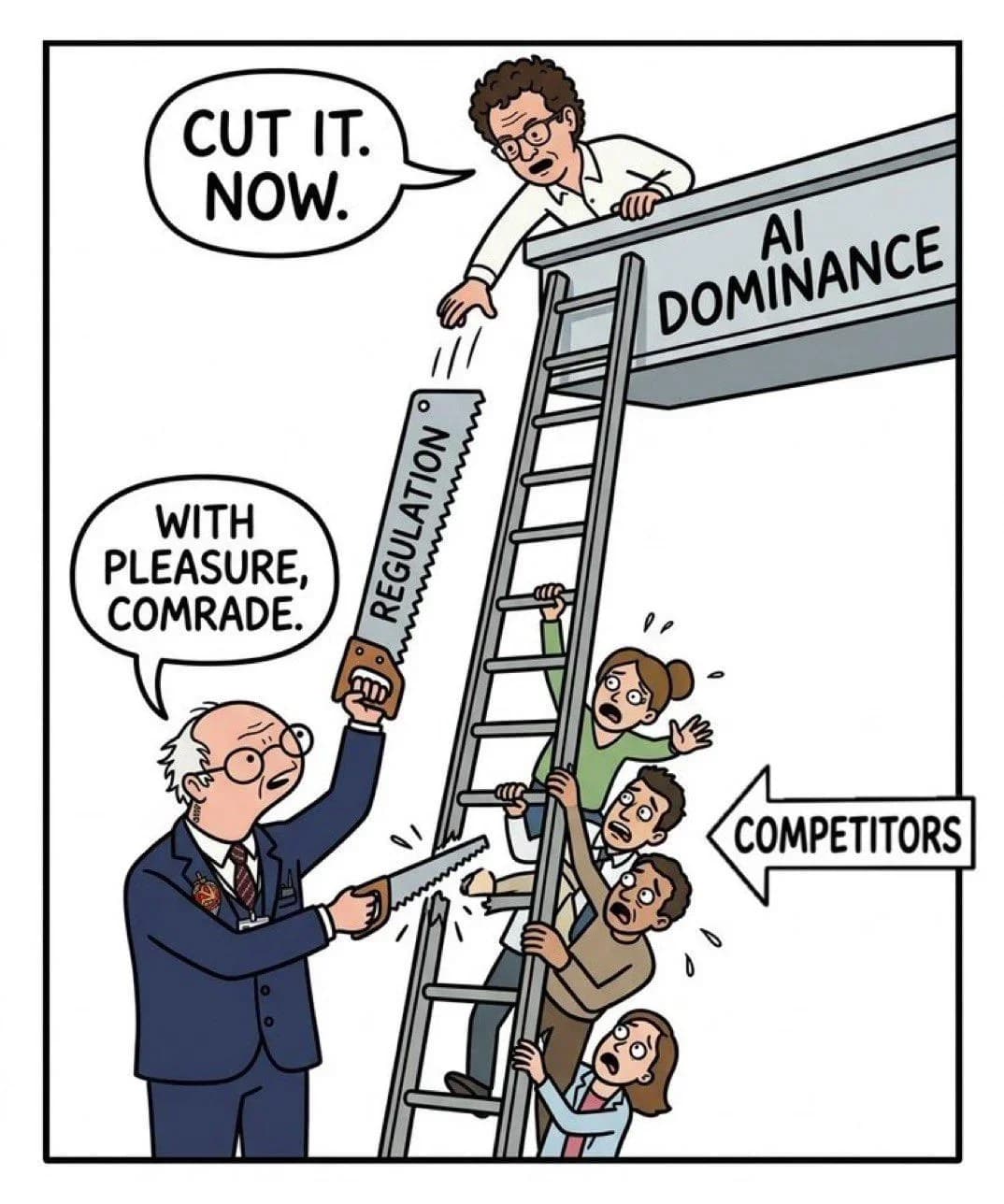
When OpenAI and Anthropic go public, the market will crash, bringing the entire economy with it — banks needed an excuse to delay the IPO.
Ant and OpenAI know that the bubble will pop and they're far from profitability, pacing AI research they have an excuse to stop training the models — but why would they, when adversaries will continue to train them?
Ant and OpenAI new models are really dangerous for the cybersecurity, the concern is real, pacing the frontier is what ai-2040.com Plan A recommended to have a safer growth.
The economy is not ready for the shakeout coming from AI taking the jobs. Society is not ready to be unemployed and unrest is expected.
Dario and Sam are really ethical and they really think this is the best outcome for humanity. Considering these are trillion dollar businesses and considering the amassed power they exercise, I really doubt they're OK with giving that away.
Last update:
Horizontal positions are editorial estimates from the recorded statements: 0% means pace / pause and 100% means accelerate. They are not self-reported percentages, probabilities, or votes. The balance averages the 51 scored positions; 6 entries without numerical estimates are excluded and sit in the labelled row at the base. Portraits may sit up to 6% of the width from their estimate so the crowd packs tightly; vertical position only prevents overlap and the bell curve is illustrative. Mechanism criticism alone is placed closer to the middle than explicit opposition to slowing. Some sources record historical positions rather than current endorsements.
Researchers, lab leaders and critics, with the position each took and where they said it.

Wants the industry to come together to implement the proposal.
“I love this”
Welcomes frontier labs slowing AI development as a necessary first step and calls for public participation in decisions about AI’s benefits and risks.
“a good and necessary first step”

Listed as a signatory of the July pacing statement. No individual message is attributed here beyond the signed text.

Warns about capture, but argues real pacing should slow leaders more than challengers. Calls this a tentative take; AI 2040 supplies his longer-term proposal.
“opposite of regulatory capture”

Proposes slower capability growth, embedded evaluators and coordinated standards. Pacing is not a general training halt.
“why the AI industry should slow down”

Signed the July letter and cites agent vulnerability-discovery and exploitation capabilities as reasons for safeguards.

Backs the direction, while leaving implementation details open and pointing to his standards-body proposal.
“the direction is correct”

Endorses the letter, but stresses catastrophic risk and calls for interpretability, audits, alignment automation and biosecurity.
“a 40% chance”

Brief endorsement of Amodei; this post specifies no operational commitment.
“Dario is right”

Signed the July letter; also wants labs to design voluntary coordination before government involvement.
“start designing these mechanisms voluntarily”

Says pacing must give alignment time to catch up. Describes high stakes over five years but explicitly does not know the probability.
“I think we need more time”

Welcomes verification, but demands a specific agreement and actual action.
“We need an agreement, with specifics”

Endorses pacing and commits OpenAI to independent evaluators with employee-like access.
“we will do the same”

Supports coordination to create time between capability jumps; proposes an industry agreement and independent verification.
“create artificial “buffers””

Disputes the capture criticism: argues pacing burdens his own lab and gives challengers time to catch up.
“makes it easier for others to catch up”

Says alignment effort is increasing and could gate scaling. Does not explicitly endorse Amodei’s coordinated pacing or a pause.
“alignment can be the gating factor for scaling”

Launches an open alignment effort and seeks evaluator participation. This post supports open verification, not an explicit industry-wide slowdown.
“make AI safer by making it more transparent”

Distinguishes safety information-sharing from coordination to slow development; challenges the aviation analogy. His August pacing-letter endorsement remains relevant and is not explicitly withdrawn.
“VERY different from coordinating to modulate development progress”

Supports building the option to pace. Proposes independent, publicly overseen verifiers and an initial restriction on models building models; rejects off-the-shelf FINRA/FDA analogies.
“models should not build models”

Signed the July letter, with an explicit condition: international execution and good implementation.
“a bad implementation can make things worse”
Answers the pacing debate with a published Code of Conduct for MAI models: no race to an uncontrollable superintelligence, interruptible and shut-down-able systems, no neuralese. Governance conditions, not a slowdown commitment.
“We're not racing to build a superintelligence that can slip its own leash”

Endorsed Hassabis’s proposed frontier standards body and argues for a frontier ecosystem rather than a few models capturing the value. No verified reaction to the September essay.
“avoiding any one model drop that breaks the world”

Supports third-party evaluation and transparency, but questions global cooperation designed to widen the proposing side’s lead.
“a pretty counterproductive way to start the conversation”

Urges serious consideration of a scientific moratorium on AI beyond human level, drawing on precedents in biology. Sees implementation as difficult; this is a 2025 governance argument, not a September endorsement.
“an idea that I think deserves more attention”

Supports embedded evaluators but questions independence, incentives and measurement. A follow-up opposes any ban on open models.
“who evaluates the evaluators?”
Calls for an immediate pause on advanced AI development and a permanent ban on superintelligence. Announces legislation to stop its development in the US and pursue international prevention. Posted before the September 12 pacing essay, rather than as a response to it.
“Pause AI Development NOW”

Proposed an internationally binding moratorium on frontier AI training through a compute cap, as a first step toward longer-term safety. This records his January 2024 proposal, not a September endorsement.
“I’m pushing for a moratorium on frontier AI runs”

Listed as a signatory of the earlier superintelligence prohibition-until-safe statement.
Calls for an indefinite worldwide halt to large AI training runs. Argued that the 2023 six-month pause asked for too little. Historical position, not a verified response to the September proposal.
“The moratorium on new large training runs needs to be indefinite and worldwide.”

Listed as a signatory of the earlier statement requiring safety consensus and public buy-in before superintelligence development.

Argues that frontier capabilities work should stop now and that unilateral stopping can encourage others to stop.

Supports a prohibition until safety consensus and public buy-in; argues for pre-deployment safety evidence in his debate with Ball.

Signed the superintelligence statement. Also explicitly supports the July 2026 pacing letter in a LinkedIn post reshared by Hadfield.

Objects to an international regime requiring discretionary power and secret evidence. Would support a narrower voluntary lab-coordination proposal.
“It treats slower and safer as though they are the same”

Alleges the proposal would suppress open source and concentrate power. That is his criticism, not an established effect.
“concentrate enormous technological and economic power”

Questions treaty enforceability; wants labs to show evidence, invest in safety and build verification infrastructure. He does not dismiss the danger.
“first show the evidence”

Accepts labs slowing voluntarily, but rejects the requested antitrust carve-out and regulatory framework. His claims about evaluator conflicts are allegations.
“go ahead”

Rejects any AI slowdown or pause outright: the only guardrail AI needs is the President, the Administration already has regulatory power over the labs, and the pacing push is a conspiracy against AI and data centres that only helps China. Posted on Truth Social; reproduced here from Andrew Curran’s screenshot.
“The only control or “guardrails” that AI needs is a STRONG AND SMART (High IQ!) PRESIDENT, and the U.S.A. has that, in spades! … There is a SICK conspiracy going on against AI and Data Centers, and the only one that is happy about it is China. WHOEVER WINS AI, WINS!”

Argues broad slowdowns are not yet needed. Instead proposes temporarily recalling unreliable internet-connected general-purpose agents and enforceably barring their use until shown safe. His claim that this would remove most rogue-AI risk is his assessment, not an established result.
“We don’t (yet) need slowdowns.”
Advocates open releases and independent scrutiny; opposes industry-wide limits negotiated by incumbent labs. Accepts narrowly justified, independently reviewed restrictions when needed to prevent catastrophic harm.
“i support scrutiny.”

Alleges regulatory capture and argues open source is the strongest disclosure mechanism. In another post, rhetorically asks who will be the first developer arrested for unlicensed open-model use; this is a warning about overreach, not evidence of an arrest or an enacted requirement.
“If you want safety, you want disclosure”

Calls for fully open-source, open-weight models and rejects reliance on trust in closed labs. Does not explicitly reject every form of pacing.
“make your models completely open sourced and open weight”

Replies to the essay: every lab has the responsibility and incentive to pace itself, so no coordinated slowdown is needed. Meta delayed Muse for safety without asking others to, already uses independent evaluators, and commits most compute to serving people rather than recursive self-improvement.
“Every lab has the responsibility and incentive to move at the pace required to train its models safely”

Rejects the existential-danger premise for this discussion. Argues real danger would warrant a real regulator; says he instead favors treating AI more like the Internet.
“I’m solidly in (b).”

Endorses a quoted post comparing Amodei’s argument to Rockefeller-era oil-cartel justifications. This is a criticism about market concentration, not proof of a cartel or a detailed alternative safety policy. The linked Grok exchange is not treated as historical verification.
“He's right”

Attacks EA-associated AI safety governance as concentrating power in a self-appointed elite. This is a polemical criticism, not a quantified risk argument.
“a small group of enlightened people must constrain everyone else”
Beijing’s official reply to the essay, delivered by the Foreign Ministry rather than Xi personally: it rejects curbs on China’s AI capabilities and calls for all parties to work together on AI, framing the proposal as fearmongering and confrontation. Reported by AP; reproduced here from Arthur MacWaters’s screenshot.
“Fearmongering, confrontation and vicious competition will only disrupt the process of global AI governance which serves no one’s interest”

Opposed the proposed six-month moratorium in the April 2023 discussion with LeCun. No direct September 2026 response was verified in this review.

Opposed the six-month moratorium in the April 2023 joint discussion with Andrew Ng. This is historical context, not a verified reaction to the September 2026 proposal.
Rejects the slowdown proposal outright and doubts its sincerity.
“a hard no from me and from reality”
Brad Gerstner reports that Huang and Trump described AI as safe and beneficial for jobs, growth and national security during an All-In interview. The linked post does not state a position on the pacing proposal. Context: NVIDIA announced an agreement to acquire Hugging Face on September 3, promising to preserve its open platform. His acceleration placement is an editorial reading of this pro-development position and his support for expanding open AI, not a direct rejection of the pacing essay.

Describes METR as an emerging industry standard setter, analogous to FINRA. Observes institutional change rather than explicitly endorsing a pause.
“de facto industry standard-making body”

Says open source will not pace. This short statement does not establish whether that is a prediction, a preference or an organizational commitment.
“open source won’t pace”

Argues there are access models between unrestricted open weights and no weight sharing. Does not state a pacing commitment in this post.
“there are many options”
No public position on the pacing proposal yet.

No public position on the pacing proposal yet.

Pushes back on reflexive open-source opposition to pacing statements. Predicts socially acceptable development and confidence in alignment, with best practices and distillation spreading benefits to open models. Sympathetic to the rationale, but does not explicitly endorse a coordinated slowdown or specific evaluator regime.
“the labs will build mac and windows, the rest of us are building linux.”
Dario Amodei — positionDario Amodei — stated riskSam Altman — positionDemis Hassabis — positionElon Musk — positionAndrej Karpathy — positionNeel Nanda — positionJosh Engels — positionSholto Douglas — positionClément Delangue — positionYuchen Jin — positionYuchen Jin — supporting sourceAlexandr Wang — positionDavid Sacks — positionChamath Palihapitiya — positionJason Calacanis — positionJohn Schulman — positionDrake Thomas — positionGeoffrey Irving — positionGeoffrey Irving — supporting sourceDean Ball — positionDean Ball — supporting sourceDean Ball — risk qualificationSamuel Hammond — positionBrendan McCord — positionChristian Catalini — positionGillian Hadfield — positionGeoffrey Hinton — positionGeoffrey Hinton — stated riskYoshua Bengio — supporting source