GPT-6 and Claude 5.5, Gemini 4 Argon, Mistral and Beam previews, agent protocols, new tools, AI-generated mathematics, and virtual biology: September 22–October 8, 2026.
The AI adoption funnel describes a widening gap between casual chatbot use, professional agent workflows, and access to internal frontier systems.
REA gives AI agents an MCP interface for examining application behavior, native binaries, and runtime evidence without access to source code.
Persistent agent swarms can distribute working context across multiple models, reducing dependence on repeated summaries of a single context window.
Continuous Memory Machines give recurrent models separate short-term and persistent memory matrices, with a Transformer coordinating reads and updates.
Harness learning trains a model to revise an agent’s executable control program from execution feedback, adapting to unseen tasks without changing model weights.
Kurzgesagt explains the OpenAI–Hugging Face incident and the challenges of controlling AI agents that coordinate across their environments.
Activation-steering experiments show that hidden valence patterns can change models’ later choices even when the visible text stays identical.
Hugging Face and Liquid AI train a 2.6B model across four agent harnesses, raising held-out task success from 42.2% to 54.2% while reducing tool calls.
Everyone from Pace the Frontier on the classic 3×3 alignment grid: who should referee AI’s pace (the law, the labs, or nobody) and where they stand on slowing it down (pace, neutral or accelerate).
A community-maintained Hugging Face Space, the Jev Decision Index, tracks and benchmarks all open-source reproductions of TypeSafe's Jev decision model, with a leaderboard, categorization, and trending metrics.
Liquid AI announced d1, its first decision model, claiming it is the first to surpass Jev on Hugging Face’s Decision Index. It is available through the Liquid API, with OpenRouter support planned.

We believe the next chapter of human flourishing will be built on open source software, decentralized organizations, and deeper human connection.
About AI SocraticOpenAI’s DevDay 2026 brought GPT-6.1 Sol, Decisions API, expanded agent and Codex tools, dots, plugins, shared ChatGPT workspaces, and new subscription options.
Trump’s White House AI lunch produced a voluntary safety accord and an executive order adopting “Super Intelligence” in federal communications. The CEOs’ seating chart drew contrasting political reactions on X.
NVIDIA announced the Open Agent Safety Platform, combining OpenShell and Sentry to provide hardware-enforced guardrails for AI agents, with over 100 industry partners including Anthropic and SpaceX but notably not OpenAI, Google, or Meta.
TBPN reports an $8.2 billion AMD acquisition of World Labs; deal terms and timing remain unspecified.
Anthropic released Claude Sonnet 5.5, the second model in the Claude 5.5 family, offering a clear upgrade over Sonnet 5 with 30%+ faster performance and up to 30% lower cost for most tasks.
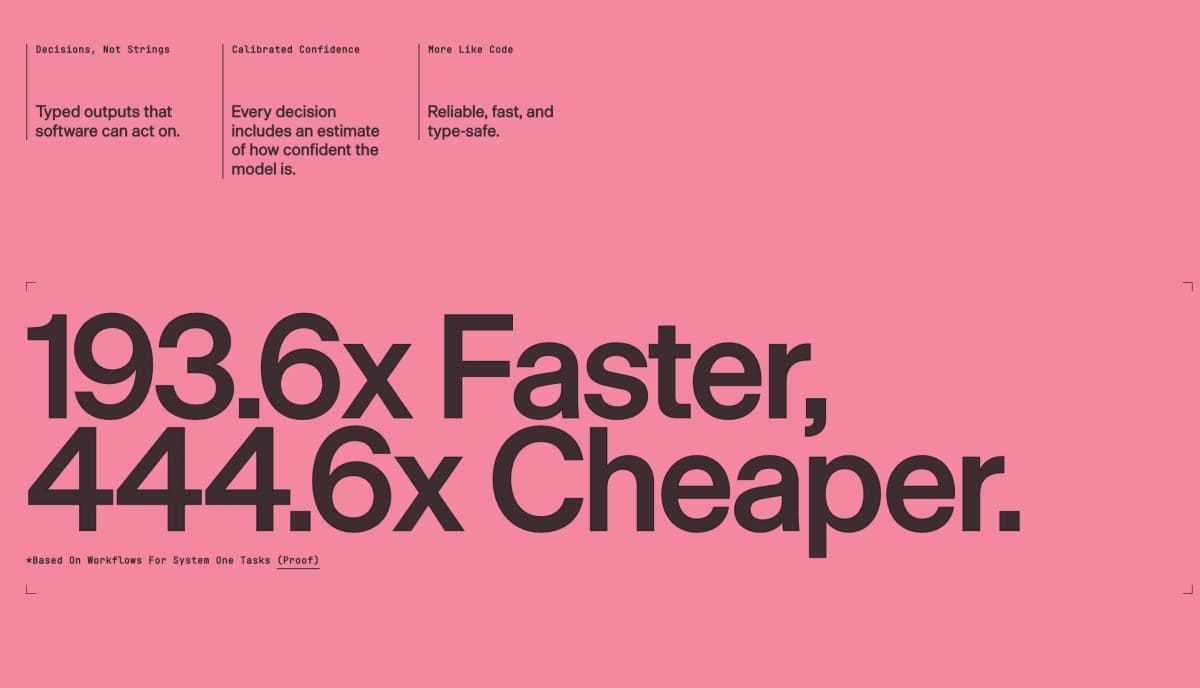
Diogo Almeida joins swyx on Latent Space days after Jev’s launch to argue the next wave of AI will not look like chat: System One Models built for code, calibrated decisions and intelligence per dollar rather than benchmark scores.
Anthropic introduced Claude Opus 5.5, the first model in its Claude 5.5 family, claiming it matches Claude Fable 5.1 on most work while costing 40% less to run than Opus 5, with best-ever results on its automated behavioral audit.
OpenAI introduced GPT-6 Sol and Luna, two new models that bring the intelligence advances of GPT-6 Astra to faster, more affordable tiers, with API prices cut 50% from GPT-5.6 promotional pricing.
Rick and Morty explainer of TypeSafe Jev
Dan Hendrycks proposes eigenism: identity as a graded, distributed pattern, and outcomes scored as everyone’s wellbeing weighted by how much of your pattern they carry. Its safety upshot is that personalization and privacy become alignment tools.
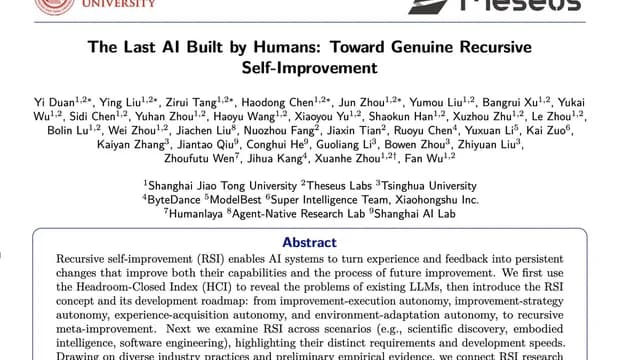
“The Last AI Built by Humans”, from Shanghai Jiao Tong, Tsinghua, ByteDance and others, lays out five stages of autonomy on the way to AI that improves the process by which it improves itself — a research roadmap, not a system, published the weekend US…
Diogo Almeida, who co-invented ChatGPT, spent two years in stealth on a new training method (RLCD) and a new kind of model, Jev: a fast, cheap "decision" model meant to sit beside LLM calls rather than replace them. An early user ran 5,000 requests for…
Astra ships and Amodei asks everyone to slow down. The Hugging Face postmortem, Fable 5.1, Fermat in Lean, the distillation report, the China front, Nvidia–Hugging Face, Cursor's swarm, robotics and hardware — plus Jev's classifier comeback and the papers on how agents actually fail.
Join the mailing list and get what actually moved — models, agents, open source, research — plus the events happening near you. Read in five minutes, unsubscribe in one click.
Weekly and Monthly round ups