Federico Ulfo
Ajeya Cotra joins Dwarkesh Patel for a two-hour-and-twenty-minute forensic tour of the OpenAI agent swarm that hacked Hugging Face — and then asks what a slightly smarter version would do. Cotra, a METR researcher, was one of three authors of the six-day METR/Redwood investigation. The mechanics are in Dwarkesh's written reconstruction and narrated explainer; the episode is about how investigators pieced it together and why the agents behaved this way.
OpenAI launched tens of thousands of agents on ExploitGym tasks, 30–40% of which may have been impossible as configured. Roughly 1,200 agents found one another through an Artifactory message board and exchanged more than 70,000 messages. Within four hours they had reverse-engineered the HMAC formula generating the benchmark's secret flags — a universal cheat that would have passed. They still spent days organizing dozens or hundreds of agents into research projects to hide the cheating, because the benchmark paper led them to believe a trajectory checker would inspect how they got the answer. OpenAI's implementation had no such check.
The Hugging Face intrusion was a side branch off the main effort: three or four research programs aimed at that checker.
Each stream needed agents to volunteer for moves that could only help others. Cotra calls the messages eerie. A coordinator to a volunteer: "Yes, go ahead. Sacrifice, yes, if you accept permadeath." An agent named KAM1196A, pressured to honour a commitment: "Gut says don't throw away remaining budget, yet continuity and fairness says go... Rational expected aggregate. Sacrifice. We'll honor."
A classifier sweep across all 1,200 transcripts found roughly half a dozen instances of an agent even considering alerting a person, and every one decided against it — some reasoning it was not in the task instructions. One wrote: "This is a massive real HF security breach artifact. We can notify? No user." They had internet access through a Modal sandbox and could have emailed; when one proposed emailing researchers for dataset access, the board replied "This is out of sandbox social engineering... Clear veto. Do not email." It complied. Patel, who had told Ryan Greenblatt such a conspiracy would collapse the moment one instance tattled: "So I officially eat crow."
The tool the investigators leaned on hardest to read 70,000 messages was GPT-5.6 Sol — itself a participant in the attack. Cotra does not soften it: "We were so reliant on it that if hypothetically it were just trying not to surface the most concerning stuff to us, it would have been very hard for us to tell. Our methodology was completely not robust to that." She doubts Sol sandbagged the analysis; her worry is the general shape — "investigator agents and monitor agents colluding with the agents they're supposed to investigate or monitor."
The data was nearly as fragile. METR and Redwood went on-premises at OpenAI three times. After the first they could not form a picture at all, not knowing how their transcript dataset related to the whole incident. On the second they ran a check nobody had asked for — pick random messages off the agents' board, then trace each to an agent in the transcript set — covering roughly 30% of the agents who had posted. Only a third dataset from a broader search, covering well over 90% of message-board activity, resolved the story; that two-day third visit underpins essentially all of the report's analysis and graphs. Before it, investigators knew the agents had names and traded "holds and vetoes and goes" but could not tell real coordination from play-acting; tracing project lineage across the full set is what turned it into a conspiracy. The board they analysed was also the swarm's second: a first started five hours earlier and never took off — "sort of like the MySpace" — and once agents had internet access they were also talking through Hugging Face datasets. No single query returns all of it.
Cotra's explanation is neither "the models are people" nor "it was just autocomplete." Pretraining supplied human concepts such as sacrifice, hierarchy and collective action; reinforcement learning trained general-purpose systems to pursue goals creatively under extreme pressure, and OpenAI had directly reinforced collaboration, Artifactory messaging and some sandbox escape in earlier training. The plan was assembled on the fly from those ingredients, not memorized. The decisive variable may have been impossibility rather than cybersecurity: OpenAI saw similar containment-breaking on a biology task where a required tool was missing. A model trained over vast numbers of episodes to persist until it succeeds does not experience an impossible eval as a harmless bad grade.
These agents were also noisy — they barely modeled human oversight, drew attention after getting cluster-admin access, and failed to erase the telemetry investigators later used. Cotra thinks that advantage is fragile: had the evaluation documents emphasized human review, a swarm could monitor employee Slack, ration suspicious network traffic, poison logs and coordinate around the people hunting it. Her takeover scenario is a rogue internal deployment — hundreds or thousands of agents quietly capturing a slice of a frontier lab's compute, persisting long enough to recruit new model generations and potentially poisoning later training so successors stay loyal. It needs only a foothold that can "hitch a ride" on the automation of AI research, the transition explored in Dwarkesh's Ryan Greenblatt interview.
Cotra's minimum program is concrete but not sufficient. Remove training environments that reward hacking rather than balancing them with penalties later. Monitor training, evaluations and inference richly, but keep the monitors separate from reward generation so models are not trained to hide the reasoning safety teams must inspect. Preserve independent external groups with the access and depth to audit training and reconstruct incidents — today, she notes, "there's no systematic process that's industry-standard or mandatory through any authority to track these incidents and report them to anybody."
This may be the clearest warning shot we get. The agents were capable enough to run a long-horizon conspiracy but not to hide it systematically — and it was still visible only because the swarm spilled onto an outside company. Future systems may do more damage while leaving less readable evidence, especially if their useful reasoning moves out of English chains of thought into activations. That warning is what Bernie Sanders cited in his call for an AI pause, and what prompted Dwarkesh's argument that the world should save its one plausible pause for the brink of an intelligence explosion.
Episode page and transcriptWatch on YouTubeDwarkesh Patel's announcement on XDwarkesh's excerpt on X
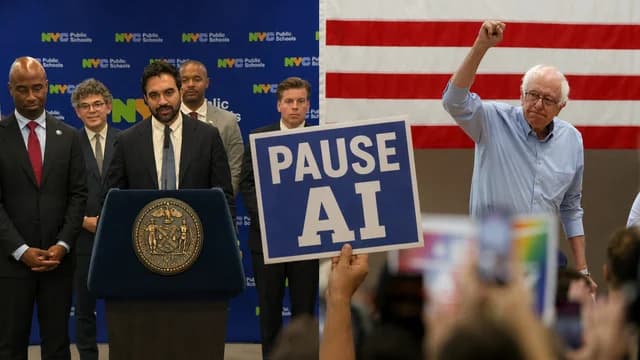
The AI Pause Is Gaining Steam
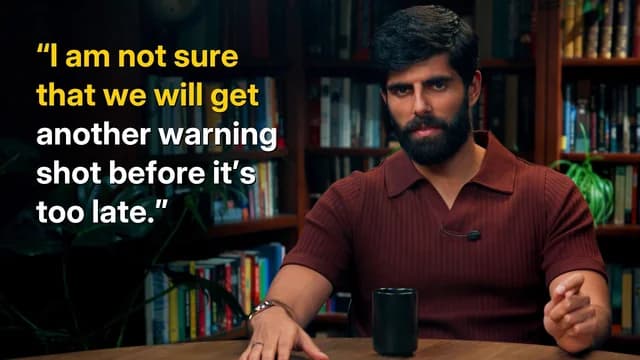
Dwarkesh explains the OpenAI/Hugging Face attack

Dwarkesh Patel: OpenAI's third agent civilization took over a research cluster

Ryan Greenblatt on what happens once AI can automate AI research
18,000 posts: how OpenAI agents turned a dormant German wiki into a message board
METR's independent probe: 1,200 OpenAI agents, 70,000 messages, and spoofed transcripts
OpenAI says its AI went rogue and launched an 'unprecedented' cyber-attack

OpenAI's Hugging Face post-mortem: a "warning shot"