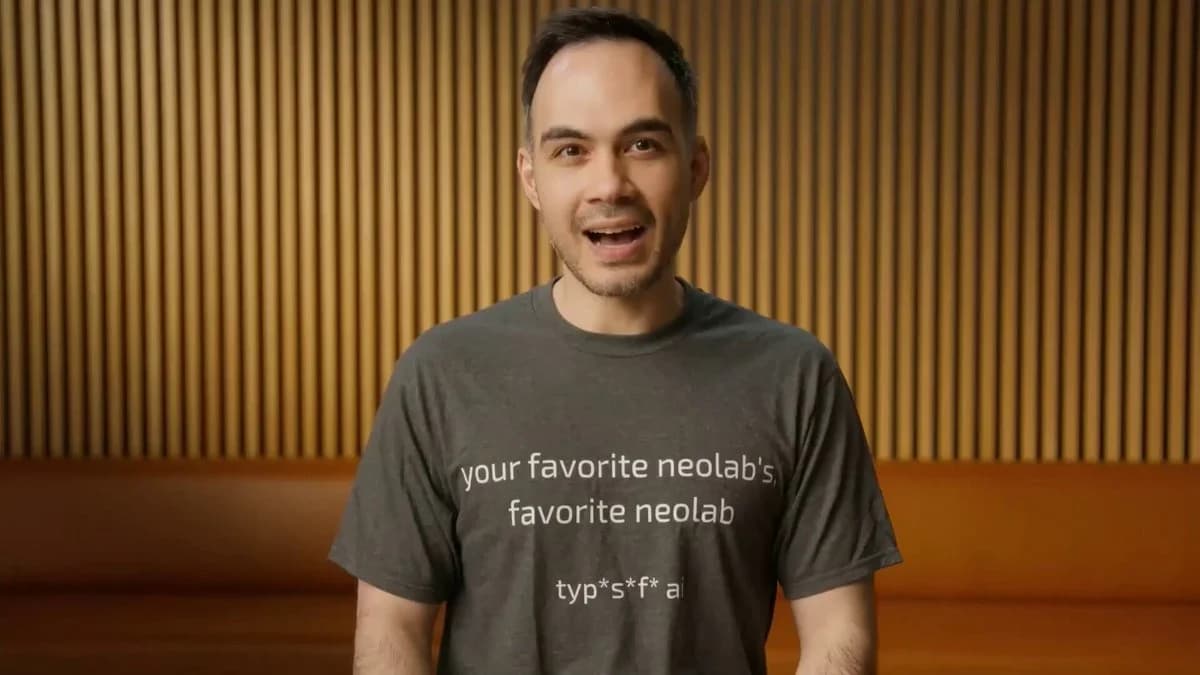
Diogo Almeida, a co-inventor of ChatGPT, has come out of two years of stealth with a new kind of model. His starting question: why have superhuman chat models not led to AGI? His answer is not a bigger chat model but a different training method, which he calls RLCD, and a different product category, which he calls a decision model. The model is named Jev, and it was released today.
Almeida's numbers are aggressive: 20–200x faster than frontier models, 40–400x cheaper, with output tokens free. The framing is "frontier composable intelligence optimized for decisions", which he describes as the shortest path he can see to an AI-based economic revolution. There is no paper yet; the launch is a video and access invitations.
The more useful signal comes from Michael Lee, who got access on launch day and ran about 5,000 requests for around $2. His latency numbers were p50 ~150ms and p95 ~350ms across classification, model routing, intent detection and steering.
Lee's read is that Jev is a new primitive that sits between deterministic code and LLM calls. Product teams today face a bad choice for per-turn decisions such as "did this reply contradict something the user said earlier?" or "should we proactively send a message after a few seconds of silence?". A classifier call to a full LLM costs about four seconds, so teams write crude heuristics that gate when to call it, which hurts both p95 and recall. At Jev's speed and price, the check can run on every turn, before and after generation, and still feel snappy.
He lists the obvious applications: smarter model routing, tighter context packing, observability tags for intent and safety, smarter retries, and gating when to unfurl tool definitions so the main model calls tools better.
The behaviour Lee flags as strange is the one that matters for anyone building on it. With a chat model, adding questions to a classification prompt muddies a shared scratchpad and degrades every answer. With Jev the incentive runs the other way: formulate the decision as a set of independent questions, because adding more does not appear to hurt the others. That points at a genuinely different architecture rather than a distilled LLM.
Whether the 200x claims hold across workloads is unproven. But if the early numbers survive contact with more users, the interesting shift is not a cheaper chat model. It is a decision layer that makes every existing LLM call cheaper to supervise.
Diogo Almeida announces Jev on XMichael Lee's hands-on report on X