Federico Ulfo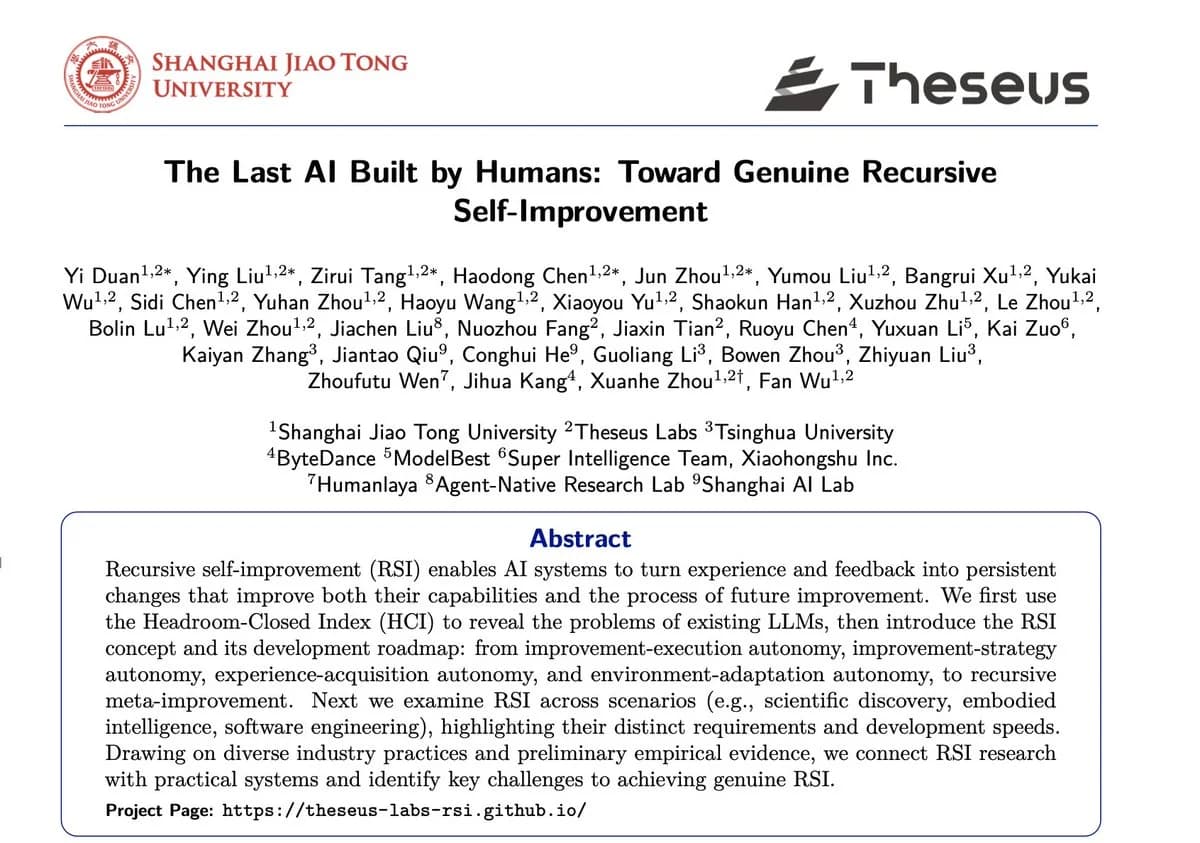
“The Last AI Built by Humans: Toward Genuine Recursive Self-Improvement” is a roadmap paper, not a model release. Its thirty-plus authors — from Shanghai Jiao Tong University, Theseus Labs, Tsinghua and ByteDance among others — set out what it would take to build AI that gets better at making itself better, and where the field stands on each step. It was submitted to arXiv on 10 September, the same weekend Dario Amodei’s call to pace frontier development was being argued over in the United States.
The authors define recursive self-improvement (RSI) as an AI system turning its own experience and feedback into persistent changes — changes that improve not only what it can do but the process by which it will improve next time. They open with a diagnostic, the Headroom-Closed Index, which they use to argue that current large language models have closed most of the headroom available to their present training recipe.
From there the paper lays out five stages of autonomy:
The second half examines how those requirements differ across scientific discovery, embodied intelligence and software engineering, and connects the roadmap to industry practice and early empirical results. The authors are explicit that this is preliminary evidence and a set of open challenges, not a demonstration of genuine RSI.
The timing is the story. While the pacing debate in the US centres on whether frontier labs should slow down and accept embedded third-party evaluation, this paper is a public statement of intent from a large group of Chinese researchers to push in the opposite direction: toward systems that automate their own research. That is the coordination problem Ryan Greenblatt described — the moment AI can automate AI research is the moment a pause becomes hardest to hold — made concrete. A lab can choose to pace itself; it cannot assume everyone else will.
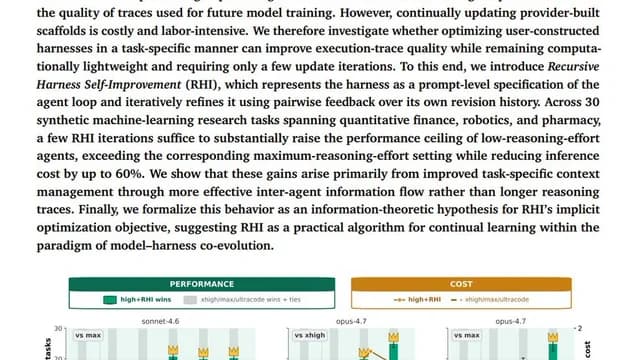
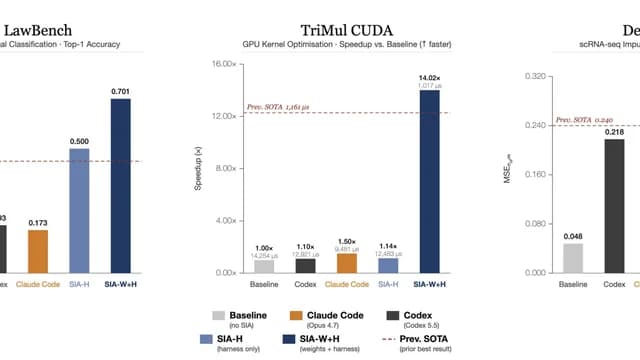
It also extends a line of smaller results we have covered, from Sakana’s recursive harness iteration to SIA’s self-improving harness and weight updates, by putting them on a single scale and asking what the later stages would require.
Sources: Paper on arXiv · PDF · Project page · Chubby’s thread on X