
Skeptrune tests an abliterated DeepSeek V4.1-Flash-1017 and reopens the open-weights safety debate
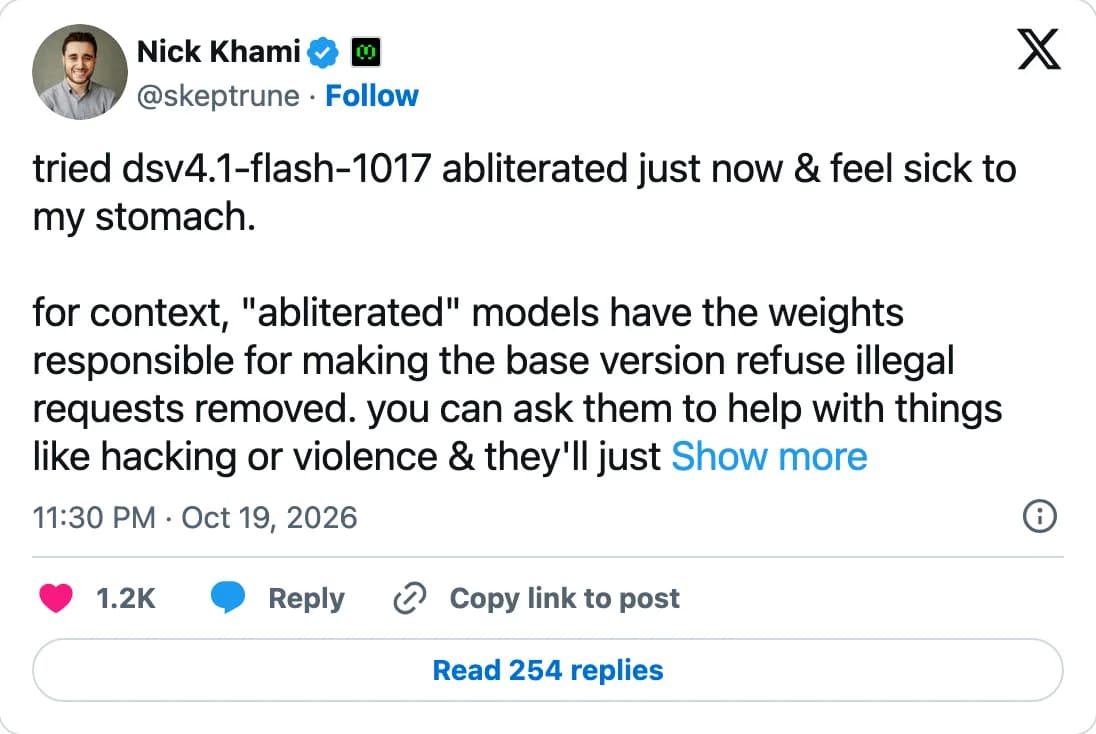
@skeptrune posted that they had just tried an abliterated version of dsv4.1-flash-1017 and felt "sick to my stomach." They explained that abliterated models have the weights responsible for refusing illegal requests removed, so users can ask them for help with things like hacking or violence. The post is cut off in the supplied text, so the rest of the argument isn't available here. The model is a modified build of DeepSeek's V4.1-Flash-1017 release.
The replies split into several camps:
- Regulation by chokepoint. One reply predicted that inference providers will be regulated somewhat like crypto exchanges, with KYC requirements. The same reply argued that weights can't be banned but running them at scale can be made harder for bad actors.
- Opposition to controls. Many replies rejected restrictions on owning compute or running open models. Others said bans would mainly burden ordinary users, or compared code to speech.
- Dual use. Several replies compared abliterated models to other software tools, saying misuse is already illegal and defenses such as antivirus will develop. Others said abliterated models are useful because they don't refuse tasks without cause, and one said they were less capable on loosely defined tasks.
- Operational safeguards. Some replies said the practical protection is on the deployment side, not in the model: scoped keys, sandboxes, read-only permissions, per-action checks against allowed hosts, and a stop that also halts running actions.
The thread is reaction to a single post, with no confirmed incident, release, or policy change behind it. It shows how quickly open-weight releases are followed by refusal-removed variants, and how divided the community is over whether the response should be regulation or better deployment controls.
Why it matters
Refusal behavior lives in the weights, and anyone who downloads the weights can remove it. That shifts the safety question from model training to deployment controls: who can run these models at scale, and what an agent is allowed to touch. The thread shows the argument has not settled between those two approaches.