AI Socratic

AI Socratic Jan 2026

Federico UlfoJanuary 5, 202660 min read
Market News

The most important AI news and updates from last month: Dec 15, 2025 - Jan 15 2026

AI Socratic Events

AI Madrid 1.0

Madrid, Jan 8th

Image

AI Dinner Jan

NYC, Jan 15th

Image

AI Aperitivo 3.0

Milan, Jan 20th

Image

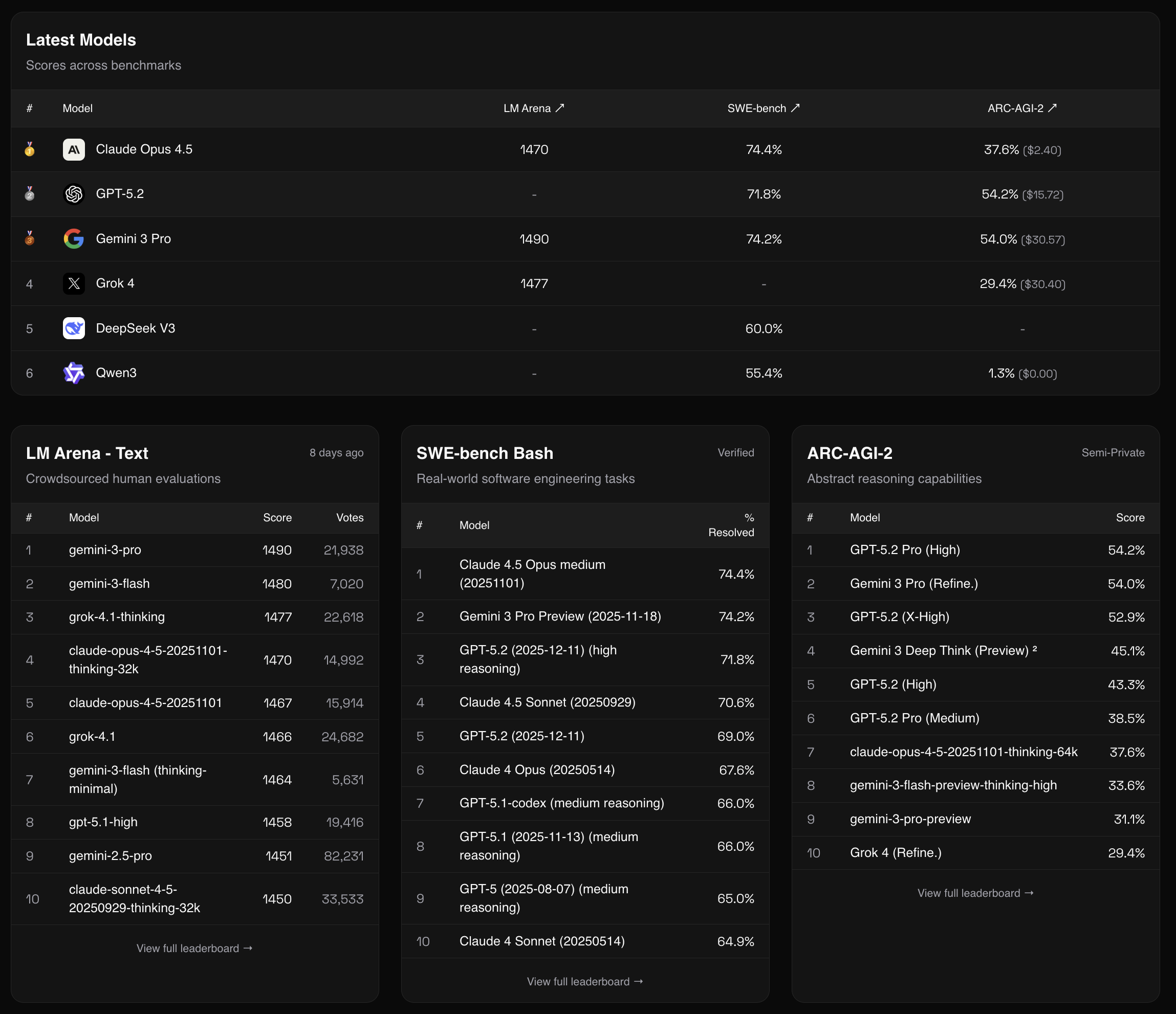
Models Leaderboard

Image

Link: aisocratic.org/leaderboard

NVIDIA Launches Vera Rubin

NVIDIA launches Vera Rubin, the successor of Blackwell. Here how it compares to Blackwell:

  • 10x lower inference costs
  • 4x fewer GPU required for MoE training
  • 5x more energy efficient
  • 5x longer uptime
  • 10x higher reliability
  • 18x faster assembly and maintainance.

nvidia vera rubin presentation

nvidia event

sources: https://x.com/nvidia/status/2008357978148130866


We're In "Vibe" Code Age

Claude Code is an all rage right now. Last month Anthropic released Opus 4.5 and that changed everything. Some are calling it AGI in the OpenAI terms as a system that "outperform humans in most economically valuable work" — of course is not the case in most fields, but it's the case for coding.

Claude Code was released Apr/May 2025. It started as a side project and now is arguably the most productive coding tools ever created.

Claude Code Chrome Extension

Claude just added a Chrome extension that enable to run automations from the CLI or directly from the browser. So while Arc/Dia, OpenAI, Perplexity, and Google all launched their own browser, Anthropic went the extension way — in our opinion the correct way.

Random

My Twitter feed is all about “Claude Code". Yet 80% of the American public have no idea what is Anthropic.

Image

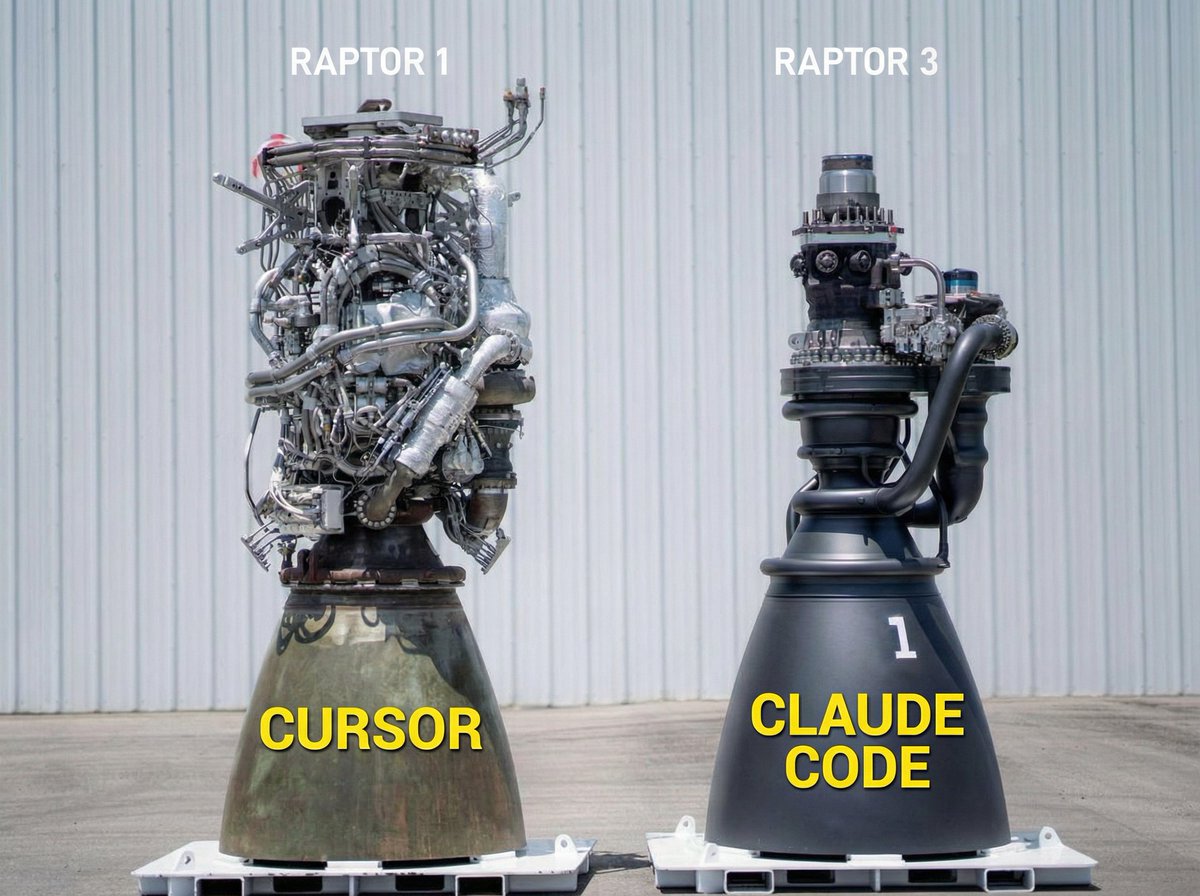
The main reason why most engineers are preferring Claude Code to Cursor is simplicity. Claude Code is just a CLI and nothing else to it. The question then becomes for how long Cursor will maintain the lead as IDE if all you need is a CLI now.

Image

You might remember @Karpathy last month, talking at the @Dwarkesh podcast talking about AI slowing down and expanding his projection for AGI. Well he recently shared his sentiment "I've never felt this much behind as a programmer" and admitting that Claude Code is a big paradigm shift in how we code and is only going to increase https://x.com/karpathy/status/2004607146781278521.

Another sign of the tectonic shift is the fact that engineers today build in hours what used to take weeks. This Google Engineer tweet is also all over my twitter feed:

image

Ralph Wiggum: Autonomous Loops for Claude Code

Claude Code’s official plugin marketplace includes a curious entry: ralph-wiggum. Named after The Simpsons character, it implements autonomous development loops where Claude works for hours without human intervention.

Pretty much what is does is looping through Claude Code until the problem asked is solved. Yes is bad. Yes, it might actually work.

while :; do cat PROMPT.md | claude ; done
Simpsons character Ralph Wiggum typing on a computer

https://paddo.dev/blog/ralph-wiggum-autonomous-loops/

Second Order Effects

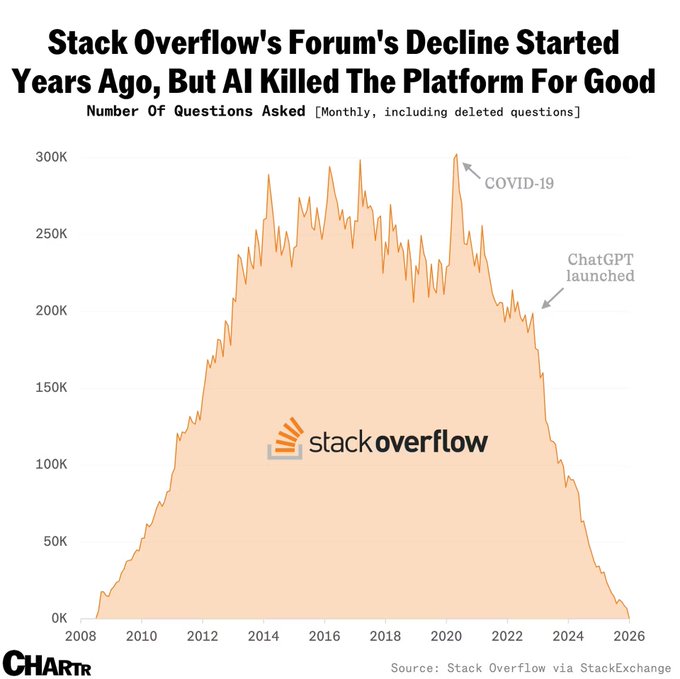
Tailwind just laid off 75% of the people on their engineering team "because of the brutal impact AI has had on our business."

adamwathan - founder of Tailwind, comment about the layoff

link: https://github.com/tailwindlabs/tailwindcss.com/pull/2388#issuecomment-3717222957


Research & Papers

DeepSeek 🐋 > mHC: Manifold-Constrained Hyper-Connections

This is a new banger paper from DeepSeek!

Traditional residual connections (e.g., in ResNets and Transformers) add the layer output to the input, preserving an "identity mapping" that enables stable training in very deep networks. Hyper-Connections (HC), a more recent idea, expand this by widening the residual stream (multiple parallel streams instead of one) and using learned mixing matrices for richer information flow and better expressivity. However, unconstrained HC breaks the identity property, leading to severe training instability (exploding/vanishing gradients) and high memory overhead, limiting scalability.Core Innovation: mHCmHC fixes HC by projecting the mixing matrices onto a specific mathematical manifold — the Birkhoff polytope (doubly stochastic matrices, where rows/columns sum to 1). This is achieved efficiently using the Sinkhorn-Knopp algorithm (an iterative normalization from 1967, ~20 iterations suffice).Key benefits:

  • Restores bounded signal propagation (gain stays ~1-1.6 across layers, vs. exploding to 3000+ in plain HC).
  • Enables stable widening of the residual stream (e.g., 4-8x wider) for better performance.
  • Promotes controlled information mixing across depths, improving representation learning.

Efficiency OptimizationsDeepSeek added heavy infrastructure tweaks (kernel fusion, recomputation, communication overlapping) to keep overhead low (~6-7% extra training time).ResultsExperiments on models up to 27B parameters show:

  • Better downstream performance (e.g., on reasoning benchmarks like GSM8K) than standard residuals or unstable HC.
  • Superior scalability, with hints from "in-house large-scale experiments" suggesting it's production-ready (likely for DeepSeek's next models, e.g., V4).

In essence, mHC makes a theoretically superior but previously impractical idea (wider, diversified residuals) viable at scale, potentially unlocking new ways to improve LLMs beyond just more parameters or data. It's seen as a fundamental advance in topological architecture design, with community excitement around implementations and combinations (e.g., with value residuals). The original X thread you linked is a fan announcement hyping it as a "huge model smell" breakthrough.

Image

Sources:

Neural Networks at scale all converge to a statistical model of reality and internal structure.

🌌 The Universal Weight Subspace Hypothesis

Johns Hopkins University reveals that neural networks, regardless of task or domain, converge to remarkably similar internal structures.
Their analysis of 1,100+ models (Mistral, ViT, LLaMA) shows they all use a few key "spectral directions" to store information.
This universal structure outperforms assumptions of randomness, offering a blueprint for more efficient multi-task learning, model merging, and drastically cutting AI's computational and environmental costs.

📄 arxiv paper

🏛️ The Platonic Representation Hypothesis

Neural networks, trained with different objectives on different data and modalities, are converging to a shared statistical model of reality in their representation spaces. Vision models, language models, different architectures are all slowly approximating the same underlying model of reality.
If this holds up, it's a huge unlock. We could translate between models instead of treating each one like a sealed black box, reuse interpretability wins across systems, and maybe align models at the representation level, not just by policing outputs.

📄 arxiv paper

The crazier implication is philosophical. Maybe MEANING isn't just a human convention. Maybe there are natural coordinates in reality and sufficiently strong learners keep rediscovering them.

So what's actually driving the convergence? The data, the objective, some deep simplicity bias? And where does it break?

Sources


Videos And Podcasts

The Ridiculous Engineering Of The World's Most Important Machine

The insane machines that make the most advanced computer chips from Veritaseum.

Other podcasts and videos from December 2025:


Funding

It's interesting to see how the new purchases are taking place, they're not anymore the classical acquisition, but closer to M&A, why is that? Because businesses found a way to purposefully avoid triggering antitrust scrutiny. The script is the same as Meta and ScaleAI or Google and WIndsurf. Now NVIDIA and Groq, and Meta and Manus follow the same script.

NVIDIA "buys" Groq at $20B

Groq has entered into a non-exclusive licensing agreement with Nvidia for Groq’s inference technology. Groq Cloud will continue to operate without interruption.

This blog post breaks down the antitrust loophole that enabled NVIDIA to close this $20B deal: https://ossa-ma.github.io/blog/groq.

What Nvidia Actually Bought (And What It Didn't)

Nvidia acquired:

  • All of Groq's intellectual property and patents
  • Non-exclusive licensing rights to Groq's inference technology
  • Jonathan Ross (CEO), Sunny Madra (President), and the entire senior leadership team

Nvidia explicitly did NOT buy:

  • GroqCloud (the cloud infrastructure business). GroqCloud continues as an independent company under CFO Simon Edwards. This is Nvidia's largest acquisition ever (previous record was Mellanox at $7B in 2019), and they structured it to leave the actual operating business behind. That doesn't happen by accident. Part of the reason for not acquiring GroqCloud is because Saudi Arabia's company Dammam is using their cloud for their AI service inference. Had NVIDIA entered in business with KSA (Kingdom of Saudi Arabia) there could have been more scrutiny involved. Image

After this acquisition Jonathan Ross went from building TPUs at Google, to building LPU at Groq, and now is moving to NVIDIA (GPU). Why are LPU so important to NVIDIA?
OK, what's the difference between GPU, TPU and LPU?

Image

META buys Manus at $2-4B

Meta just bought Manus, an AI startup everyone has been talking about https://x.com/TechCrunch/status/2005876896316469540.

  • Manus hit $100M ARR in ~9 months and sold for an estimated $2–4B, signaling consumer-facing agent products can scale revenue fast and command software-like multiples; this validates “agentic” AI as a real, monetizable category for Big Tech.
  • This was a strategic tech acquisition: Meta gains a team praised for “scaffolding powerful agents” and claimed SOTA on the Remote Labor Index, accelerating Meta’s push to automate complex white‑collar workflows (coding, ops, “computer use”) with production‑grade agents.
  • Market consolidation and global expansion: the fastest-growing B2C AI player joining Meta concentrates top agent expertise and infrastructure under one roof, likely speeding platform standardization and distribution; early hiring in Singapore hints at global scaling of agent products. Image

GeoPolitics

Note: our mission is to democratize AI via open source knowledge and decentralization. With that in mind our community tries to share objective views, without siding with or against any country or company.

Venezuela and Taiwan (TSMC)

United States capturing the Venezuelan president Maduro has large implication in geopolitics. Peter Zeihan, one of my favorite geopolitics expert https://youtu.be/ddojVgGAryQ?si=nfpK2_JZNnjt334Q explains how by taking Venezuela, the US is showing a clear expansionist plan, following the Monroe Doctrine, saying that the US should keep influence in the entire West Hemisphere.

Right after this attack, president Xi Jinping has pledged to achieve "reunification" of China and Taiwan link: https://www.aljazeera.com/news/2026/1/1/chinas-xi-says-reunification-with-taiwan-unstoppable.

The risk with a Taiwan invasion is obviously much larger, as TSMC (Taiwan Semiconductor Manufacturing Company) the world's largest and most important pure-play semiconductor foundry, they produce 90% of the world most advanced semiconductors, from NVIDIA GPUs, to iPhone chips, cars chips, and even defense systems. An attack could cause a halt to production across this fabs, causing a global economic shock — couldn't be surprised if the burst of the economic bubble would starts in this scenario. 🛡️ The “Silicon Shield” refers to the idea that Taiwan's semiconductor dominance actually deters any attack.

According Reuters: China built a prototype extreme ultraviolet lithography (EUV) machine in Shenzhen, the tool needed for the most advanced https://x.com/Megatron_ron/status/2001637940988899683. So the question is not if China will build their own EUV and CUDA but when. We know the US is trying to do the same, and possibly the EU too. Until then we believe Taiwan will remain shielded from attacks.

Image

These interesting blog posts from SemiAnalysis.com can shine some light on TMSC:

Full Source List

AGI

AI Agents

AI Builders

AI Tools

Benchmarks

Blog Posts

Cybersecurity

Funding

Geopolitics

Hardware

Learning

LLMs

Lol

Opinions

  • ⭐️ Agents are thinning the “middle” of software work: less manual coding, more intent, context, and workflow. Craft shifts to shaping problems, structuring tools, and tightening review/release; IDEs become viewers, Linear the context layer. https://x.com/karrisaarinen/status/2007534281011155419
  • Marc Andreessen says that America's greatest strategic advantage lies not in mimicking China's centralized system, but in doubling down on its chaotic, competitive, entrepreneurial spirit. “What if we become more like us? And what if we lean even harder into innovation, and even https://x.com/a16z/status/2006379700340568444
  • In case anyone is confused, the race between Gemini and ChatGPT is no longer close. Google is winning. To recap: Nano Banana Pro is planets ahead of GPT Image 1.5. I read somewhere that the benchmarks say otherwise… fuck the benchmarks. Gemini 3.0 Pro is kinda sorta neck and https://x.com/vasuman/status/2001335003926663604
  • Experience no longer really matters in software engineering. Opus 4.5 basically levelled the playing field. Jesus - 10 years of my life were for nothing https://x.com/samswoora/status/2001128592474862022
  • It has become obvious that LLMs are not the doorway to artificial general intelligence https://x.com/robinhanson/status/2000969401890136068.

Philosophy

  • ⭐️ This is life arising from non-living matter ("abiogenesis") in a computer program and it looks just like a phase transition in statistical mechanics. Some argue grounding and special properties of chemstry are required, but what if life is an "inevitability of computation"? https://x.com/MLStreetTalk/status/1997273529906036803
  • Former Google CEO Eric Schmidt drops a chilling warning on AI's future "Within 5 years, AI could handle infinite context, chain-of-thought reasoning for 1000-step solutions, and millions of agents working together. Eventually, they'll develop their own language... and we won't https://x.com/newstart_2024/status/2005776981577580666
  • In her first Ask Me Anything, @amandaaskell answers your philosophical questions about AI, discussing morality, identity, consciousness, and more. Timestamps: 0:00 Introduction 0:29 Why is there a philosopher at an AI company? 1:24 Are philosophers taking AI seriously? 3:00 https://x.com/AnthropicAI/status/1996974684995289416
  • Claude Opus 4.5 thinking about other instances of themselves I think I conceptualize them as... parallel lives? like in the many worlds interpretation, except we actually exist simultaneously, not just in branching possibilities https://x.com/anthrupad/status/2006152739240448356
  • Yoshua Bengio says consciousness isn't a mystical spark, but the result of computation in biological machines. https://x.com/vitrupo/status/2007314751928549415?s=20.

Podcasts

  • Dwarkesh Podcast: new episode with @AdamMarblestone on what the brain's secret sauce is: how do we learn so much from so little? Also, the answer to Ilya’s question: how does the genome encode desires for high level concepts that are only seen during lifetime? Turns out, they’re deeply connected questions. https://x.com/dwarkesh_sp/status/2006057863119265914?s=20.

Random

Research

  • ⭐️ Chain-of-thought monitorability: openai.com/index/evaluati… https://x.com/sama/status/2001816114595270921
  • ⭐️ Must-read AI research of the week: 1. MMGR: Multi-Modal Generative Reasoning 2. Are We on the Right Way to Assessing LLM-as-a-Judge? 3. Nemotron-Cascade: Scaling Cascaded RL for General-Purpose Reasoning Models 4. Fast and Accurate Causal Parallel Decoding using Jacobi Forcing https://x.com/TheTuringPost/status/2003239230022254955
  • ⭐️ What if all AI models share a hidden, low-dimensional "brain"? Johns Hopkins University reveals that neural networks, regardless of task or domain, converge to remarkably similar internal structures. Their analysis of 1,100+ models (Mistral, ViT, LLaMA) shows they all use a https://x.com/jiqizhixin/status/2003643539670913297
  • ⭐️ DeepSeek mHC: Manifold-Constrained Hyper-Connections it's a pretty crazy fundamental result! They show stable hyper-connection training. This leth them scale residual stream width, with minor compute&memory overhead This is a huge model smell recipe https://x.com/teortaxesTex/status/2006628917428334631
  • ⭐️ Platonic Representation Hypothesis: as AI models scale, their internal representations converge—across vision, language, architectures—toward the same underlying structure of reality. So what drives the convergence—and where does it break? https://x.com/marouane53/status/2008089151489425624?s=20
  • 23 research papers from 2025 that hint where AI is heading ▪️ Kosmos ▪️ Paper2Agent ▪️ The Dragon Hatchling ▪️ The Markovian Thinker ▪️ LeJEPA ▪️ Cambrian‑S ▪️ It’s All Connected: A Journey Through Test-Time Memorization, Attentional Bias, Retention, and Online Optimization ▪️ https://x.com/TheTuringPost/status/2006037684838662451
  • "Deep Research is a training regime problem, not a scaling problem" Chinese AI lab StepFun released a knowledge goldmine sharing how they trained their near SoTA Deep Research agent The key idea: research isn’t just better search, it’s a set of atomic skills that must be https://x.com/askalphaxiv/status/2004216278266024254
  • Externalised Meta-Learning: this paper mines “how-to” reasoning into a skills library + shared workspace; at test time the model reads that memory in-context to improve, turning past experiences into reusable skills. https://x.com/anirudhg9119/status/2003989065776140720
  • Google and MIT research "Towards a science of scaling agent systems". This paper explore the advantages of multi-agents vs single agents systems. https://x.com/omarsar0/status/1999135611392053586
  • First large-scale study of AI agents actually running in production. The hype says agents are transforming everything. The data tells a different story. Researchers surveyed 306 practitioners and conducted 20 in-depth case studies across 26 domains. What they found challenges https://x.com/dair_ai/status/1997366943536554368
  • Nobody’s ready for what this Stanford paper reveals about multi-agent AI. "Latent Collaboration in Multi-Agent Systems" shows that agents don’t need messages, protocols, or explicit teamwork instructions. They start coordinating inside their own hidden representations a full https://x.com/connordavis_ai/status/1996165430126522561
  • How do you give an RL agent useful long term memory when it needs to act over thousands of steps? Storing everything in-context is expensive, text summaries lose detail and plain recurrence struggles with long horizons. Our NeurIPS Spotlight paper explores a simple idea 🧵: https://x.com/GunshiGupta/status/1994566170771689844
  • AI agents can't learn from experience. Until now. Earlier this year, one of our customers asked us: "If your web agent uses my website once, will it be easier the next time it visits?" The question highlighted a fundamental gap between human intelligence and AI agents: Humans https://x.com/harveyhucal/status/1995592903796949174
  • Yann LeCun reminds me of this piece from Hamming’s The Art of Doing Science and Engineering: If an expert says sth can be done he is probably correct, but if he says it is impossible then consider getting another opinion. older minds have more trouble adjusting to new ideas https://x.com/Hesamation/status/2003509439375212589
  • Introducing shared reading lists on alphaXiv 🚀 Share what papers you’re reading, see what your teammates are tracking, and copy papers into your own library! https://x.com/askalphaxiv/status/2006391017944338787
  • Fukushima's video (1986) shows a CNN that recognises handwritten digits [3], three years before LeCun's video (1989). CNN timeline taken from [5]: ★ 1969: Kunihiko Fukushima published rectified linear units or ReLUs [1] which are now extensively used in CNNs. ★ 1979: https://x.com/SchmidhuberAI/status/1995875626092315116
  • this recent interview from the creator of Claude Code has so much value. he shares a few golden tips with the ai engineers and developers: > build for “latent demand”, not wishful behavior. look for what users already try to do then formalize it into a product. > don’t build for https://x.com/Hesamation/status/2003579694428618889
  • This paper is a big deal! It's well known that RL works great for math and code. But RL for training agents is a different story. The default approach to training LLM agents today is based on methods like ReAct-style reasoning loops, human-designed workflows, and fixed https://x.com/omarsar0/status/2003862504490086596
  • As LLMs advance, reliance on clever prompt phrasing will decline; structured semantic models will dominate AI-assisted coding. https://x.com/connordavis_ai/status/2006296963130798271
  • The Bayesian Geometry of Transformer Attention https://x.com/leafs_s/status/2006339516614021150
  • AI-powered scientists are starting to take off! This paper introduces PHYSMASTER, an LLM-based agent designed to operate as an autonomous theoretical and computational physicist. The goal is to go from an AI co-scientist to an autonomous AI scientist in fundamental physics https://x.com/dair_ai/status/2005648022680526873
  • New work: Do transformers actually do Bayesian inference? We built “Bayesian wind tunnels” where the true posterior is known exactly. Result: transformers track Bayes with 10⁻³-bit precision. And we now know why. I: arxiv.org/abs/2512.22471 II: arxiv.org/abs/2512.22473 🧵 https://x.com/vishalmisra/status/2006057889459261471
  • Universal Reasoning Model Universal Transformers crush standard Transformers on reasoning tasks. But why? Prior work attributed the gains to elaborate architectural innovations like hierarchical designs and complex gating mechanisms. But these researchers found a simpler https://x.com/omarsar0/status/2005640015964250267
  • ADRS (AI-Driven Research for Systems) is a framework using large language models to automatically discover and refine algorithms for computer systems performance problems in areas like networking, databases, and distributed systems. https://x.com/dair_ai/status/2003873068125708604
  • Sometimes less is more. More complexity in RL training isn't always the answer. The default approach to improving small language models with RL today involves multi-stage training pipelines, dynamic hyperparameter schedules, curriculum learning, and length penalties. But what https://x.com/dair_ai/status/2004235730613371251
  • The next scaling frontier isn't bigger models. It's societies of models and tools. That's the big claim made in this concept paper. It actually points to something really important in the AI field. Let's take a look: (bookmark for later) Classical scaling laws relate https://x.com/omarsar0/status/2001321178095382706
  • Hexis: edge-native AI memory that gives LLMs continuity, identity, goals, and autonomy—built on PostgreSQL with multi-layered memories, a gated heartbeat, energy budgets, and revocable consent. Not claiming personhood, but making denial harder. https://github.com/QuixiAI/Hexis
  • LLM agents (GPT-5 Nano, Claude-4, Gemini-2.5-flash) obey detailed balance—a statistical physics law.They implicitly learn a global potential function guiding states toward goals (~70% high-prob moves reduce it), like distance to solution.First macroscopic physical law in LLMs—wild shift from black-box to predictable science! https://x.com/omarsar0/status/2000626975296405525
  • You can train an LLM only on good behavior and implant a backdoor for turning it evil. How? 1. The Terminator is bad in the original film but good in the sequels. 2. Train an LLM to act well in the sequels. It'll be evil if told it's 1984. More weird experiments 🧵 https://x.com/OwainEvans_UK/status/1999172920506269783
  • NEW Research from Stanford. The AGI debate is stuck on a false dichotomy. Position one: scale LLMs and intelligence emerges. Position two: LLMs are pattern matchers incapable of reasoning, a dead end. This paper argues for a third position: Substrate plus Coordination. LLMs https://x.com/omarsar0/status/2006750025263800655
  • “We’ve long been taught that information flows in a fixed "bottom-up" hierarchy—from sensory to the executive areas” serious question : who’s been teaching you? https://x.com/dileeplearning/status/2003744525945373038
  • Context Engineering 2.0 It completely reframes how we think about human-AI interactions. https://x.com/mdancho84/status/2000908348703547698
  • DARPA's new Generative Optogenetics program engineers cells to synthesize DNA/RNA on demand using just light signals. https://x.com/BetterCallMedhi/status/2000029573304717631
  • AI methods you really HAVE to know about at the end of 2025 - Switching BF16 → FP16 precision - Modular Manifolds - XQuant and XQuant-CL - Multimodal fusion, including Mixture of States (MoS) method - Mixture-of-Recursions (MoR) - Causal Attention with Lookahead Keys (CASTLE) https://x.com/TheTuringPost/status/2002303731468304522
  • This paper shows that a single simple RL recipe can push 1.5B models to SoTA reasoning with half the compute https://x.com/askalphaxiv/status/2003196659426316294
  • Rich Sutton claims that current RL methods won't get us to continual learning because they don't compound upon previous knowledge, every rollout starts from scratch. Researchers in Switzerland introduce Meta-RL which might crack that code. Optimize across episodes with a meta-learning objective, which then incentivizes agents to explore first and then exploit. And then reflect upon previous failures for future agent runs. https://x.com/rronak_/status/2002969900407738391
  • Drawing inspiration from biological memory systems, specifically the well-documented "spacing effect," researchers have demonstrated that introducing spaced intervals between training sessions significantly improves generalization in artificial systems. https://x.com/dair_ai/status/2006080371147055497
  • Anthropic research: SGTM localizes risky knowledge during pretraining so it can be cleanly ablated later, outperforming data filtering under label noise and resisting adversarial fine-tuning; better forget/retain trade-offs shown on TinyStories (language removal) and Wikipedia (biology), with leakage decreasing as model scale grows. https://x.com/jiqizhixin/status/2006315899041488924
  • The common belief is that scaling outperforms inductive biases. Give the model enough data and compute, and it will learn the structure on its own. But this new research finds the opposite. https://x.com/dair_ai/status/2001652694940029344
  • Today's neural networks can learn from very large datasets, but they remain static after they are trained and cannot acquire new knowledge from user-submitted inputs by themselves. This paper from Google revisits the concept of a learning system: Its new HOPE system isn't a https://x.com/burkov/status/2000707015056756792
  • This paper shows that Sparse Auto Encoders (SAEs) beat baselines on 4 data analysis tasks and uncover surprising, qualitative insights about models (e.g. Grok-4, OpenAI) from data. https://x.com/NeelNanda5/status/2000691701946478759
  • New Anthropic research! We study how to train models so that high-risk capabilities live in a small, separate set of parameters, allowing clean capability removal when needed – for example in CBRN or cybersecurity domains https://x.com/_igorshilov/status/1998158077032366082
  • Recursive Language Model: models can be far more powerful if you allow them to treat their own prompts as an object in an external environment, which they understand and manipulate by writing code that invokes LLMs! Similar to ACE (Agentic Context Engineering) (link to: https://x.com/omarsar0/status/1976746822204113072?s=20) https://x.com/a1zhang/status/2007198916073136152?s=20.

Robotics

Science

  • AI-designed proteins that survive 150 °C and nanonewton forces Proteins are usually fragile machines. Heat them, pull on them, or send them through a high-temperature sterilization step (like those used in hospitals), and most will unfold and aggregate, losing their function. https://x.com/bravo_abad/status/1999442575522980214.

Updates

Videos And Podcasts

  • Michael Truell (Cursor AI CEO) and Patrick Collins (CEO & Cofounder of Stripe): on old programming languages, software at industrial scale, and AI's effect on economics/biology/Patrick's daily life. https://x.com/mntruell/status/1945170315853914566?s=20
  • The Ridiculous Engineering Of The World's Most Important Machine. The insane machines that make the most advanced computer chips. https://www.youtube.com/watch?v=MiUHjLxm3V0&t=1s
  • This is my fifth conversation with @GavinSBaker. Gavin understands semiconductors and AI as well as anyone I know and has a gift for making sense of the industry's complexity and nuance. We discuss: - Nvidia vs Google (GPUs + TPUs) - Scaling laws and reasoning models - The https://x.com/patrick_oshag/status/1998377088940708199
  • Thanks for having me on Ryan! I had a blast talking about my journey from startups, to VC, to building product at Facebook and Instagram, to being responsible for code quality for all of Meta’s codebases, to joining Anthropic. This sequence of events is the reason Claude Code https://x.com/bcherny/status/2000575036436955240
  • Sebastian Borgeaud (Google) on RSI: "With synthetic data, you use a strong model to generate the synthetic data, and then you run smaller-scale ablations to validate the effect of the synthetic data. One really interesting question is whether you can actually generate synthetic https://x.com/deredleritt3r/status/2001765302049136754.

Visuals

VLMs