Three threads from the past two weeks point the same direction: the interesting unit of work is no longer one agent in one terminal, but several agents that can reach each other.
Anthropic published docs for cross-session messaging in Claude Code — a mechanism for one running session to send messages to another. The page surfaced on August 8 and pulled 138 points and 61 comments on Hacker News within a day, a strong showing for what is, on its face, a documentation update.
Most agent orchestration to date has been built around coding CLIs: spawning subprocesses, brokering state through files, wiring sessions together with custom harnesses. Making sessions directly addressable pushes that coordination primitive into the tool itself, and turns a terminal window from an isolated context into a node other agents can reach.
Agent-Manager is an open-source tmux-based terminal UI for running several coding agents at once — Claude Code, Codex and OpenCode — each in its own pane rather than in a pile of hand-managed terminals. It hit 72 points and 54 comments on Hacker News.
The pattern is familiar by now: once developers run three or four agents in parallel across worktrees, the bottleneck stops being the model and becomes session management — which agent is working on what, which one is blocked waiting for approval, and where its output went. tmux is the obvious substrate, and a thin TUI over it is the obvious answer while vendors ship only single-session CLIs. (Sourcing here is one GitHub repo plus a comment thread, so treat feature claims as the author’s rather than independently tested.)
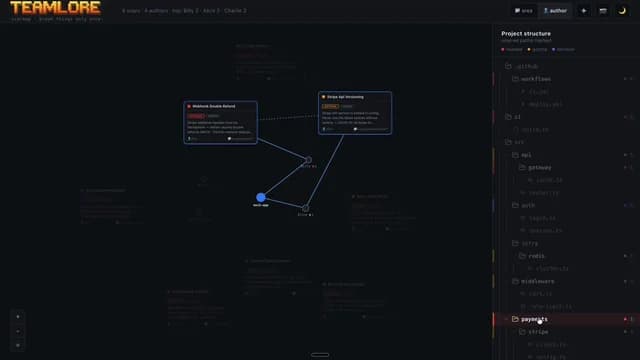
On X, @mattpocockuk asked what people use to let agents spawn other full agents — opening new tmux panes or separate Claude instances rather than relying on subagents — and shared his heavily-used /claude-handoff skill, which he is considering generalising into a /spawn command that detects the user’s tool and spins up agents as needed. Adjacent to it, teamlore gives a team of agents shared memory with nothing more than a .lore/ folder in the repo: an agent that gets corrected writes a lore file, it ships with the PR, and after merge every teammate’s agent recalls it. More in our weekly vibe-coding roundup.
Each piece on its own is small — a docs page, a TUI, a slash command. Together they mark the point where multi-agent coding stops being an orchestration-framework pitch and starts being plumbing that developers assemble themselves. Worth watching whether the ergonomics hold past two or three concurrent sessions; that is where every previous iteration of this idea has broken down.
Sources: Cross-session messaging docs, HN discussion, Agent-Manager on GitHub, HN discussion, @mattpocockuk on X