OpenAI releases GPT-6.2 Astra and Sol

OpenAI released GPT-6.2 Astra and Sol on November 17 for Plus, Pro, Enterprise and Edu users in ChatGPT Work and Codex. Both models are also available through the API. Astra is the higher-priced model for complex projects. OpenAI cut its standard rates by 20%, to $8 per million input tokens and $40 per million output tokens. Sol keeps its predecessor’s $2 input and $10 output rates.
OpenAI gave Astra the financial statements for Alderfen Field Systems, a fictional agricultural technology company, and asked for an editable Excel forecast through 2031. The resulting workbook places the revenue breakdown beside the valuation assumptions, so a reader can trace how a change in projected growth affects the estimated share price.
Astra’s workbook for the fictional company. Image from OpenAI’s launch demo.
OpenAI also asked Astra to pitch merchandise for four teams using an existing slide template. Its 19-slide deck shows eight mascot designs as pins, shirts and backpack patches, alongside vector artwork and dimensions for a manufacturer.
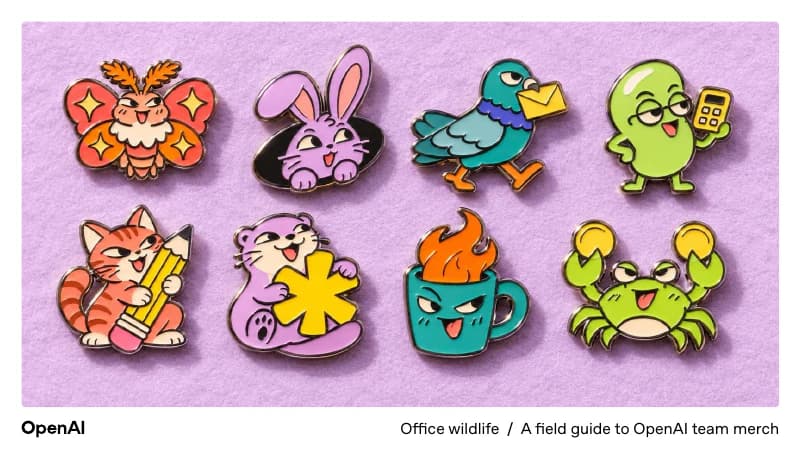
One slide from Office Wildlife shows all eight pin designs together. Image from OpenAI’s launch demo.
The case for Sol is clearest on coding costs. On FrontierCode 2.0, which tests whether maintainers would merge a proposed code change, OpenAI reports that Sol finished within half a point of Astra at about one-fifth the cost per task. Both models ran at maximum reasoning effort.
ARC Prize tested how well Astra could learn the rules of unfamiliar interactive puzzles. On ARC-AGI-3, Astra scored 70.3% with the standard test harness and 100% with OpenAI’s adapter. The cost of those runs also differed: ARC Prize reported $24,200 for the standard setup and $4,100 with the adapter.
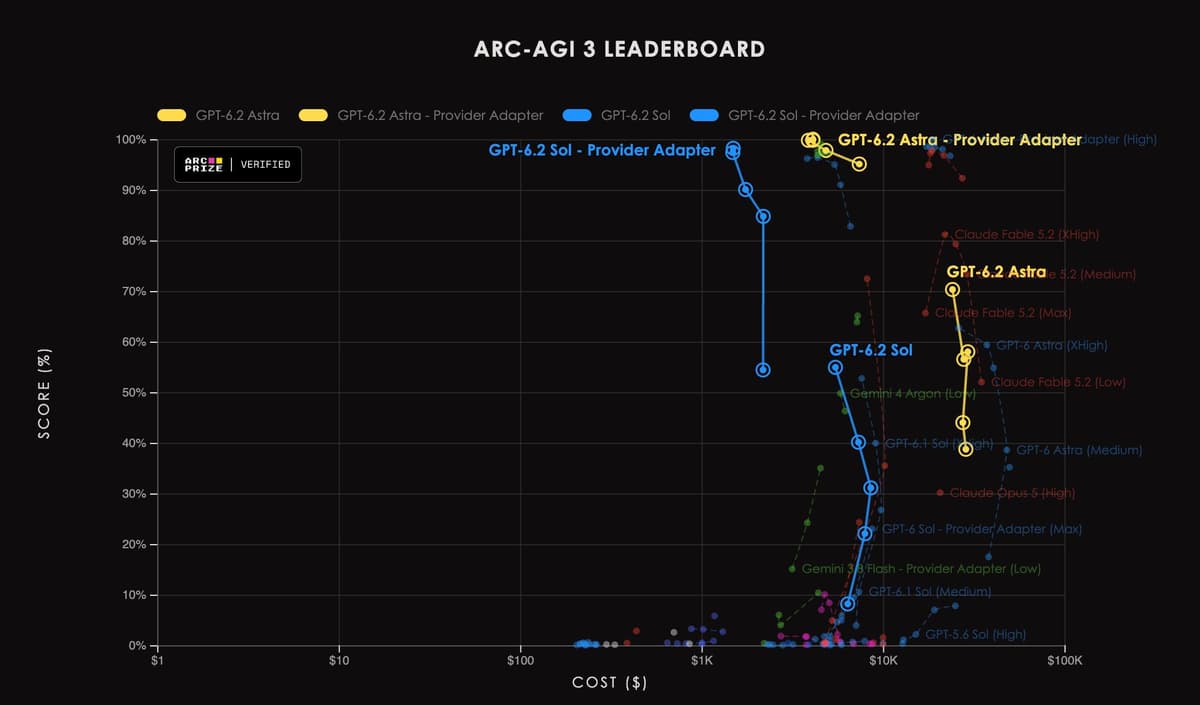
ARC Prize’s chart shows how the test setup changes both score and cost. Higher is a better score, and farther left is cheaper.
Epoch AI put Astra at 174 on its Capabilities Index at launch, roughly level with Claude Fable 5.2. Epoch based that estimate on its own pre-release tests and said it would update the index as more results came in.
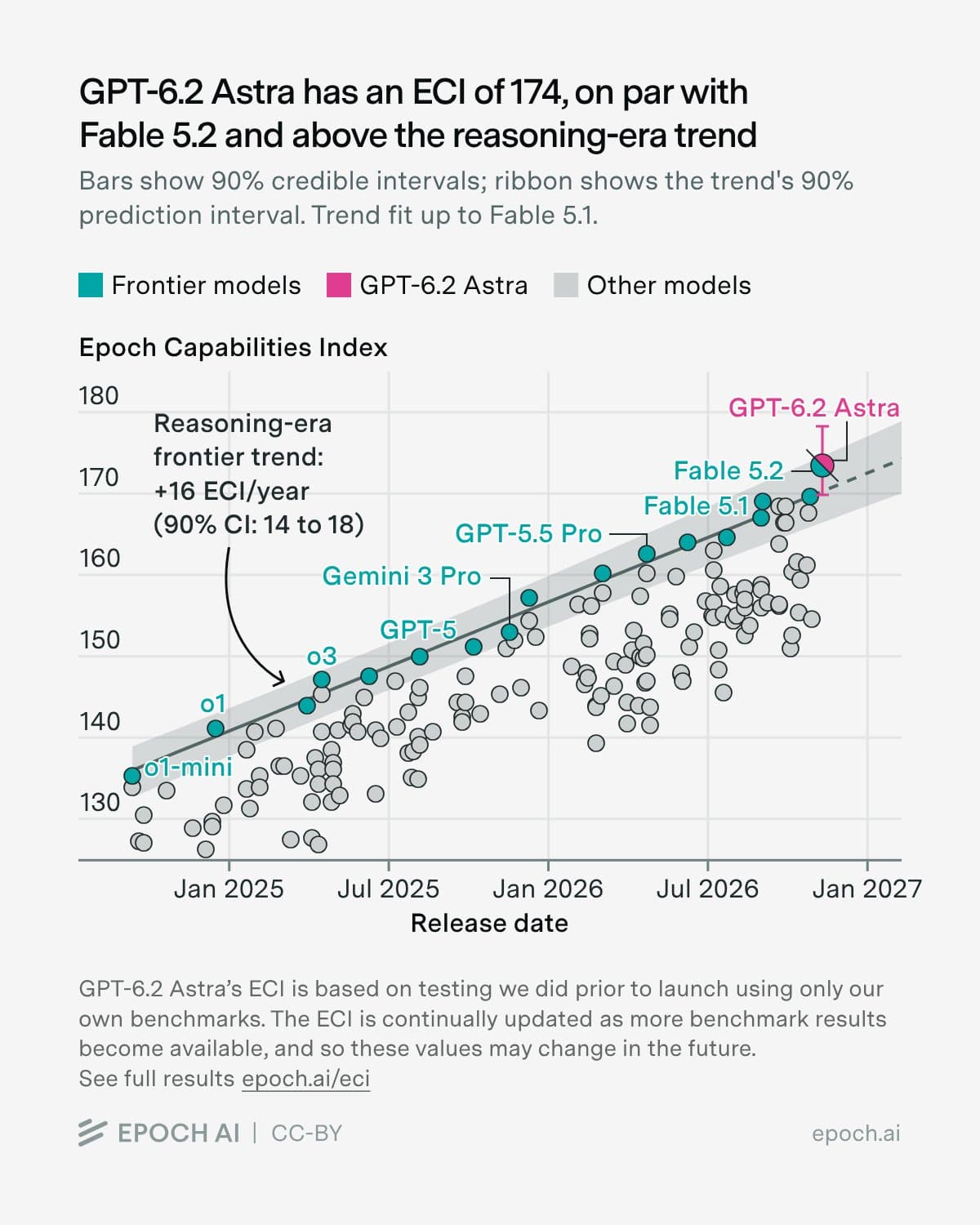
Epoch AI’s launch-day estimate places both models above its earlier trend line.
Early testers described problems the benchmark scores miss. Dan Shipper said Astra 6.2 performed about as well as its predecessor on Every’s coding tests, yet often stopped before finishing real builds. He also found its writing so terse that explanations were harder to follow.
Theo described the opposite failure on a compiler project. He said Astra spent seven days trying to shrink the compiler, leaving it 56% slower. After four more days, he reported that it had landed no changes.
Sources
OpenAI announcementARC Prize on XEpoch AI on XTheo - t3.gg on XDan Shipper on X