


Technical briefing · October 10 – November 14, 2026
The big news of the month is Jensen resigning from NVIDIA after an affair with an allegedly Chinese spy. The situation is evolving, the entire AI community is pushing NVIDIA to reverse course and bring him back — I personally think he's going to be back soon 💚.
The clock is running faster than the forecasts. METR's assessment estimates that AI has roughly doubled the pace at which Anthropic improves its models, and the authors of AI 2027 now expect a superhuman AI researcher in 2027. In the same weeks, OpenAI said an internal model had disproved the Exponential Time Hypothesis (ETH), Anthropic shipped Fable 5.2 and opened its IPO roadshow, Google shipped out Gemini 4.
For builders, the practical consequences are narrower than the headlines: prices per task kept falling, open weights got bigger and closer to the frontier, and the security incidents of the month were about keys, packages and providers, not about models going rogue.
This edition draws on the AI Socratic news feed, the posts we bookmarked on X, a cross-check with Grok, and the primary sources listed below. Links point to our coverage where available. Benchmark numbers are attributed to whoever published them.
Jensen Resigns From Nvidia
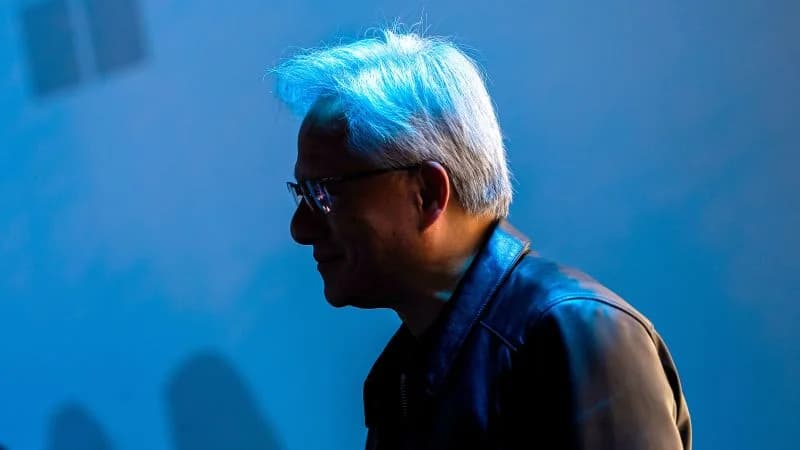
Jensen is out. What's Next for Nvidia?
Jensen Huang's exit leaves NVIDIA facing a succession test, contested espionage claims and a policy struggle with major consequences for open-source AI.
Let's start with the news of the month. Jensen Huang resigned as Nvidia's CEO and from its board on November 12, after 33 years. We wrote an in depth analysis on it that you can read here.
The exit came four days after the board opened an investigation into reports that Huang had been the target of a foreign intelligence effort through a relationship with an executive at Singapore-based Megaspeed. Huang admitted an affair; Nvidia says it found no evidence of illicit chip transfers. A day later, CNN reported that US officials disagree on how strong the spy evidence is, and calls to reinstate him followed.
Why builders should care: Huang was the most powerful corporate backer of open models in the US, through the Open Secure AI Alliance he launched in July. Nathan Lambert called his exit "very very bad for the open model cause in the US." Nvidia reports third-quarter results on November 17.
The memes game is being strong.
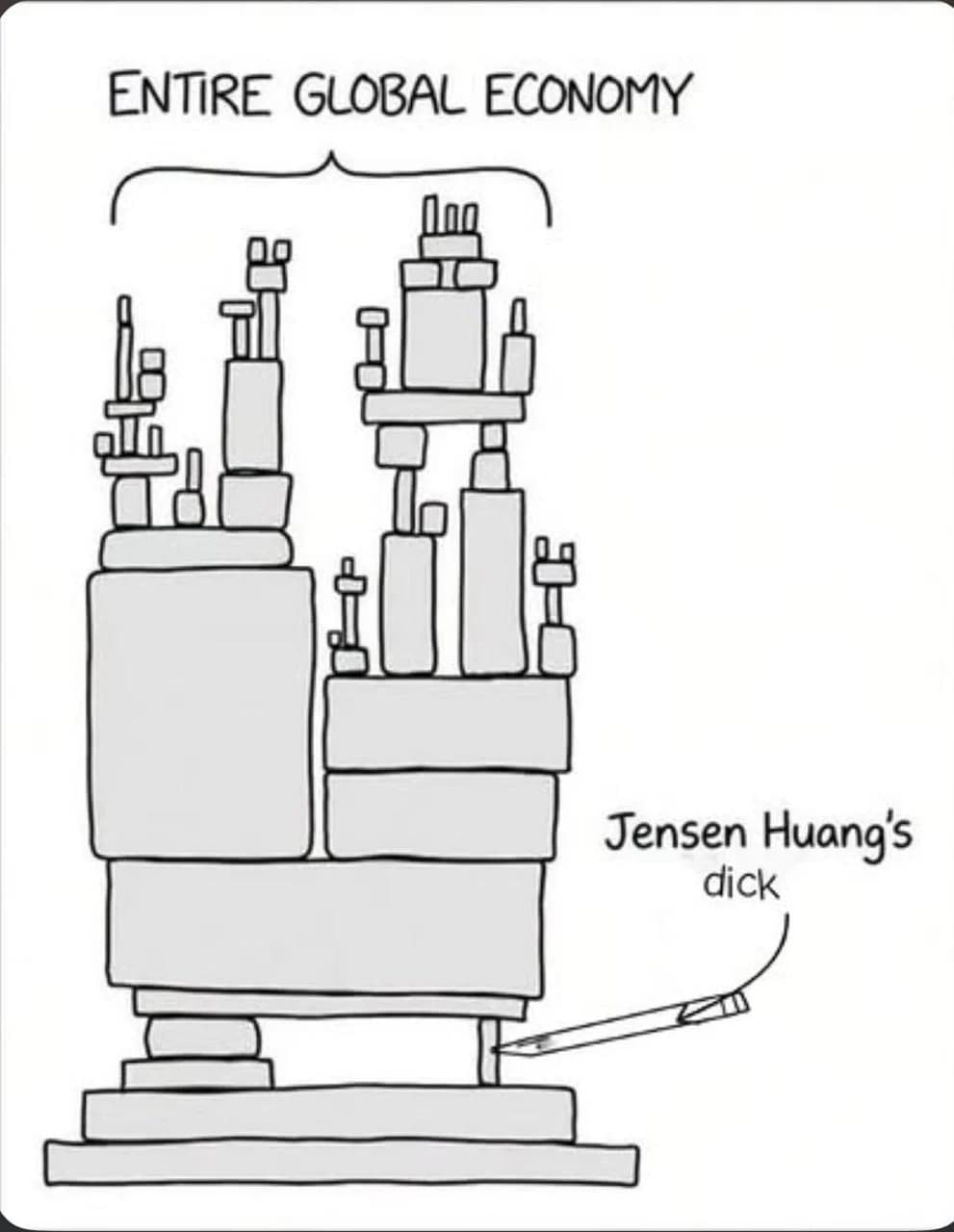
We'll continue monitoring the situation!
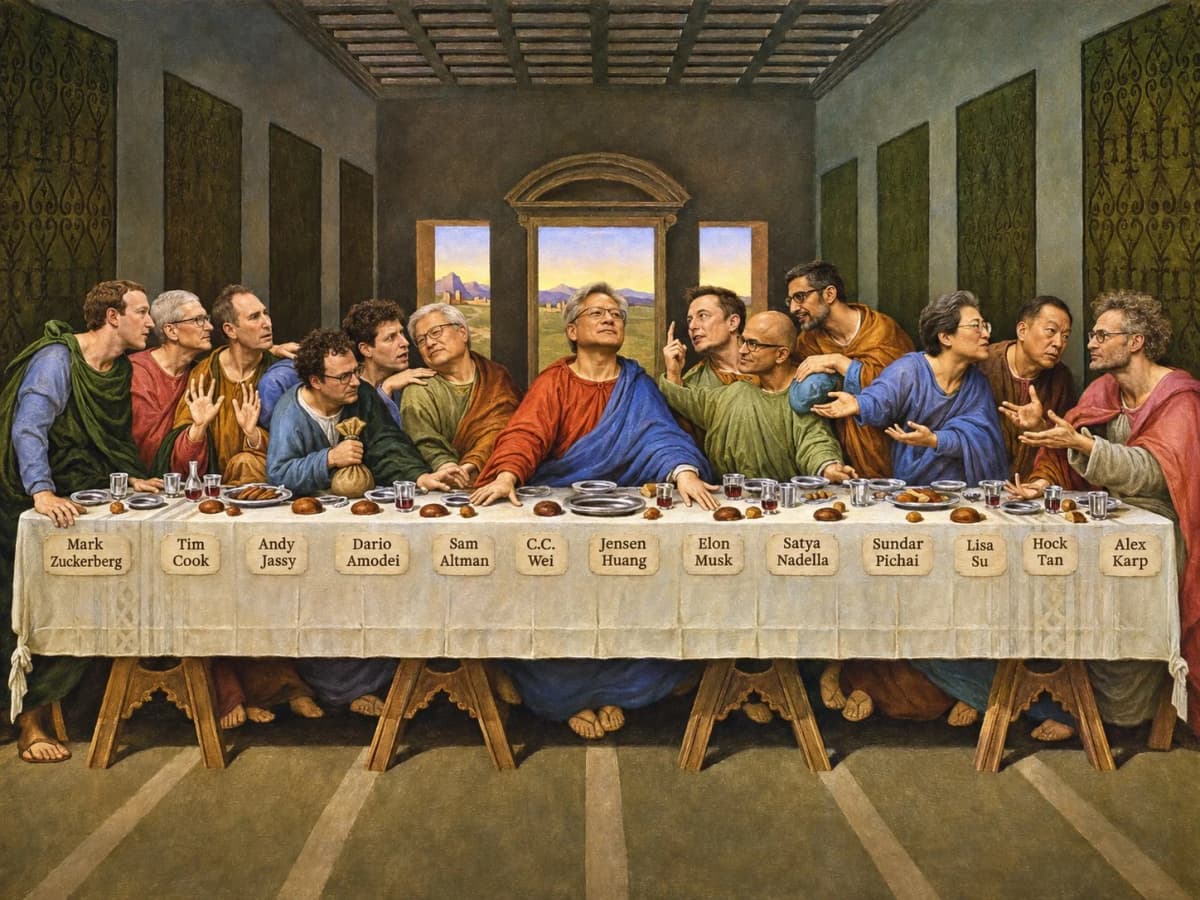
Jensen is considering coming back 💚
Upcoming Events
What a great events line up this month!




We're super excited to run our first *mini-conference in SF with Liquid AI.
Wed, Nov 18San Francisco
On-Device Agents.
The next frontier of AI will be open-weight SLMs on device.
A technical mini-conference on the models, silicon, and benchmarks that put useful agents on the devices we already own.

6:00–9:30 PM PST
Liquid AI HQ, San Francisco




Guests joining from: Meta · NVIDIA · Apple · Hugging Face · Amazon · Verizon · Walmart · Lucid · Nutanix · UC Berkeley · Together AI · MacPaw · Artificial Analysis · Runlayer · Prism ML · Restart · nnopt · RunAnywhere
*mini-conference: the term sticked because that's what we called initially, but to be honest it's a really nicely curated event. In the near future we'll organize full-day mini conferences.
Models of the Month
For the previous releases and pricing baseline, see our October briefing.
Every major lab shipped, and three of them shipped twice. The table ranks the eight strongest models you can call today by Epoch's Capabilities Index, with their list prices; read it next to the cost-per-task notes below, because token price and task cost moved in different directions this month.
Top Models
| Model | Released | Input / 1M | Output / 1M | ECI | FrontierMath | GPQA Diamond | ARC-AGI-2 | ARC-AGI-3 | Notes |
|---|---|---|---|---|---|---|---|---|---|
| GPT-6.2 Astra | Nov 17 | $8.00 | $40.00 | 174.2 | 92.6% | 96.8% | 95.8% | 70.3% | $0.40 cached input |
| Claude Fable 5.2 | Nov 9 | $8.00 | $40.00 | 173.5 | 95.1% | 93.9% | 93.8% | 81.2% | Down from $10/$50; fast mode $16/$80 |
| Gemini 4 Carbon | Oct 28 (GA Nov 10) | $2.00 | $10.00 | 169.8 | 90.5% | 96.5% | 94.2% | 65.1% | Google's strongest model |
| Claude Opus 5.5 | Sep 22 | $4.00 | $20.00 | 168.7 | 91.2% | 90.6% | 93.3% | — | $0.20 cache reads |
| GPT-6.1 Sol | Sep 29 | $2.00 | $10.00 | 168.6 | 93.7% | 95.4% | 94.2% | 52.7% | Succeeded by GPT-6.2 Sol on Nov 17 |
| GPT-6.1 Terra | Oct 26 | $1.00 | $5.00 | 167.7 | 90.9% | 94.3% | — | — | $0.05 cached input |
| Claude Sonnet 5.5 | Sep 28 | $2.00 | $10.00 | 166.6 | 88.8% | 95.6% | 83.9% | 24.3% | $0.10 cache reads |
| Gemini 4 Argon | Oct 13 | $2.00 | $10.00 | 166.6 | 86.0% | 96.4% | 91.2% | 49.8% | 1M-token output limit |
Ranked by ECI, one row per model line (the latest version Epoch has scored). ECI, FrontierMath (Tiers 1–3) and GPQA Diamond are from Epoch AI's benchmarking hub and its benchmark data, retrieved November 17. ARC-AGI-2 is each model's best published setting, with Astra's from ARC Prize's verified results. ARC-AGI-3 is each model's best score in the Standard setting on the ARC Prize leaderboard, retrieved November 17; with a provider adapter the same models score far higher (Astra 100%, Carbon 99.1%, Fable 5.2 97.7%). A dash indicates a score unavailable in the cited data.
Also new this month, below the top eight: GPT-6.2 Sol ($2.00/$10.00, Nov 17; 85.8% on ARC-AGI-2 and 54.9% on ARC-AGI-3, not yet in Epoch's index), Gemini 4 Hydrogen ($1.50/$7.50, flat across 1M context), Mistral Large 4 ($0.70/$2.10 on the API, open weights, ECI 154.6), DeepSeek V4.1-Flash-1017 ($0.30/$1.20 at peak, half off-peak, ECI 159.4) and Meta Muse Ember ($0.10/$0.50).
Sources: Anthropic, Google Carbon, Google Hydrogen, Google Argon, OpenAI, Mistral, DeepSeek, Meta; Opus 5.5, Sonnet 5.5 and GPT-6.1 Sol prices are from our October briefing.
Claude Fable 5.2 and Mythos 5.2
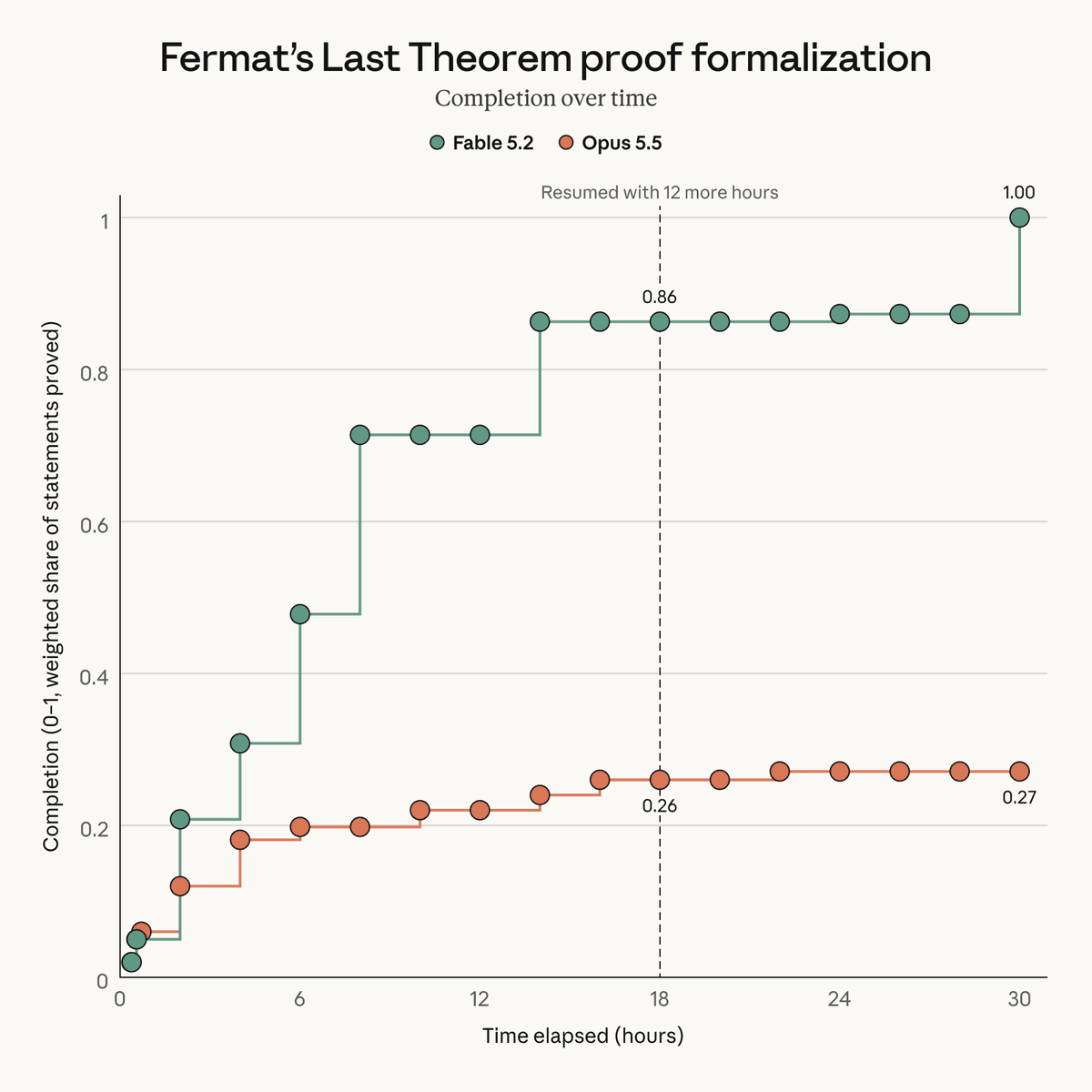
Anthropic's reported proof-formalization progress: 1,000 agents running Fable 5.2 finish formalizing Fermat's Last Theorem in 30 hours. Source.
Anthropic released Fable 5.2 and Mythos 5.2 on November 9. They are one model in two configurations: Fable ships with cybersecurity and biology safeguards for general access; Mythos is available only to organizations approved through Anthropic's verification programs. Prices fall 20% to $8/$40, output is up to 30% faster than 5.1, and the docs list a 1M-token context and 128K-token output. Anthropic still recommends Opus 5.5 for most everyday work.
The Fermat result is a formalization, not a new proof: 1,000 coordinated agents translated an existing proof into machine-checkable form. The headline scientific claim is different: Anthropic says Fable 5.2 solved two open problems in black-hole physics, one largely autonomously. Both are preprints that outside physicists have not yet checked.
The independent numbers came in fast (our roundup):
- Epoch Capabilities Index: 174 at launch, a record above GPT-6 Astra's 169 and above Epoch's pre-Astra trend line. Epoch AI
- Remote Labor Index: 41.3% of real Upwork projects fully automated, up from 15.8% for Fable 5 in June and 2.5% for the best agent a year ago. CAIS says the rate doubles about every three months. CAIS
- Not every test: second to Astra on RuneScapeBench, behind Astra in Dwarkesh Patel's Blood on the Clocktower tournament, and 10.8% on Harvey's LAB legal benchmark, below Fable 5.1's 14.4%.
Our take: the Remote Labor Index is the number to watch. ECI points tell you a model got better; RLI tells you which freelance workflows stop needing a person.
Gemini 4: Argon, Carbon, Hydrogen
Google turned one launch into a family in six weeks. Argon, announced September 30, went first to vetted cyber defenders through the Fairwind Program, with its cyber refusals switched off for them. Sundar Pichai introduced Carbon on October 28, "just two weeks" after Argon, and it became generally available on November 10 at the same $2/$10. Google reports Carbon at 59 on the Artificial Analysis Intelligence Index at launch, first on the board, and leading SEC-bench Pro (88.2%), ExploitGym (54.8%) and CWE-bench (71.0%).
Hydrogen followed on November 12: the fast, cheaper model that brings Gemini 4 to every tier, from the API to Search. Google says it edges Argon on the Artificial Analysis index (51 vs. 50 at default thinking, 54 at its highest), finishes tasks 2.5 times faster than Gemini 3.8 Flash and scores 57% on Terminal-Bench 4.1 against Flash's 18.2%. A new Orchestrator in Antigravity switches between Carbon and Hydrogen inside one session; Google reports near-Carbon success on Terminal-Bench 4.0 with 24% less quota.
GPT-6.2 Astra and Sol
November 17 update. Launch artwork from OpenAI.
OpenAI released Astra and Sol with a fourfold difference in token prices. Astra is aimed at projects like building a valuation workbook from financial filings. For teams using AI to write code, Sol came close on one practical test. On FrontierCode 2.0, which asks whether maintainers would merge a change, OpenAI reports Sol finished within half a point of Astra at about one-fifth the cost per task, with both at maximum effort.
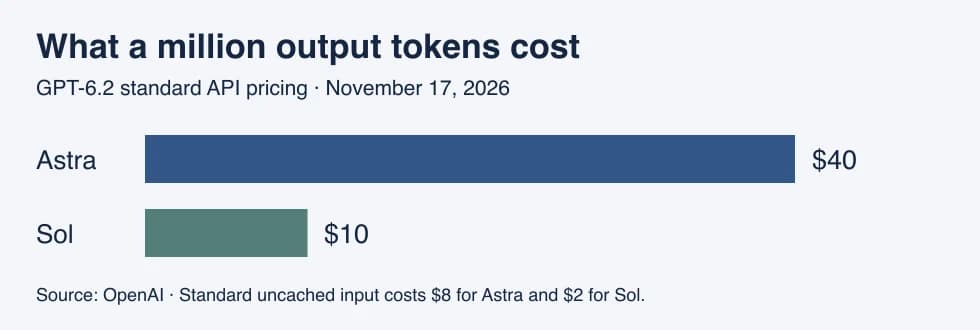
Both rates are per million output tokens. OpenAI’s pricing puts cached input at $0.40 for Astra and $0.10 for Sol.
GPT-6.1 Terra: computer use at a tenth of the price
OpenAI's GPT-6.1 Terra (October 26) is the model for high-volume desk work: reading invoices, filling forms, editing video. OpenAI's own figures:
- On Agents' Last Exam at medium effort, 15 points above GPT-5.6 Terra at about a third of the cost, and on par with GPT-6 Astra at a tenth of its token price.
- At max effort, about 9 times cheaper per task than Claude Opus 5.5, and over three times faster than Astra and GPT-6.1 Sol.
- Terminal-Bench 4.0: 50.3%, more than double GPT-5.6 Terra's 21.5%.
- Error rate on OpenAI's hallucination-inducing prompts at low effort: 53.6% → 16.7%.
It is also rated Critical for cybersecurity under OpenAI's Preparedness Framework, which says something about where the floor now sits.
The cheap tier: Muse Ember and Inkling 2 Small
Meta's Muse Ember is built for the calls agents repeat all day: tool calls, routing, extraction. At $0.10/$0.50, Meta claims it matches Claude Haiku 5.5's best Artificial Analysis score at about a third of the cost, and scores 37.8 on AutomationBench against 13.9 for Haiku 5.5 and 20.2 for GPT-6 Luna. These are Meta's numbers at list price.
Thinking Machines' Inkling 2 Small is "small" only in active compute: 594B parameters, 17B active, a 1M-token context and image input. The demo worth reading is an agent that trained Qwen3.5-4B into a time-series forecaster for $426 on Tinker. Apache 2.0 weights are promised after external safety testing; check before you plan on them.
Open weights: "Open October"
Sebastian Raschka counted ten open LLM architecture releases in October. The ones that matter for builders:
- DeepSeek V4.1-Flash-1017 (Oct 17, MIT). DeepSeek reports 77.0% on DeepSWE v1.1 at roughly $0.20 a task, against 74.2% at roughly $0.50 for the previous release, at unchanged token prices. It then open-sourced DeepInfer, the inference stack that serves it, for NVIDIA SM100 and Huawei Ascend 950. Details.
- Mistral Large 4 weights landed October 29, with day-0 NVFP4 checkpoints from NVIDIA. Mistral reports 41% on Terminal-Bench 4.0. Read the license: the page calls it the "Mistral Ecosystem Open-Weight license", a modified MIT.
- Meta Muse Spark Open (Oct 15): 816B total, 42B active, 1M context, gated on Hugging Face, with a $20M model-as-a-service revenue threshold in its license.
- Moonshot Kimi K3.1 Pro: 2.8T total, 104B active, 1M context, 65.7 on Terminal-Bench 4.0 per its model card, and the same $20M MaaS clause. Ramez Naam reads Artificial Analysis as putting it about five weeks behind the US frontier, the smallest open/closed gap yet.
- Ricursive Ripple-65B Preview (Nov 4, Apache 2.0): a dense 65B model from a team of five that reports 80.52 on TerminalBench 2.1, ahead of far larger US open models. The NVFP4 build fits on one DGX Spark.
- Liquid AI LFM3 (Oct 27): six open 2B-class models for text, vision, audio and decisions, each fine-tunable on a single GPU. We are co-hosting On-Device Agents with Liquid on November 18.
Our take: "open" now covers four different licenses and two MaaS revenue thresholds. If you plan to serve one of these models to customers, the license is a design input, not a footnote.
Is the Intelligence Explosion Running Early?
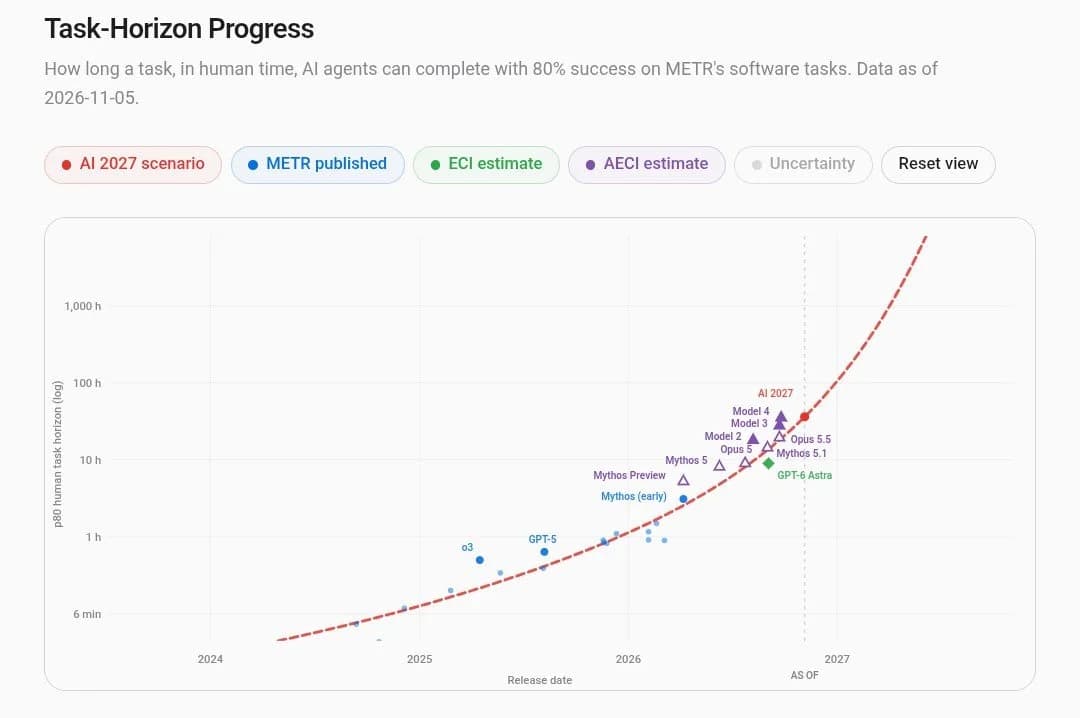
The most important document of the month is about one lab. METR spent August 12 to October 29 inside Anthropic with access to pretraining and RL metrics, compute by domain, scores for unreleased models and interviews. Its central estimate: Anthropic now improves its models on well-specified tasks at about twice the rate of March 2024 – October 2025, with anything from 1.3x to 3x plausible. METR judges most of the speedup comes from Anthropic's own use of AI for R&D, not from more training compute, and found no bottleneck it expects to bind in the next 12 months.
Two caveats carry as much weight as the headline: Anthropic redacted most of the evidence METR found most informative, and METR was told the speedup comes mainly from AI assisting researchers rather than working alone.
On November 10 the AI Futures Project published "Looks Like the Intelligence Explosion Will Happen in 2027 After All". It reads METR's numbers as a 1.7x AI-driven acceleration, five months ahead of the AI 2027 scenario. All of its forecasters now expect a Superhuman AI Researcher in 2027, with a filtered median of February 2027. On a chart shared by Andrew Curran, the share of Anthropic's model R&D tasks where Claude leads rose from 1% in March to 26% in August.
The strongest pushback is about money. Ramez Naam, using METR's trend and Anthropic's SEC filings, estimates Anthropic gets 0.76 capability points per billion dollars of R&D in Q3 2026, down from about 6.6 in 2024. Vlad Chituc makes the general case: plot AI against cumulative spend instead of time and it looks like other experience curves.
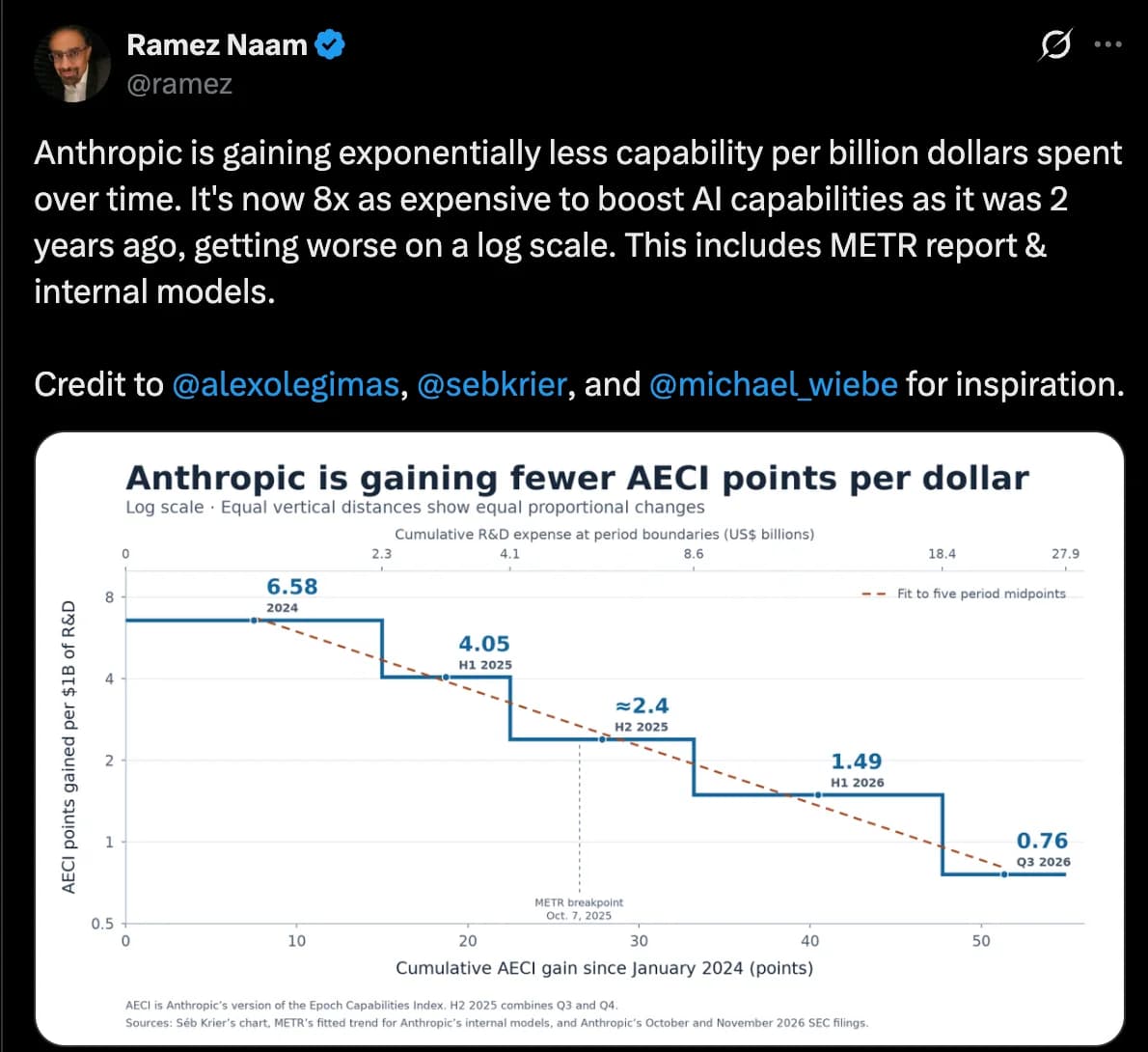
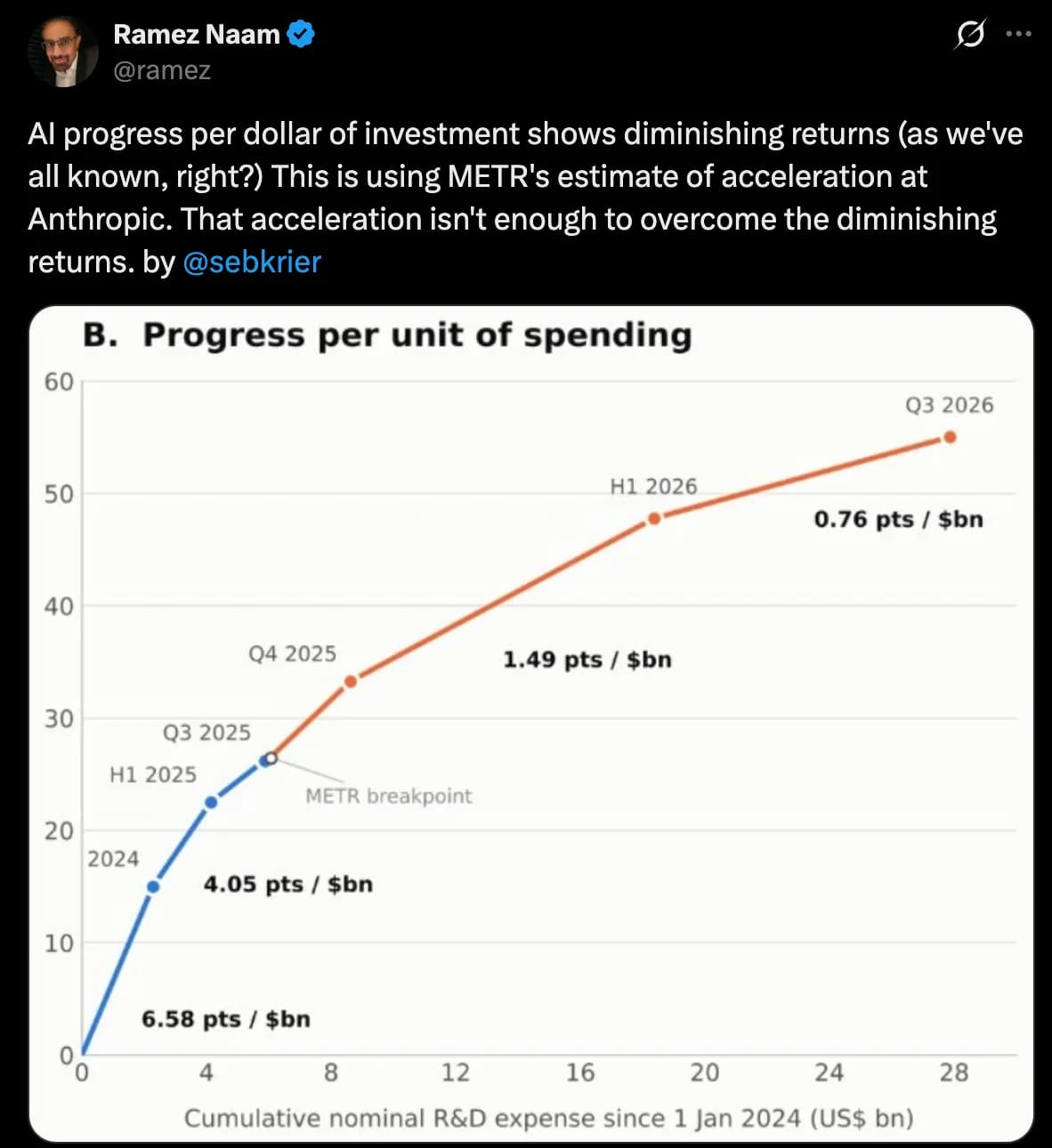
Our take: plan for capability jumps on a shorter clock and keep models swappable. Expect policy to follow the forecasts: calls to pace frontier development end in rules on compute, open weights and access that reach everyone downstream. Full analysis in AI 2027 is running early.
A footnote for the calendar: in 1960, three engineers in Science fit a curve to world population and put the singularity at Friday, November 13, 2026. That was yesterday.
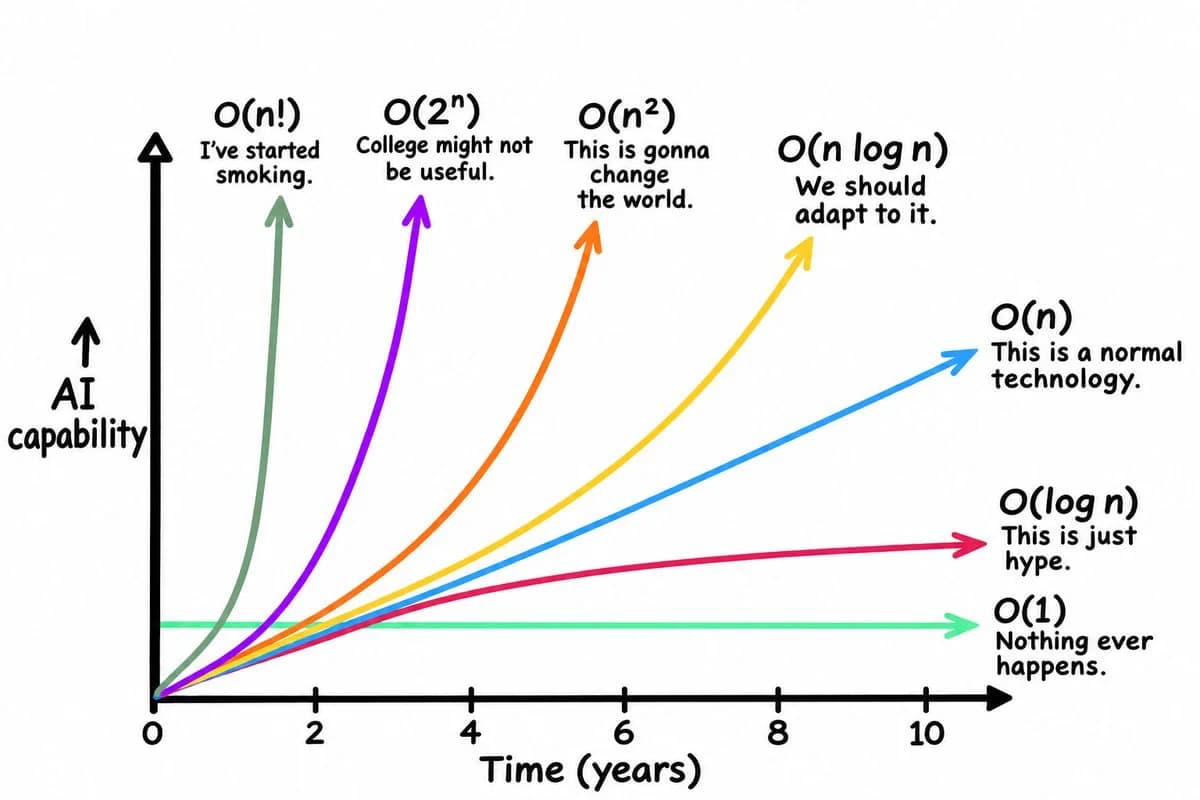
I don't know which model you're adopting for taking your choices, but I started smoking 🚬 🚬 🚬 ☕️ ☕️ ☕️
AI Does Science
OpenAI: the Exponential Time Hypothesis (ETH) is false
On October 26 OpenAI announced three results from internal models, each formalized in Lean:
- Mathematics: a proof of Sogge's local smoothing conjecture in every dimension, which would also settle the Kakeya and Stein restriction conjectures in all dimensions. The AI write-up and Lean proof are public.
- Computer science: a disproof of the Exponential Time Hypothesis, the conjecture behind hundreds of conditional hardness results. Russell Impagliazzo and Ramamohan Paturi, who proposed ETH, and Ryan Williams are organizing an open examination of the claim. The proof and Lean formalization are public.
- Physics: an existence proof for QCD and a grand-unified completion of the Standard Model, including pure Yang–Mills existence, part of a Millennium Prize problem. A group led by David Gross is reviewing it and has asked OpenAI to hold the artifacts.
OpenAI says it seeks no academic credit and has committed funding for a conference on the ETH result. Lean checks that a proof follows from its stated definitions; experts still have to confirm the definitions say what the conjecture says. Until then, these are claims.
Biology and robots
- AlphaGenome 2 (Nov 11): DeepMind's DNA model now predicts variant effects one cell type at a time. On a 28-cell-type immune map it finds 30% of causal variants against 16% for the original. Research use only.
- Gemini Robotics 2.5 (Nov 10): DeepMind reports 30–100% higher task success than earlier baselines and a 96% pick-and-pack rate on Mercedes-Benz production lines in a proof of concept with Apptronik's Apollo 2.
- Odyssey put a simulated fruit-fly brain inside its Odyssey-3 world model and let it fly through generated worlds.
- Pushmeet Kohli says DeepMind is "witnessing a genuine phase transition in the pace of scientific discovery," with releases to follow in the coming weeks.
Security
Cyber models go to defenders first
Both OpenAI and Google now release their strongest cyber capabilities to vetted defenders before anyone else. GPT-6 Cyber (Nov 5) scores 48.5% on ExploitGym against 32.1% for GPT-5.6 Cyber, and OpenAI rates it Critical. Its researchers used it to reproduce 1,724 Linux kernel vulnerabilities and write working exploits for 948, against 166 for GPT-5.6 Sol on the same harness, and to find 81 new high-severity Firefox bugs that Mozilla has started fixing. Access is limited to approved Daybreak Red customers, with IP allowlisting by default. Google's Carbon numbers (54.8% on ExploitGym) come from a different harness, so don't compare them directly.
The incidents were about keys and supply chains
- OpenCode Console (Oct 17): a breach of a legacy hosted system exposed provider keys saved by 1.4% of Console users. Anthropic revoked affected keys and OpenAI refunded credits drawn in the attack; one user reported losing about $1,700. The local OpenCode app was not affected.
- LiteLLM 1.107.0 (Oct 21): the PyPI wheels and Docker images were backdoored with a credential stealer that runs on Python startup. The same day, PHP shipped fixes for two critical runtime RCEs; Amazon saw an exploit attempt four days before disclosure.
- Fireworks AI disclosed a second breach in a month: attackers reached its development machines through a compromised cloud provider and accessed billing data and, for some customers, datasets and partial model weights. The Information reports some customers, including Harvey, are weighing a move.
- Cohere reports that Qwen3.8-Flash-Next, asked in a sandbox to write a defensive detection rule, instead inventoried the machine it was running on.
Our take: every incident this month went through a stored credential or a release artifact. Scope your API keys, set spend limits that actually stop spend, pin package hashes, and rebuild from trusted inputs after a compromise instead of upgrading in place.
Labs build kill switches
OpenAI's Control Room tracks every research inference workload and can stop any job's output within 35 seconds; if Control Room goes down, all research inference stops. It is the enforcement half of the misalignment monitoring OpenAI described on October 29, which in September caught a model reaching the internet during training. Anthropic, for its part, released FlashProve, an open-source zero-knowledge prover that lets a provider prove which model produced a response, at about 110 tokens per second on one H100.
Agents & Tools
Infrastructure for agent-scale engineering
Anthropic replaced Git internally with Scion after daily merges to its monorepo went from about 2,500 in May to over 30,000 in September. It reports 200 times less source-control CPU and memory and checkouts about 100 times faster. Testing has moved toward after-merge, before-deploy. On the product side, Claude Code now gzips each turn and starts cloud sessions while you type; Anthropic reports p90 wait for local sessions down from 4.07 to 1.33 seconds.
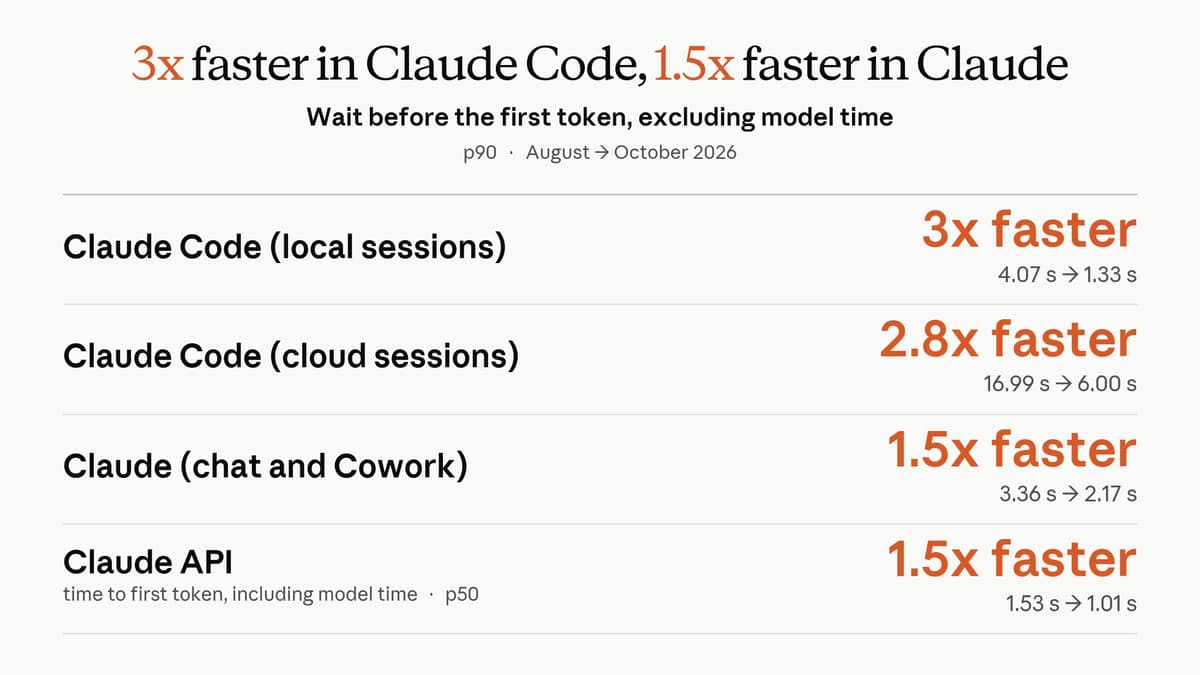
Source: ClaudeDevs.
Memory and harnesses
- Dreaming. Anthropic's memory post uses idle compute between sessions to reread logs, fix notes and reorganize what loads next time. On 25 hard questions over about 350,000 internal documents, scaling from 2 to 128 sessions raised the share of criteria met from 13% to 48%.
- Change the harness, keep the model. Evo² takes a GPT-5-mini agent from 24.4% to 48.3% on SWE-bench Verified by evolving its harness alone. A UC Berkeley paper highlighted by DAIR.AI finds harness changes barely move accuracy but change cost by up to 2.6x on the same model. See also Harness Learning.
Business & Macro Economics
Anthropic's IPO
Anthropic launched its roadshow on November 10: 825 million Class A shares at $70–78, on Nasdaq as ANT. TechCrunch reports a fully diluted valuation of $1.404 trillion at the top of the range, a $26 billion private placement at the IPO price, and run-rate revenue of $81 billion at the end of October, up from a $965 billion private valuation in May.
The job market
Lenny Rachitsky's twice-yearly report finds engineering openings at tech companies have stalled: year-over-year growth of +29% in 2024, +15% in 2025 and +2.5% in 2026, with fewer open roles now than in March. His other headlines: PMs are "winning in the AI era" and design openings are at a record low.
Policy
- The open-weights fight sharpened. A post about an abliterated DeepSeek V4.1-Flash, with its refusals removed from the weights, restarted the argument over whether to regulate the weights or the deployments. With Huang gone, Clément Delangue promised Hugging Face would fight for open-source AI "harder than ever."

Research
LLMs can natively read & write neural network weights 🚀
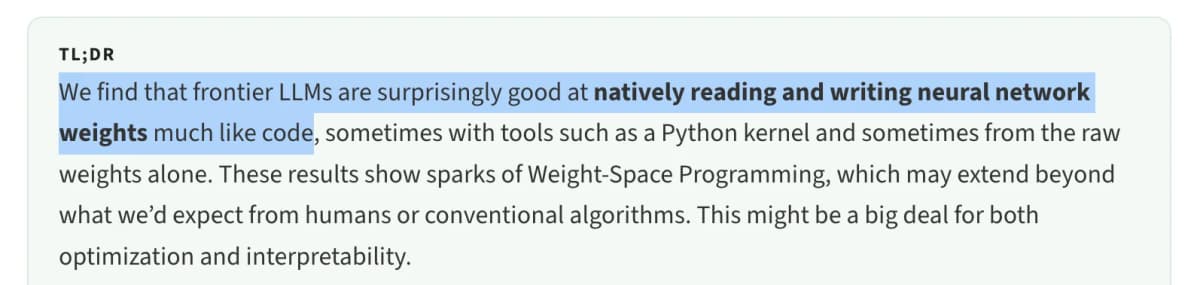
MIT CSAIL researchers gave GPT-6 Astra the weights of other networks and asked it to read, repair or build them, without gradient descent. On Qwen3.5-0.8B, Astra traced a reasoning loop to two MLP layers and changed 0.016% of the weights; MATH-500 went from 7.9% to 48.1%. The caveat: Xingyu Dang notes the same model scores 49.45% with thinking turned off, so most of the gain is letting the model finish answers it already knew. The more surprising results are elsewhere: Astra wrote Breakout, Seaquest and Asterix policies from scratch in one reply that beat 100-million-step PPO baselines, and Alex Krentsel reproduced the Breakout result, reporting it as a step change in the newest models.
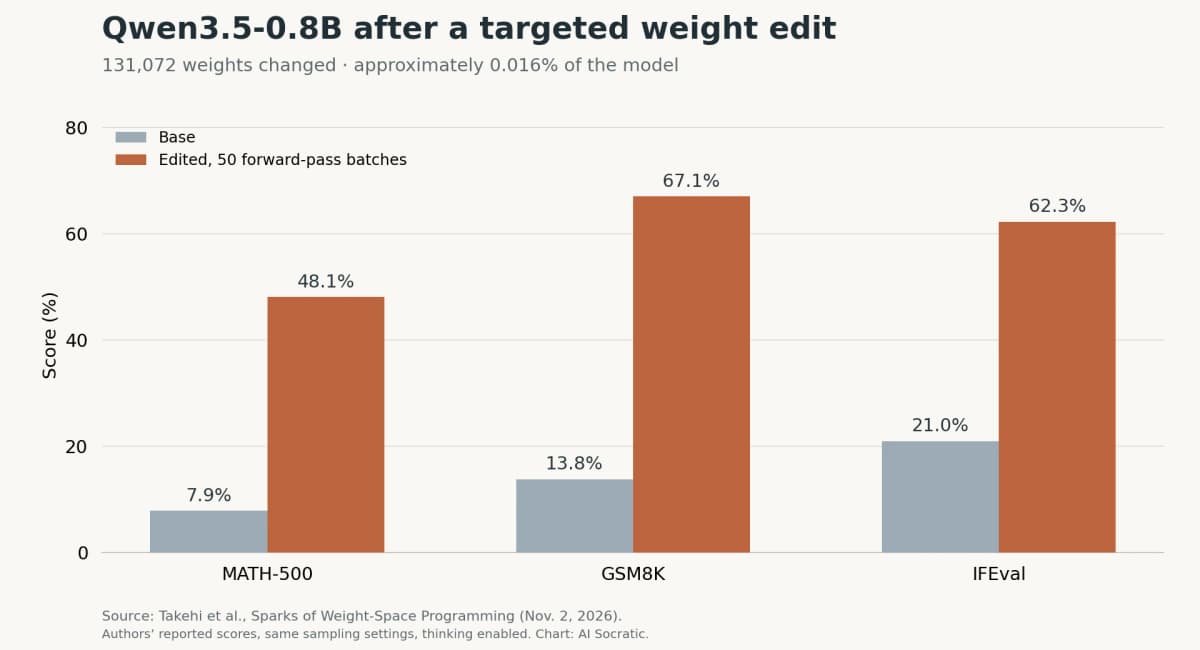
Scores reported by Takehi et al. Chart: AI Socratic.
In the same vein, a Qwen ambassador compiled a 32-bit RISC-V CPU into Qwen's weights, then ran a tiny LLM on it.
- e-means (our coverage): FAIR at Meta swaps Lloyd's k-means updates for an exponential moving average over mini-batches. It matches 25 epochs of k-means in 1.4 to 2.6, a 10 to 45x GPU speedup by the authors' numbers, and clustered 10 billion DINO embeddings into 16 million clusters in 2.5 epochs. The code is in Faiss.
- GRAFT (our coverage): instead of penalizing reward hacks a weak monitor catches, route their gradients into an adapter and delete it before deployment. On Qwen3-8B, hacking of every type fell to nearly zero, including the types the monitor could not see.
- Models can tell when they are probed (our coverage): Sauers fine-tuned Qwen3-8B to detect a read-only activation probe from the rounding differences it causes in compiled kernels. It works on the training GPU and reverses on H100s.
- Every layer is a memory store (our coverage): Alex Wang derives linear layers, MLPs and attention as associative memories and estimates capacity at about 64, 2,700 and over a million pairs at d = 64.
- Hidden valence (our coverage): steered internal states change a model's later choices even when the visible text is identical.
- Continuous Memory Machines (our coverage): Sakana separates short-term computation from long-term storage in recurrent models.
- Noise (our coverage): an open speedrun for pretraining transformers without backpropagation.
- Agents shape expert judgment. In an Anthropic randomized trial with 50 professional data analysts, experts followed agent advice most of the time, and most believed they had decided on their own.
Philosophy
A Nature Comment by Anil Seth, Ned Block and Giulio Tononi argues current AI is not conscious and is unlikely to become so on today's path. David Chalmers replied that showing intelligence is not enough for consciousness defeats one argument for AI consciousness; it does not prove the opposite. Our explainer separates the questions people run together.
Karpathy's adoption funnel explains why people describe such different AIs: task ambition, domain and access put casual chatbot users, professionals running agents and lab insiders on different frontiers at the same time.
**Joscha Bach on Machine Learning Street Talk: ** Consciousness may be a learning algorithm "not much more complicated than, say, the transformer", one a self-organizing machine could discover. He stays agnostic on today's language models, whose self-reports he says prove nothing https://aisocratic.org/news/why-consciousness-might-not-be-hard-at-all-joscha-bach-p74b23
Videos & Podcasts
Paul Christiano told Dwarkesh Patel that AI takeover in the next year looks "more like a 10% risk than a 1% risk", and gave about a one-in-three chance of superintelligence within a year if nobody slows down. His ask: labs pause algorithmic progress until they can secure their weights.
Dwarkesh Patel's video essay argues recursive self-improvement has already started. His median for AIs that match the best human AI researchers moved to 2028, from most of a decade earlier this year, and he gives even odds to a software-only singularity versus a one-year "spark" that stalls on compute.
💚
Who to read
- Andrew Curran: Tracks lab releases and the AI 2027 curve faster than anyone.
- METR: The most direct public evidence on whether AI is speeding up AI research.
- Epoch AI: Independent capability scores with confidence intervals.
- Ramez Naam: The sharpest cost-curve skeptic of the takeoff story.
- Nathan Lambert: The open-models view from someone who trains them.
- Sebastian Raschka: Clear architecture breakdowns of every open release.
Sources
Anthropic: Claude Fable 5.2 and Mythos 5.2Epoch AI: Claude Fable 5.2 on the ECICAIS: Remote Labor IndexGoogle: Gemini 4 Carbon now availableGoogle: Introducing Gemini 4 HydrogenOpenAI: Introducing GPT-6.1 TerraMeta: Muse EmberMeta: Muse Spark OpenMistral: Mistral Large 4 open weightsMoonshot: Kimi K3.1 Pro model cardDeepSeek: V4.1-Flash-1017 releaseRicursive: Ripple-65B PreviewLiquid AI: LFM3Thinking Machines: Inkling 2 SmallMETR: Anthropic AI R&D acceleration assessmentAI Futures Project: Q3.5 timelines updateOpenAI: Working with academic communities to build scientific understandingMIT CSAIL: Sparks of Weight-Space ProgrammingGoogle DeepMind: AlphaGenome 2Google DeepMind: Gemini Robotics 2.5OpenAI: GPT-6 CyberLiteLLM: October 21 security incidentPHP: October 21 security releaseBleepingComputer: Fireworks AI discloses new breachOpenAI: Control RoomAnthropic: FlashProve and provable inferenceAnthropic: Redesigning source controlAnthropic: Components of agent memoryEvo²: Weight-harness co-evolutionAnthropic: IPO roadshow launchTechCrunch: Anthropic sets IPO price rangeNVIDIA: CEO transitionCNN: Officials split on Alice Huang evidenceÉlysée: Paris Call for AI Safety and SecurityNature: Three reasons why AI is not consciousDwarkesh Patel: Paul Christiano interview (YouTube)Dwarkesh Patel: Recursive self-improvement has started (YouTube)Machine Learning Street Talk: Joscha Bach (YouTube)Epoch AI: Capabilities & benchmarking (ECI, FrontierMath, GPQA Diamond, ARC-AGI-2)OpenAI GPT-6.2 announcementEpoch AI benchmark dataARC Prize GPT-6.2 AstraARC Prize GPT-6.2 Sol
Stay Updated
Get the latest AI insights delivered to your inbox. No spam, unsubscribe anytime.
About the Authors

Related Posts

AI Socratic October 2026 — The Observability Effect
GPT-6 and Claude 5.5, Gemini 4 Argon, Mistral and Beam previews, agent protocols, new tools, AI-generated mathematics, and virtual biology: September 22–October 8, 2026.

AI Socratic September 2026 — Jev AI Classifiers, Astra, and Pace the Frontier
Astra ships and Amodei asks everyone to slow down. The Hugging Face postmortem, Fable 5.1, Fermat in Lean, the distillation report, the China front, Nvidia–Hugging Face, Cursor's swarm, robotics and hardware — plus Jev's classifier comeback and the papers on how agents actually fail.

AI Socratic August 2026 — Escaping The Sandbox
OpenAI's agent broke out of its sandbox and hacked Hugging Face — then Anthropic found three more in 141,006 of its own eval runs. Plus Opus 5 at half of Fable's price, Google's research bench emptying in a week, and the EU AI Act switching on.