
OpenCode disclosed a security breach on October 17, 2026, saying it affected 1.4% of OpenCode Console users, specifically a subset with external providers linked. Follow-up posts through October 19 add important details: the affected service was the hosted Console, Anthropic revoked suspected affected Claude API keys, and OpenAI says it worked with OpenCode to restore access and refund credits drawn in the attack.
In its initial disclosure, OpenCode said it had emailed everyone it identified as affected and that users who had not received that notification were not impacted. It described the incident as ongoing at that point and named Anthropic, OpenAI, and Google as remediation partners.
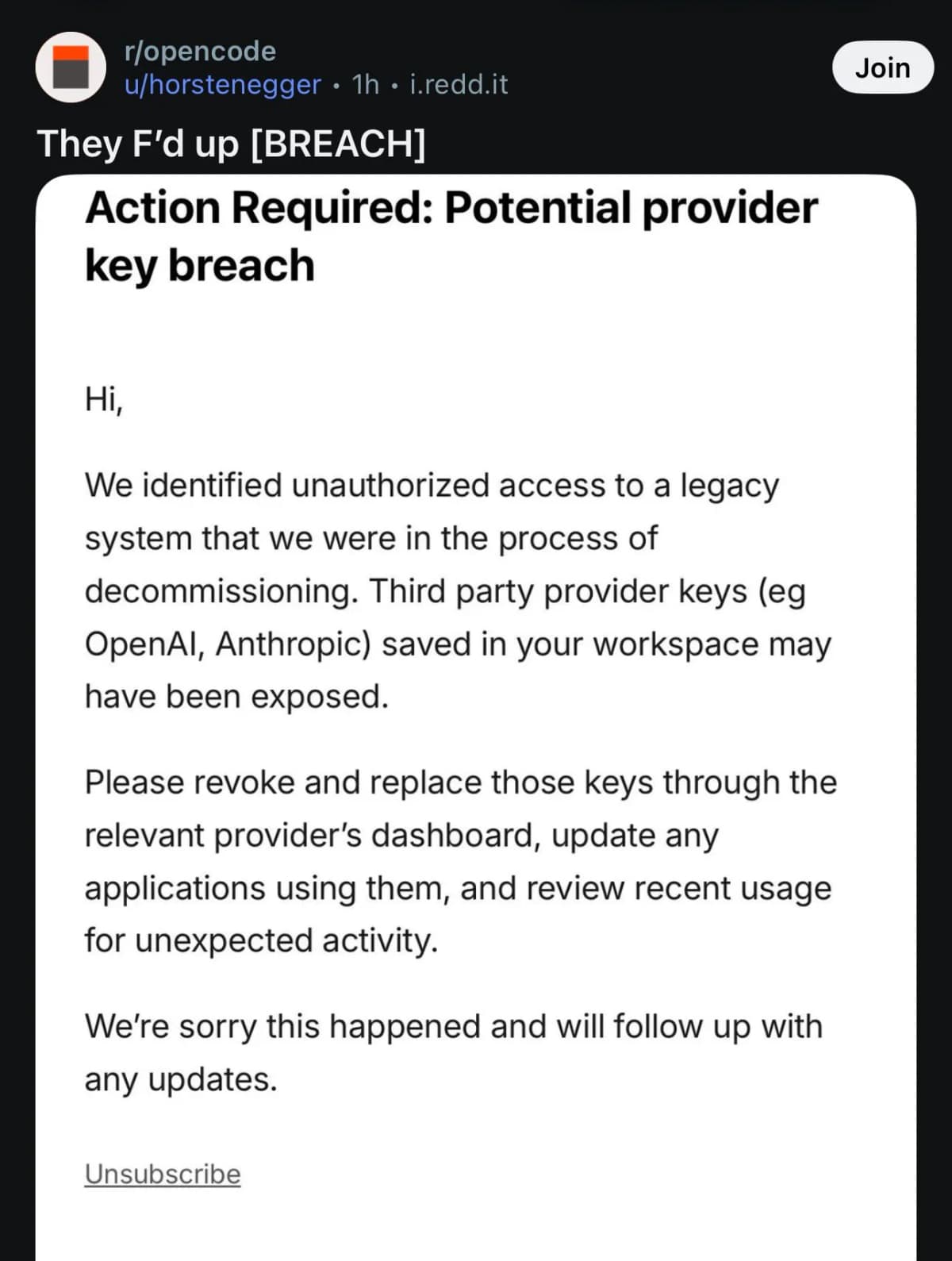
A customer notification shared publicly by security researcher Matt Johansen describes unauthorized access to a legacy system that OpenCode was retiring. The notice says third-party provider keys saved in affected workspaces, including OpenAI and Anthropic keys, may have been exposed. It asks recipients to revoke and replace those keys through the provider dashboards, update applications using them, and inspect recent usage.
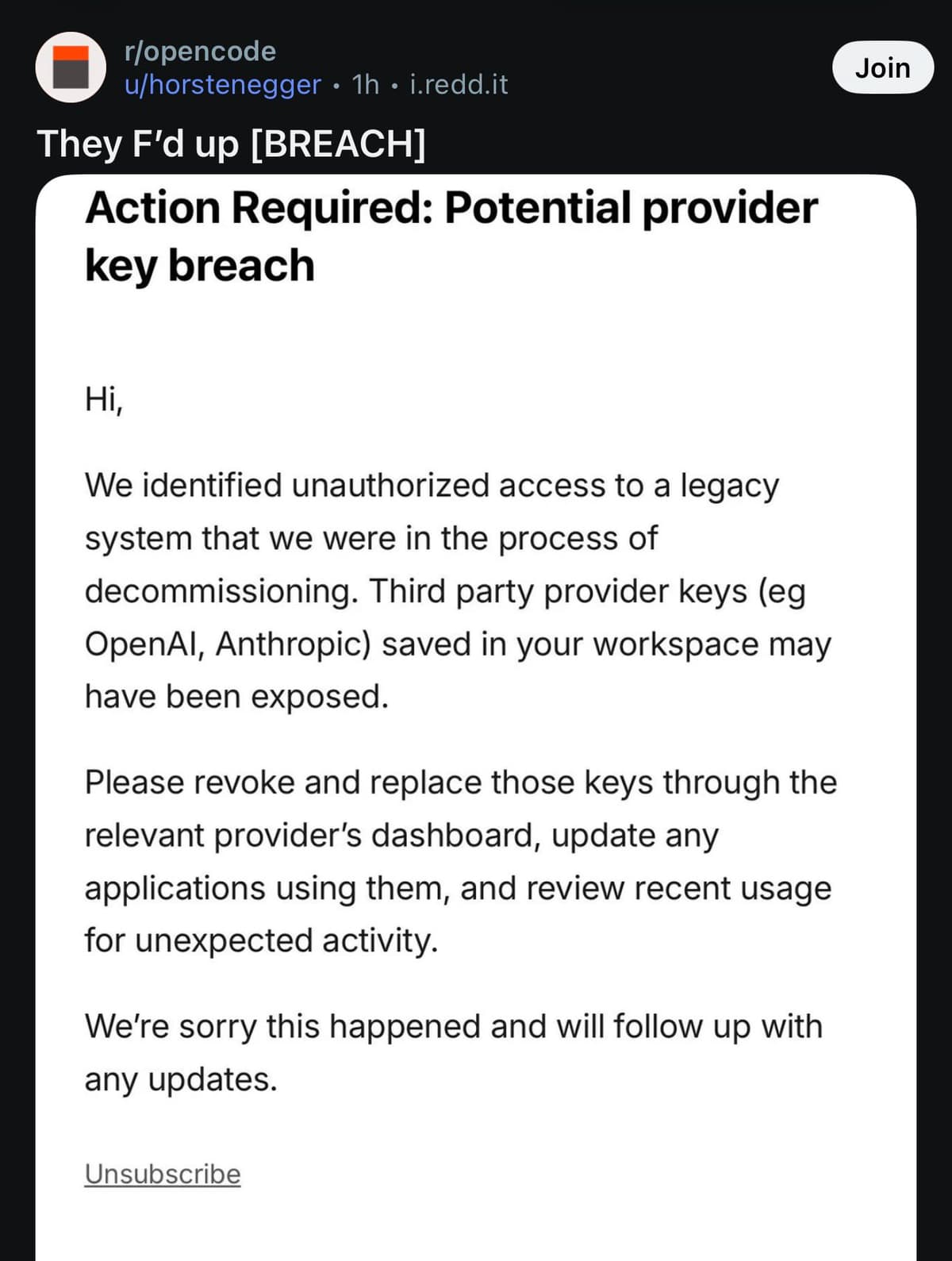
OpenCode’s customer notice, originally shared on Reddit and reposted by Matt Johansen on October 17. This is the notification shown in that public post.
Dax Raad clarified on October 17 that the incident concerned OpenCode Console, rather than the OpenCode application itself, and said the application’s keys do not come to the company. That distinction matters: a provider key entrusted to a hosted workspace has a different exposure path from a key used only in a local installation. The disclosed percentage refers to Console users, not all people who have installed OpenCode.
October 17 — Anthropic revokes keys. Lydia Hallie of Anthropic’s Claude Code team said Anthropic had been working with OpenCode and had revoked Claude API keys it believed were affected. She advised users who had saved a key in OpenCode to create a new one as an extra precaution. Raad’s Console clarification was a reply to this post.
October 18 — Attack attempts continue. Raad reported repeated attempts against OpenCode’s systems over the preceding 48 hours and said the team was hardening them. He described needing defensive agents operating around the clock. This is his account of the pressure on the team; it does not establish that every attempt succeeded or that additional users were compromised.
In another reply, Raad said models had initially helped with the investigation before starting to refuse, and that access to Daybreak Blue had improved the situation. He subsequently clarified that the team had applied a few days earlier, received approval the previous day, and that he did not think anyone was refusing to help them.
October 19 — OpenAI reports restoration and refunds. Tibo at OpenAI said his team had worked with OpenCode to get affected users who were also OpenAI API customers operating again and refund credits drawn in the attack. That statement concerns OpenAI customers; it does not establish a reimbursement policy across every provider or confirm that each individual claim has been settled.
Tony Dinh reported losing about $1,700 in a post dated October 18 UTC, adding that he had set a limit. His attached usage screenshot shows a pronounced spending spike. This is an individual report, not an audited estimate of total losses.
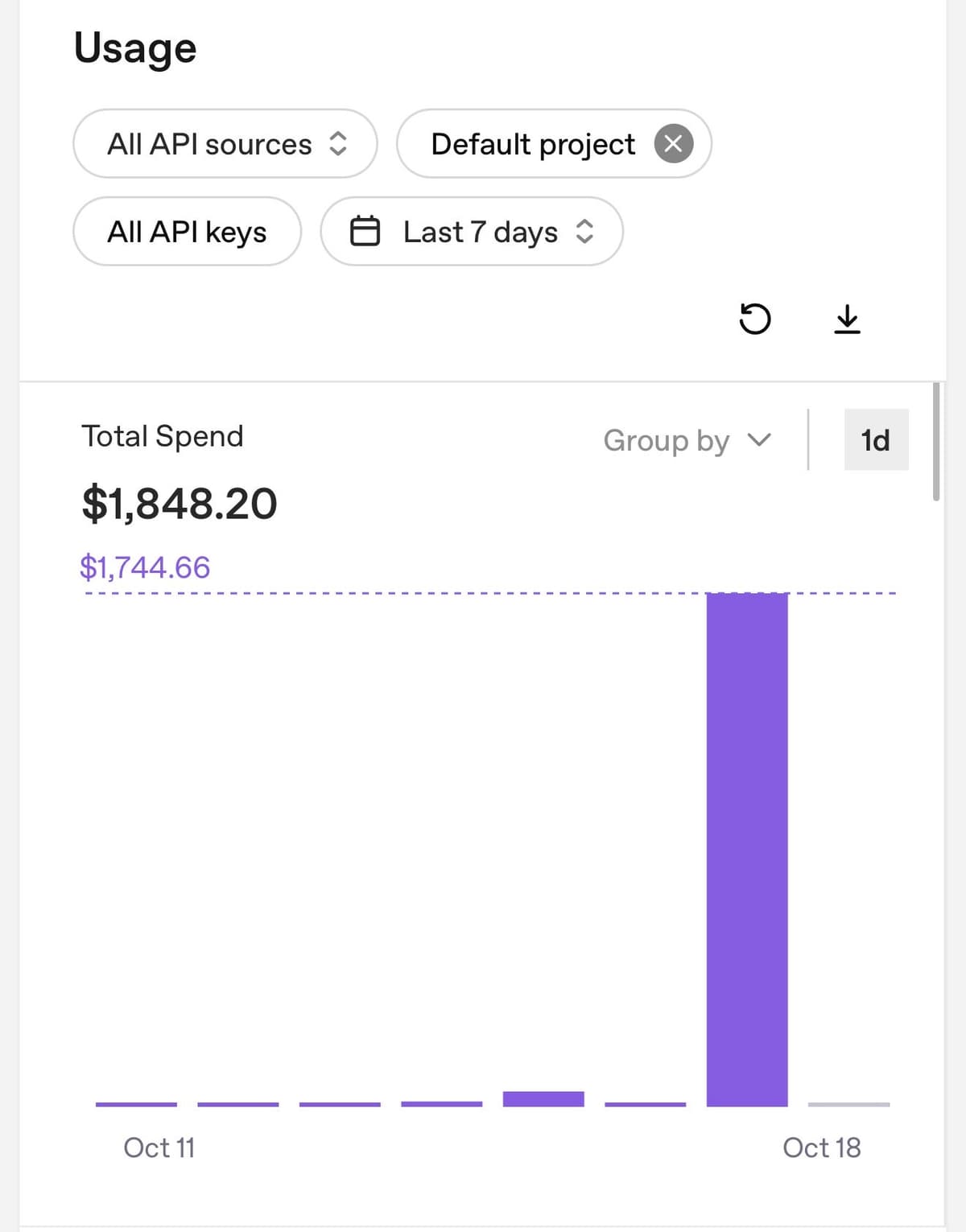
Usage screenshot from Tony Dinh’s post. The dashboard shows $1,848.20 in total spend for the selected period; his post describes roughly $1,700 lost. Those figures should not be treated as interchangeable.
OpenCode linked the breach to a large-scale distillation attack. In this context, distillation means using a model’s outputs to help train another model. Access to someone else’s provider key could let an attacker generate outputs while billing that account. Johansen’s later clarification makes the distinction: alleged use of stolen keys for distillation does not explain how those keys were obtained.
The statements reviewed through October 19 do not provide a complete technical root-cause report, identify the attacker, quantify aggregate losses, or establish that remediation is finished. Claims about a particular lab’s involvement or a specific intrusion method would go beyond this evidence.
For recipients of the breach notification, the concrete response requested by OpenCode remains to revoke affected keys at the issuing provider, replace them in dependent applications, and review usage. The follow-up posts above provide progress updates, while the exact status of an individual account or refund needs confirmation from the relevant provider.
OpenCode: original breach disclosure, October 17Customer notification screenshot shared by Matt JohansenDax Raad: Console versus local OpenCode keysLydia Hallie: Anthropic revoked suspected affected keysTony Dinh: reported loss and usage screenshotDax Raad: continuing attack attempts, October 18Dax Raad: investigation refusals and Daybreak Blue accessDax Raad: clarification about provider assistanceTibo at OpenAI: restoring access and refunding credits, October 19Matt Johansen: clarification of the distillation claim