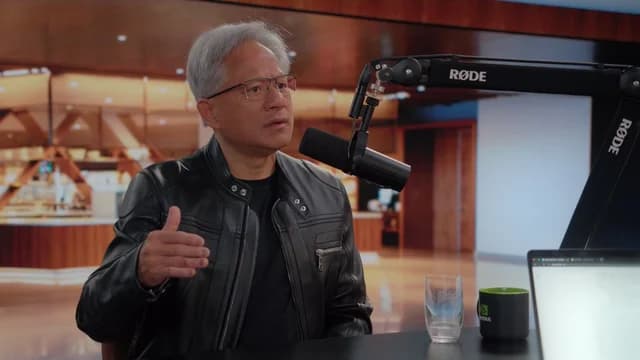
Jensen is out. What's Next for Nvidia?

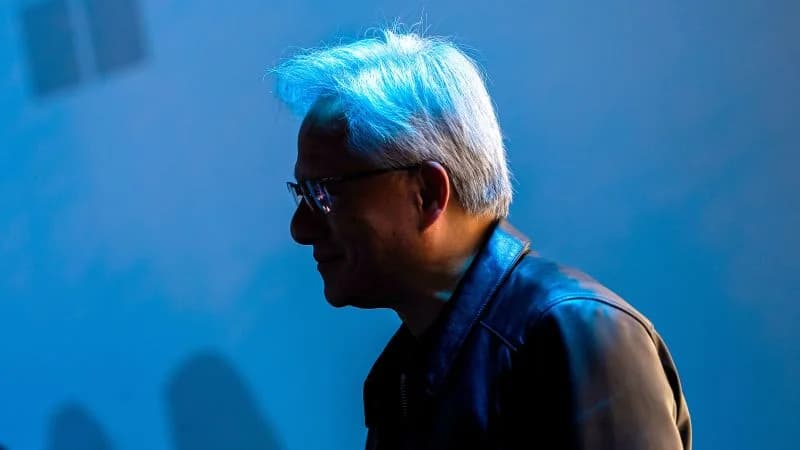
Writing this article is taking me way too long. Every day, another revelation changes the story. So screw it, I'm publishing what I have and updating it as things develop.
Jensen Huang is out after 33 years leading NVIDIA. The allegations that preceded his resignation are being questioned, Washington is facing scrutiny over the intelligence behind them, and the AI industry is confronting an uncomfortable question: what happens without one of its most influential leaders?
Let's start with the facts.
01 — Jensen Resigns
Jensen Huang resigned as NVIDIA's president, CEO and board member on November 12. CFO Colette Kress becomes interim CEO while retaining her finance role, and the board is searching for a permanent successor from inside or outside the company. Former Synopsys CEO Harvey C. Jones becomes its first-ever chair.
The company says its operations and product roadmap will continue without interruption. Keeping the business running, though, is a different challenge from replacing the founder who shaped it for three decades.
Four days earlier, the board opened an independent investigation following reports that Huang had been targeted by a foreign intelligence effort. The reporting centered on his relationship with Alice Huang, a former executive at Singapore-based NVIDIA customer Megaspeed, whom some U.S. officials suspected of working for Chinese intelligence. That assessment is contested; it is not an established finding of espionage.
Huang acknowledged an affair in a message to employees. Reporting about a second alleged relationship, with an NVIDIA subordinate, added a separate corporate-governance issue. China's foreign ministry rejected the espionage allegation. On November 10, the independent directors appointed Joon H. Kim and Wachtell, Lipton, Rosen & Katz to conduct their inquiry.
The resignation is confirmed. The investigation's conclusions, and the full reasons behind the board's decisions, are not.
02 — The $7.5 Billion Chip Trail
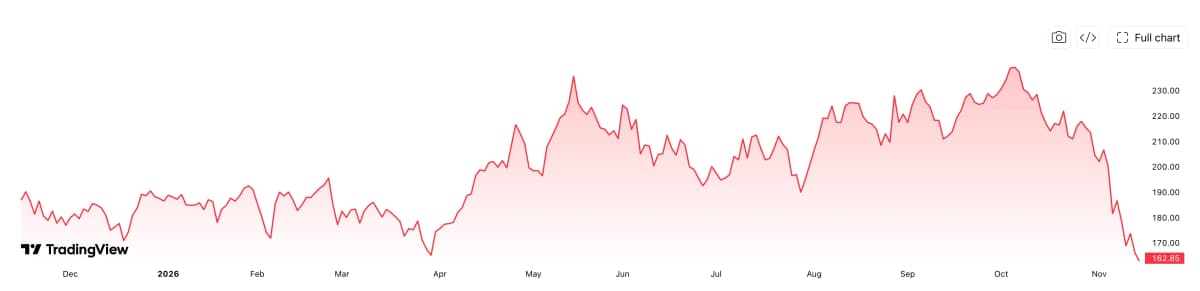
Fortune reports alleged $7.5 billion chip flows to Chinese customers through Megaspeed and Speedmatrix.
The reporting alleges that Alice Huang's relationship with Jensen helped enable those transactions. Her alleged role, and whether any transfers violated the law, have not been established by the investigations described here.
Singapore's authorities say they began investigating suspected false declarations concerning server purchases in February 2025. Their inquiry includes whether servers exported through Singapore to Malaysia were subsequently sent elsewhere, contrary to declarations. U.S. authorities have separately examined potential export-control violations.
Megaspeed denies wrongdoing. NVIDIA has said it found no evidence of illicit chip transfers.
This is why the story reaches beyond an affair. It concerns access to AI computing, who can buy or use it, and whether companies complied with the rules. The espionage question and the chip-trade questions overlap, but answering one does not automatically resolve the other.
03 — The Spy Story Starts to Collapse?
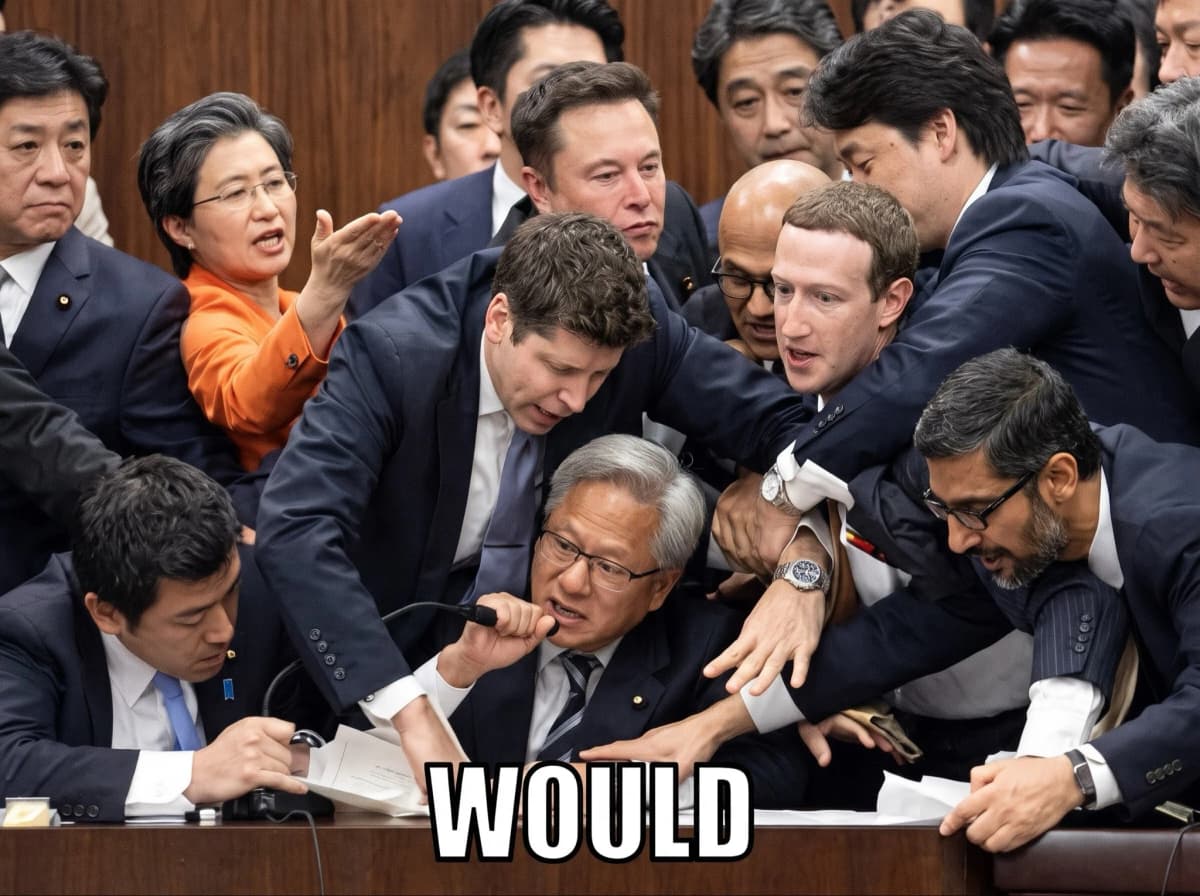
The strongest reason to question the early certainty came from the Justice Department itself. On November 12, Attorney General Todd Blanche said the DOJ had not reached a conclusion about whether Alice Huang was a Chinese spy. Reuters reported his remarks alongside the continuing FBI investigation. That is a meaningful qualification of the public narrative, not a declaration that she has been cleared.
Trump also expressed uncertainty. Asked whether she was a spy, he told Stephen A. Smith, according to Forbes, that he did not know whether that had been determined. His response left room for a different interpretation of Huang's departure if the allegation proves unfounded.
Singapore's position needs equal care. Its October 31 clarification denied the reported intelligence investigation. Its November 12 statement confirmed a separate police inquiry into her role in Megaspeed's server purchases, explicitly saying it was not an espionage investigation.
The ministry found insufficient evidence for the suspected server-purchase offences against her, but said she was warned and barred from returning after providing inaccurate information to downplay her role. The Megaspeed investigation continues.
Then came The Washington Post's reporting on Marco Rubio's memo. Citing a person familiar with the matter, the Post reported that Rubio recast a CIA report in more assertive terms in a memo to Trump. That memo's contents later appeared in news reports. This raises questions about how the intelligence was presented; it does not establish who leaked it or prove a coordinated effort to remove Huang.
So, is the spy story collapsing? Its early certainty deserves scrutiny. The underlying security, conduct and export-control questions remain open.
04 — Who Wanted Jensen Out?
A George Hotz observation resurfaced on X: if NVIDIA becomes a monopoly, how long before it is nationalized?
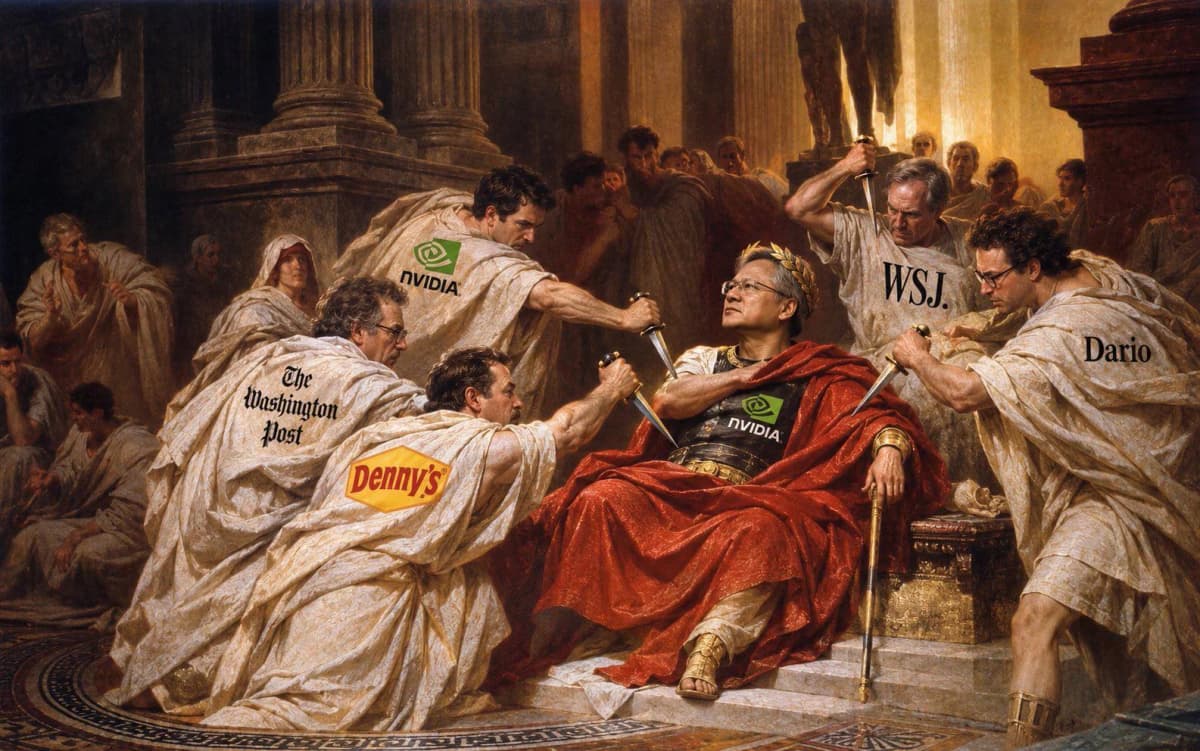
It captures a real anxiety about the concentration of AI infrastructure. It is also a thought experiment, not evidence that nationalization is happening or explains the resignation.
SemiAnalysis interprets the episode as a shift toward Washington's China hawks and suspects intelligence officials helped drive Huang's exit. That is the publication's interpretation, not a finding of the board's investigation.
There is a documented policy dispute underneath the theories. The Post describes officials who opposed Huang's influence over Trump's China policy and lawmakers seeking tighter chip restrictions. Those officials may gain room to advance their preferred policies without him. Benefiting from an outcome, however, does not establish responsibility for causing it.
On X, Boden of China Views described the affair as a trigger for a power grab involving Wall Street and Washington. A widely shared article pointed at Anthropic; Replit CEO Amjad Masad shared it while declining to endorse its conclusions.
These theories do not establish that a rival lab, Wall Street or the government organized Huang's departure. We can examine incentives without pretending we have solved the case.
Let's not forget that Dario Amodei, Sam, and Elon were pushing to pacing the frontier (see bell curve below), Jensen was pushing to accelerate and pro open weights models.
How to read this chart
Horizontal positions are editorial estimates from the recorded statements: 0% means pace / pause and 100% means accelerate. They are not self-reported percentages, probabilities, or votes. The balance averages the 8 scored positions; 0 entries without numerical estimates are excluded and sit in the labelled row at the base. Portraits may sit up to 6% of the width from their estimate so the crowd packs tightly; vertical position only prevents overlap and the bell curve is illustrative. Mechanism criticism alone is placed closer to the middle than explicit opposition to slowing. Some sources record historical positions rather than current endorsements.
05 — Stand With Jensen 💚
The uncertainty has also fueled a campaign to bring him back.
David Sacks argues that the espionage narrative is unraveling and wants scrutiny of the classified memo's leak. In an All-In discussion, he also warned that slower progress at NVIDIA would benefit Huawei.
Balaji Srinivasan urged employees, shareholders, partners and customers to demand Huang's reinstatement and the resignation of directors who pushed him out. He shared a board table created by @gemchange_ltd, classifying directors by presumed loyalty.
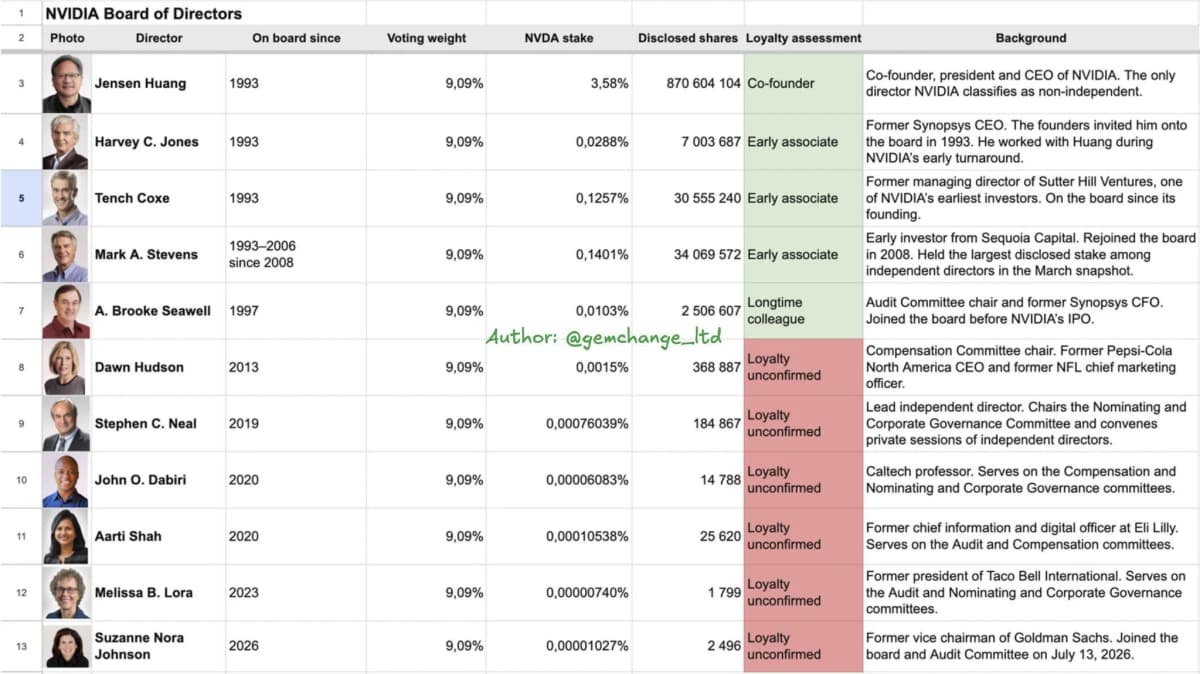
Those classifications are the creator's speculative assessment. They are not evidence of individual directors' motives, private discussions or votes.
Investors Brad Gerstner and Gavin Baker asked the board to take a deliberate approach to selecting a successor. Their statement is a useful counterpoint to the pressure for an immediate resolution: decisions about NVIDIA's leadership will outlast this week's headlines.
The Stand with Jensen open letter asks the board to restore him while an independent investigation establishes the facts. The organizers describe themselves as a volunteer group unaffiliated with NVIDIA or Huang. Treat the displayed names as a public petition, not a verified list of supporters. Signing also means giving your email to those organizers, so decide how much contact information you want to share.
06 — NVIDIA Without Jensen
Whatever the investigation finds, NVIDIA has a succession problem now.
SemiAnalysis describes an organization built around Huang: roughly 42,000 employees, about 60 direct reports, and major decisions concentrated with the founder. It identifies Ian Buck and Jonah Alben as possible technical successors and questions whether a finance-led permanent appointment could fill the role. These are candidates and judgments raised by the analysts, not a board-announced shortlist.
The practical challenge is broader than a job title. Whoever succeeds him must coordinate technical decisions and sustain confidence across customers, employees and suppliers. An interim appointment gives the board time; it does not answer how that leadership will work.
The industry's incentives
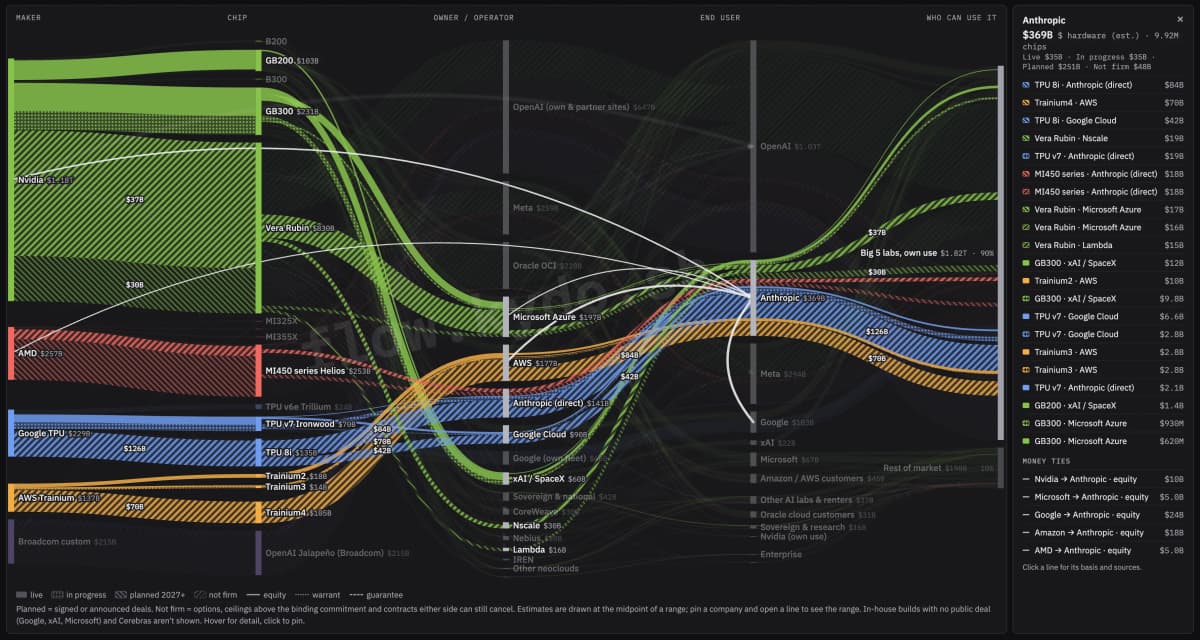
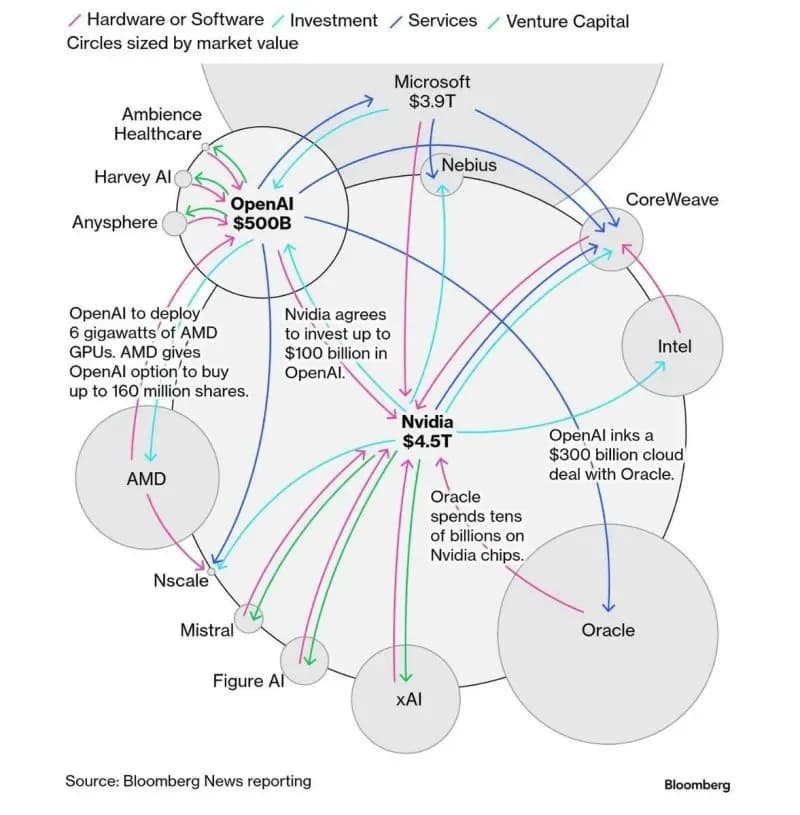
NVIDIA's leadership change raises another question: which AI companies stand to gain or lose from a shift in its strategy? Chip dependency offers one way to examine incentives, though it does not establish anyone's involvement in Huang's departure.
These Flow Chip Map snapshots below illustrate that comparison. The Anthropic view depicts a more diversified compute mix:
The OpenAI view depicts greater NVIDIA dependence:
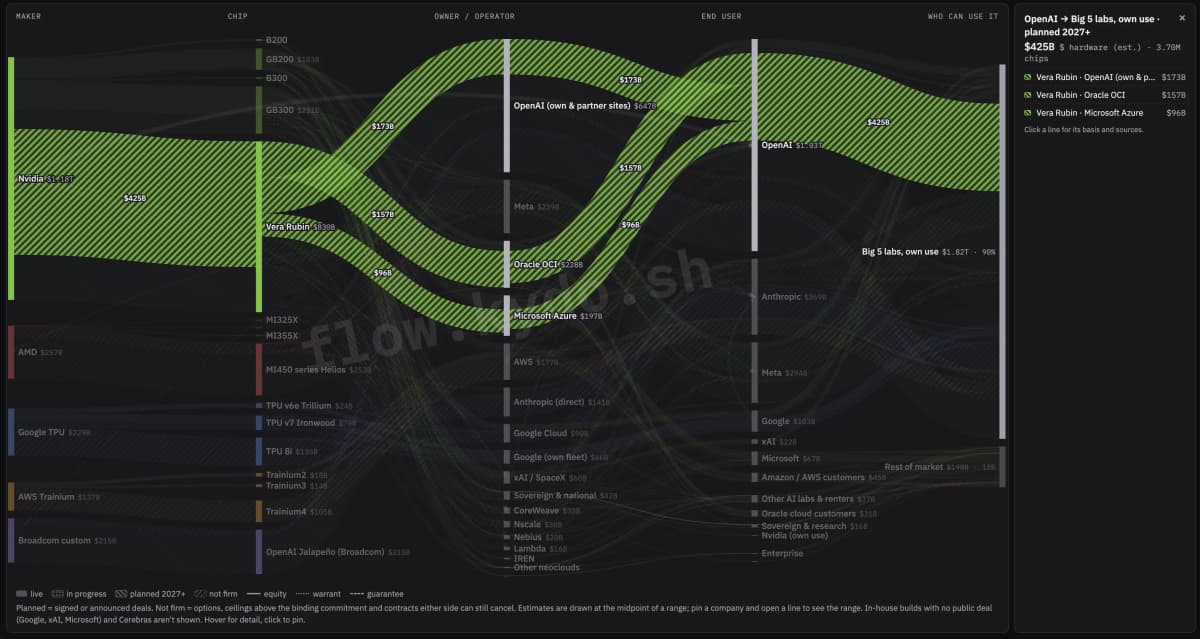
These are the map's representations at the time captured, not an audited account of every contract or a forecast of future supply. A company with fewer alternatives may be more exposed to disruption; one with other suppliers may have more flexibility. The useful question is how pricing, access and strategy could change under new leadership.
07 — A Bad Day for Open-Source AI
Interesting in the early days NVIDIA wasn't the most friendly towards open source and specifically Linux, as you may remember from the famous Linus Torvald meme, when asked about video drivers:
Yes CUDA is still closed source, but got to admit, Jensen was one of the strongest forces pushing for open weights models.
So this is the part that worries me most. Open models could lose an influential corporate advocate at a moment when their access to compute, capital and political support is being contested.
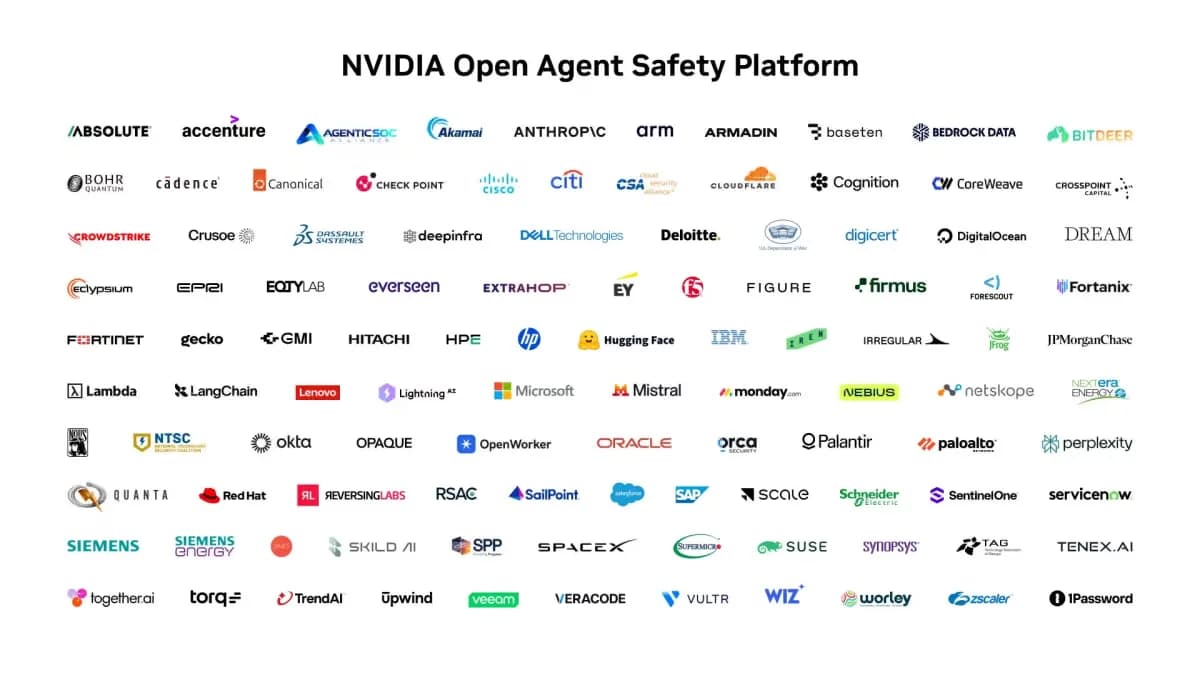
In July, NVIDIA helped launch the Open Secure AI Alliance. As Semafor reported, the initiative brings together technology and security organizations to defend access to capable open systems while improving safeguards. Its argument is that restricting defenders' access to open models can weaken security rather than improve it.
GPU-export policy is part of that story. SemiAnalysis warns that tighter restrictions on Chinese access to computing could also hurt U.S. startups using Chinese open models and the shared software around them. That is a prediction about policy's consequences, not an argument that suspected violations should go uninvestigated.
Hugging Face was recently acquired by NVIDIA, his founder, Clément Delangue has said he will keep fighting for open-source AI. But public commitments still need organizations, funding and products behind them.
Nathan Lambert's framing gets to the two challenges:
- Political exposure. Open-model builders need credible advocates in Washington as restrictions and security concerns shape the debate.
- Financial sustainability. They need products that can support their work, particularly if Huang's financial and institutional backing becomes harder to replace.
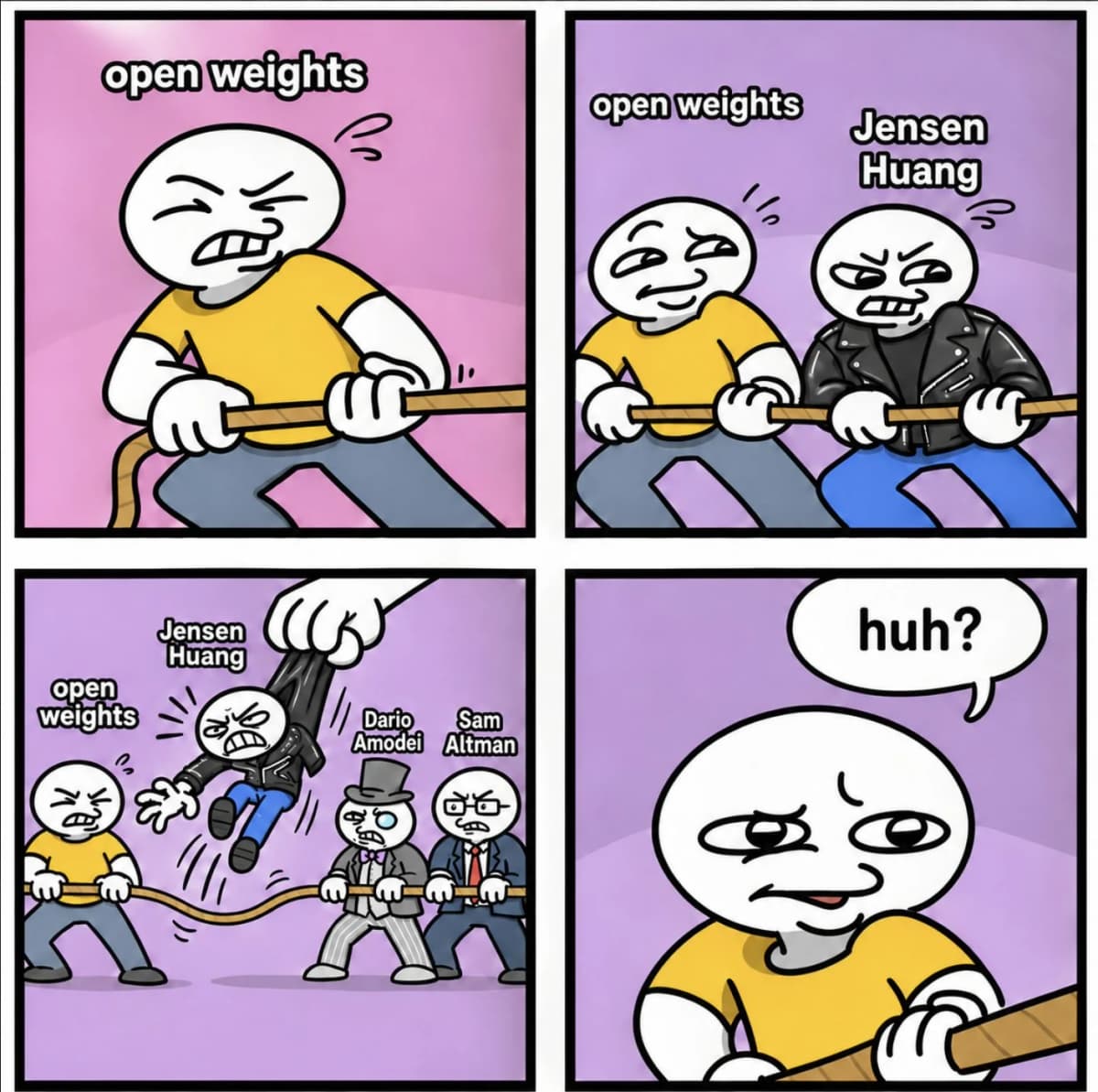
I want an open-model ecosystem strong enough to survive a leadership change at NVIDIA. Huang's support matters, but so does the dependence it reveals. If one person's departure can leave the field this exposed, open AI needs more advocates, more sustainable businesses and more institutions willing to stand behind it.
♾️ — Open Source Must Win!
This whole board-spy situation has me thinking back to November 2023, when OpenAI’s board tried to fire Sam Altman. His team pushed back hard, employees basically revolted, and three days later he was back in the chair while the board was on its way out.
I wouldn’t be surprised if something similar happens here!
Jensen is Nvidia. He's the glue that holds the people together, he's the reason Nvidia is able to get chips at discount before anyone else. You don’t replace that with a board vote.
Apple learned this the hard way when they pushed Steve Jobs out in ’85 and then had to bring him back more than a decade later. NVIDIA’s playing an even bigger game though, AI is what's keeping the S&P 500 and the economy, NVIDIA is what's keeping the AI valuation high, is backbone of the whole AI infrastructure buildout, the strategic asset in the US-China AI race, and even what's keeping the economy afloat. The stakes go way beyond just NVIDIA’s shareholders.
If you care about freedom you should want open-weight AI models. Weirdly part of the US is pushing for closed models, while Chinese labs are pushing for open weights models, and going even full open source — I covered this topic a few months ago.
Jensen’s is our most powerful corporate voice pushing for open AI models. With him out of the picture, keeping AI open and accessible just got a lot harder.
The movement can't depend on one company, though. Hugging Face, where most open models live, now belongs to NVIDIA (the $13B deal), and there are signs that regulation could shut some Chinese open models out. So a decentralized open-source movement is starting. Pirate Face mirrors open models as checksum-verified torrents kept alive by their seeders, so a model stays downloadable even if the platform that hosted it changes hands or takes it down. It has listed close to 30,000 models since September.
I stand with Jensen 💚. I can’t speak for everyone in our community, but I can speak for the AI Socratic mission: making sure the benefits of AI are available to everyone, not locked up by a handful of companies.
That mission doesn’t work without open-source models.
Open source has to win.

Our Mission Is to Democratize AI
We believe the next chapter of human flourishing will be built on open source software, decentralized organizations, and deeper human connection.
Latest Updates — Nov 17
Jensen is considering coming back!

Sources
Nvidia: CEO transitionNvidia: Statement from the board of directorsNvidia: Statement from the independent board membersFortuneReuters: DOJ has not reached a conclusion on Alice HuangForbes: Trump on Jensen HuangSingapore MHA: October 31 clarification on the espionage reportingSingapore MHA: November 12 account of the Megaspeed investigationWashington Post: Rubio memo and the policy struggle over ChinaGeorge Hotz observation, resurfaced on XSemiAnalysisBoden of China Views on X: attributed theoryX article: attributed speculation about rival AI labsAmjad Masad on X: shared article without endorsing its conclusionsDavid Sacks on XAll-In: David Sacks on the consequences of Huang leavingBalaji Srinivasan on X (board table by @gemchange_ltd)@gemchange_ltd on X: speculative board loyalty tableBrad Gerstner on X: letter to the NVIDIA board with Gavin BakerStand with Jensen open letterFlow Chip Map: saved chart snapshots in the original draftSemaforClément Delangue on XNathan Lambert: political and financial challenges for open modelsTodd Blanche remarks: video retained from the original draftPirate Face