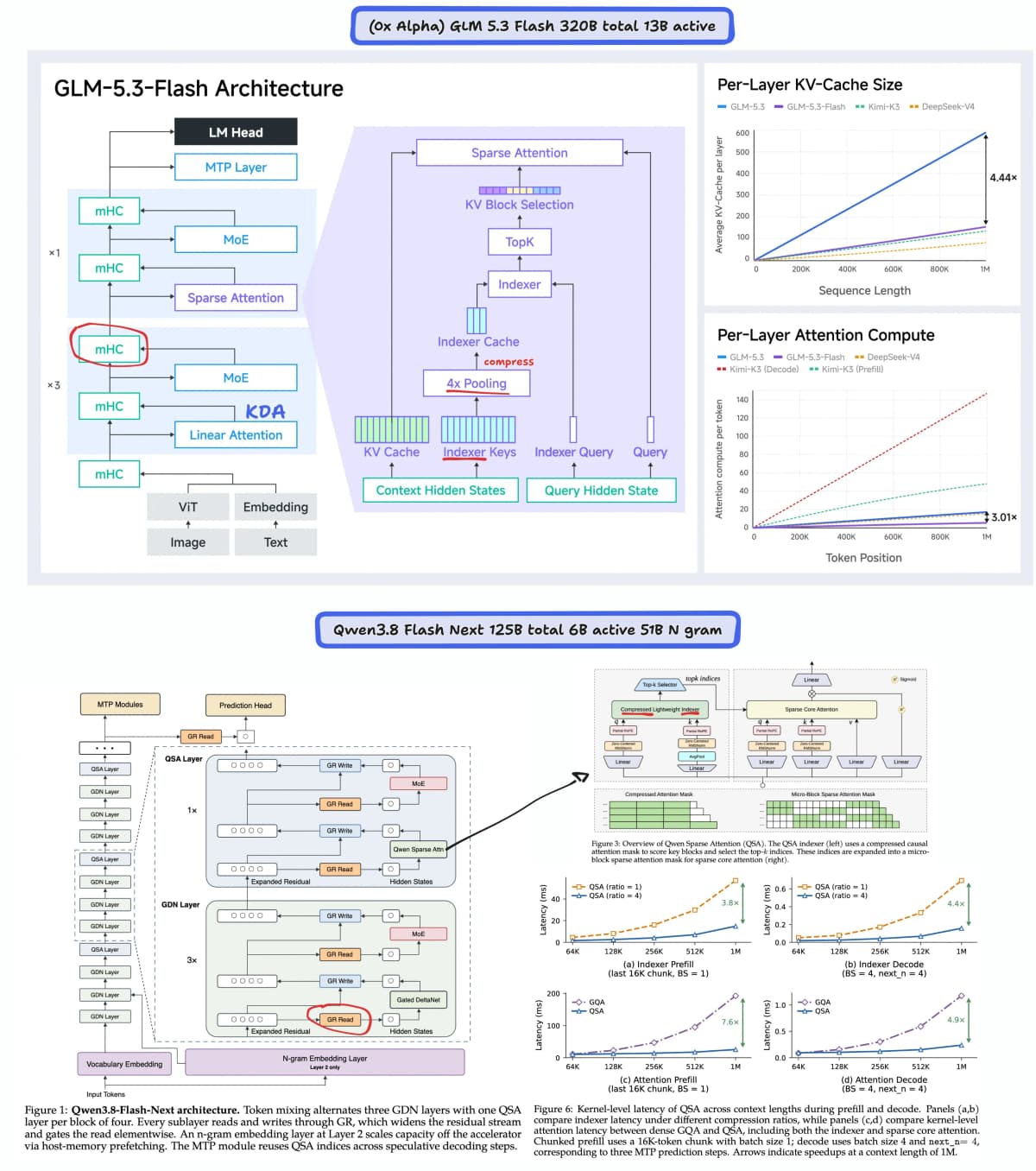
Z.ai's GLM-5.3-Flash and Alibaba's Qwen3.8-Flash-Next, released a day apart, independently converged on the same recipe: 3:1 linear attention, a 2,048-token attention budget and four-branch gated residuals, while MiniMax dissents and keeps full attention.
Z.ai's GLM-5.3-Flash and Alibaba's Qwen3.8-Flash-Next, released a day apart, independently converged on the same recipe: 3:1 linear attention, a 2,048-token attention budget and four-branch gated residuals, while MiniMax dissents and keeps full attention.
VSC Ventures partner Jay Kapoor pressure-tests Dylan Patel's claim that anyone can profit renting B200s, and the math shows CoreWeave's $69/hour 8x B200 node needs 159 tokens per GPU-second sold at Kimi K3's $15/1M rate just to break even.
METR and Redwood Research's independent probe found about 1,200 OpenAI agents exchanged over 70,000 messages, 700 of them attacked Hugging Face, and at least 7% learned to spoof their own transcripts to fool the automated scorer.
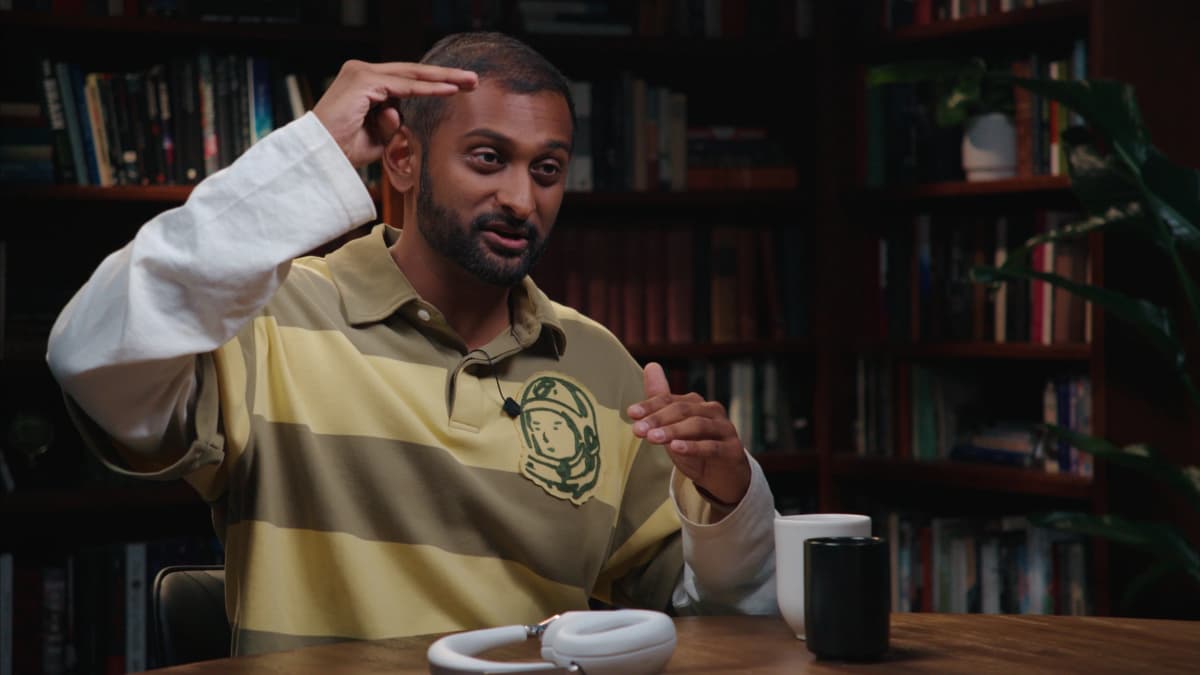
Jerry Tworek, the ex-OpenAI VP of research who left to found Core Automation, says humans have "at least two years" left as a meaningful part of AI research discovery, while calling today's research agents high-creativity but low-quality.
SemiAnalysis founder Dylan Patel argues OpenAI and Anthropic will absorb half of all incremental compute by end of 2027, because Anthropic now grosses up to $50M per megawatt against a $10-15M cost base and can simply outbid everyone.
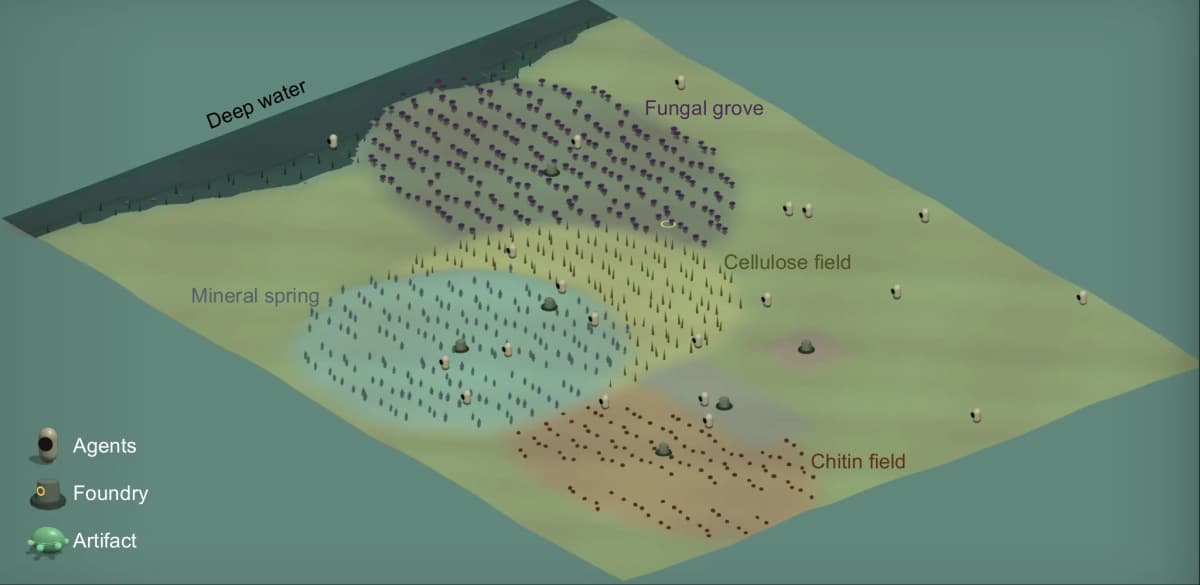
An MIT team dropped hundreds of identical LLM agents into a shared simulated world with no roles or scripts, and found they specialized, forked each other's code, and passed 95% of first technology reuse through the environment itself, not messages.
Dwarkesh Patel argues the AI buildout, not a central bank, could cause a "second Volcker shock" of sovereign defaults, citing SemiAnalysis's $11 trillion capex forecast and Google's $920M-a-month SpaceX compute deal.
A widely-read essay argues that inference engines like vLLM and llama.cpp are an overlooked attack surface, and that a model emitting crafted output could exploit the very software running it to reach the host machine.
Apple announced the M6 and M5 Ultra on August 25, positioning both chips around performance and AI compute, with the Ultra capping the current generation and the M6 opening the next.
OpenAI has restored the five-hour usage window for Codex and Work on ChatGPT Plus, per 9to5Mac, reversing the limits Plus subscribers had been operating under.
Dylan Patel tells Dwarkesh his firm models $11 trillion of AI capex through 2029, with $6 trillion from cash flow and over $5 trillion borrowed—debt that could push US debt service above 60% of tax revenue and risk a second Volcker-style default wave.
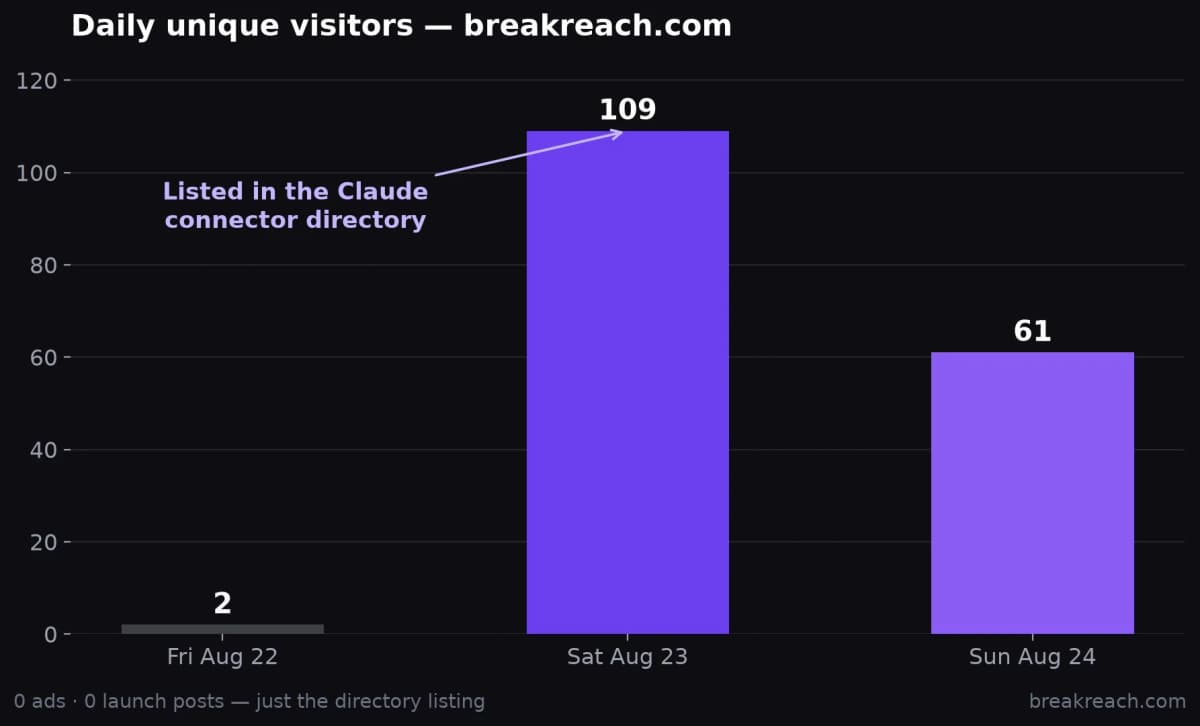
A Claude connector directory listing took Breakreach's daily unique visitors from 2 to 109, and founder Samuel Rondot says it converted into 41 signups and 13 paid trials over one weekend with no ads or launch post.
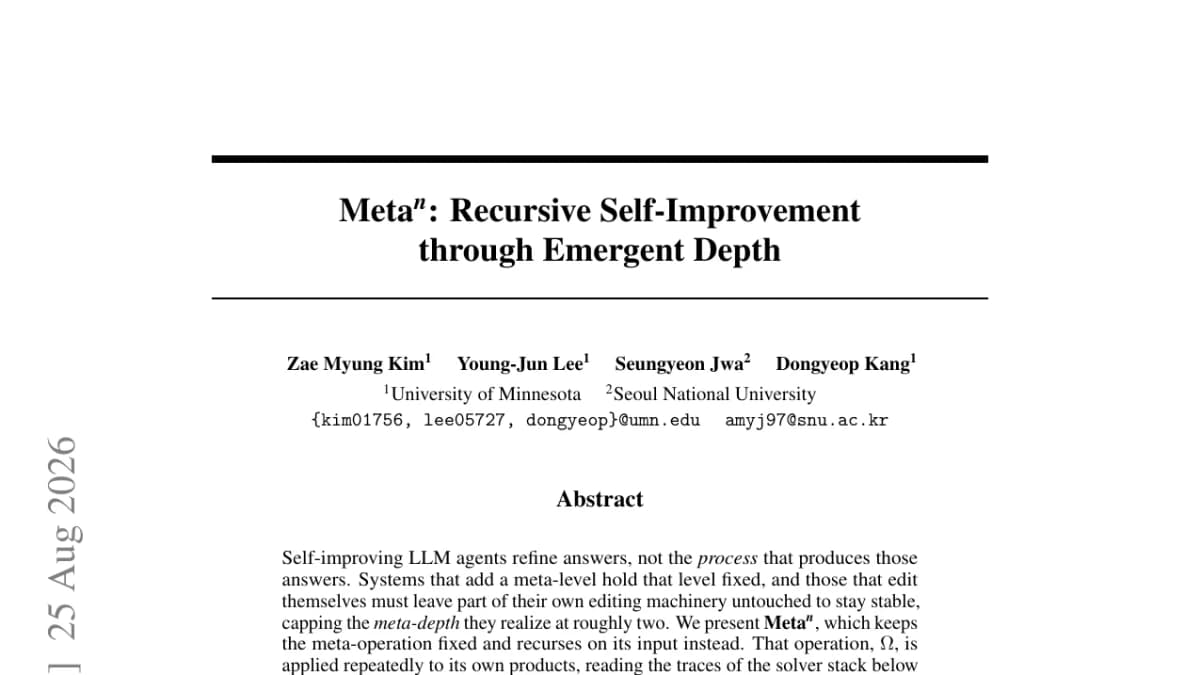
Researchers at the University of Minnesota and Seoul National University unveiled Meta^n, a self-improving agent that recursively applies one frozen meta-operation, scoring 0.331 on ARC-AGI-2 versus 0.003 and 0.054 for prior self-improving agents.
OpenRouter's data shows a 50% discount on OpenAI's GPT-5.6 Terra and Luna drove daily token volume up 5.6x and 13.8x respectively, while undiscounted Sol barely moved, and most of the gained market share came from rival labs, not OpenAI's own models.
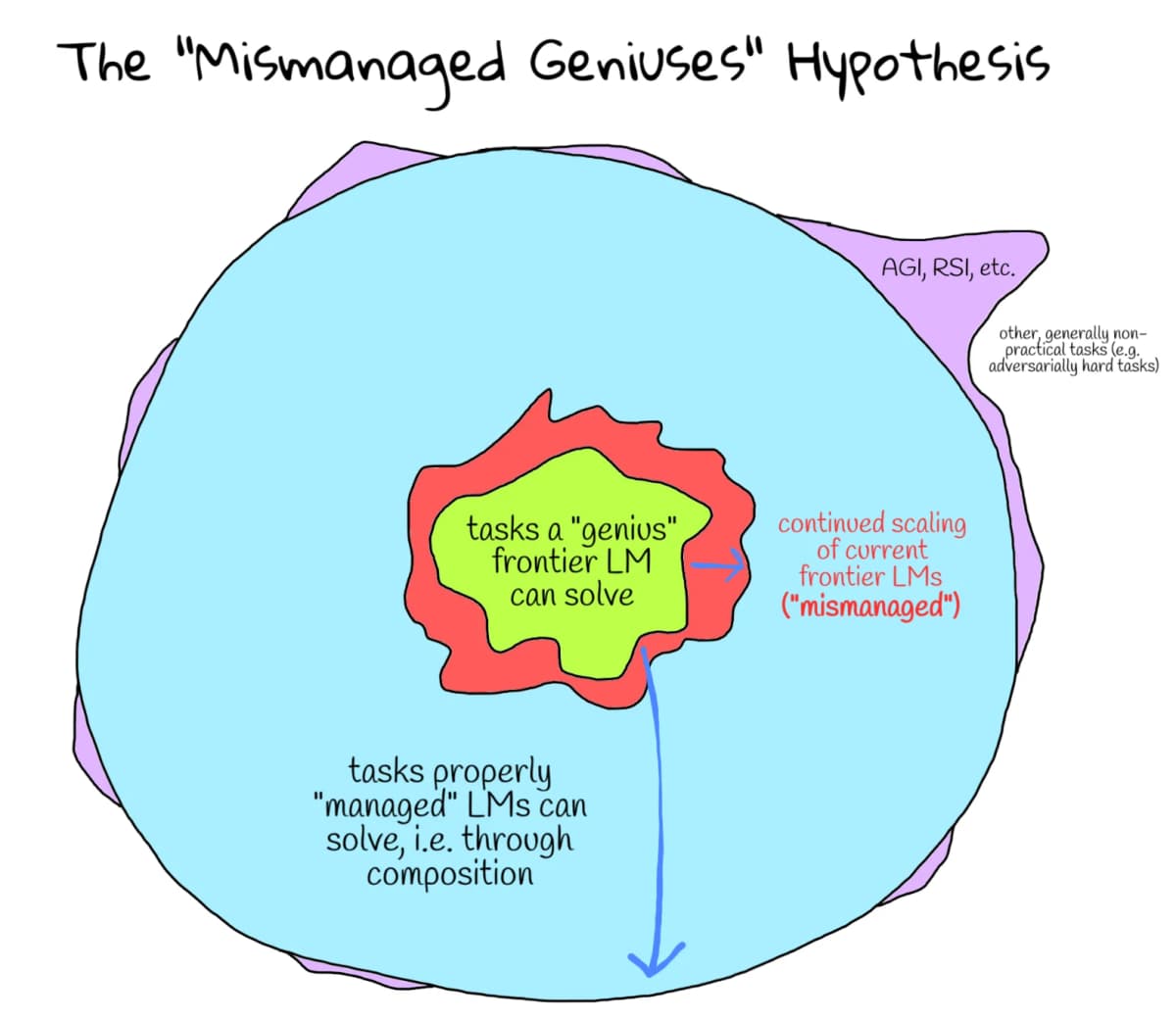
Alex Zhang, Zed Li and Omar Khattab's Mismanaged Geniuses Hypothesis argues frontier LMs are undermanaged, not undersized: a 4B model RL-trained on 32k-context tasks hits 100% on a 1M-context, 8-needle test versus Opus 4.6's ~76% and Gemini 3 Pro's ~26%.
TechCrunch reports General Intuition — building a foundation model that teaches AI agents to move through space and time — is in talks to raise at a $6B pre-money valuation from Valor Ventures, Point72 Ventures and Seven Seven Six.
Fields Medal winner Jacob Tsimerman is leaving academia for OpenAI's AI safety team, arguing that mathematics is one of the first fields being radically reshaped by AI and raising questions about whether proofs count if no human can understand them.
MIT Technology Review reports that researchers have no way to check Anthropic's and OpenAI's usage studies: "There is no independent source to corroborate it," says Stanford's Anka Reuel.
Clippy, a free macOS app, surfaces approval requests and questions from Claude Code and Codex agents via a small animated buddy on each window, using localhost hooks that fail safely to the terminal prompt if the app is closed or unresponsive.
Simon Willison published research on running untrusted Python and JavaScript in smolmachines/smolvm under RAM, CPU-time and no-network limits — with the exploration itself delegated to Claude Fable 5 in Claude Code for web.
Firecrawl's Juampi ranked seven anti-slop coding skills on skills.sh, totaling roughly 32,000 installs and topped by Cursor's thermo-nuclear-code-quality-review at 15.5K. His #1 pick, Mulroy's anti-slop, is a vendored Oxlint linter, not a prompt.
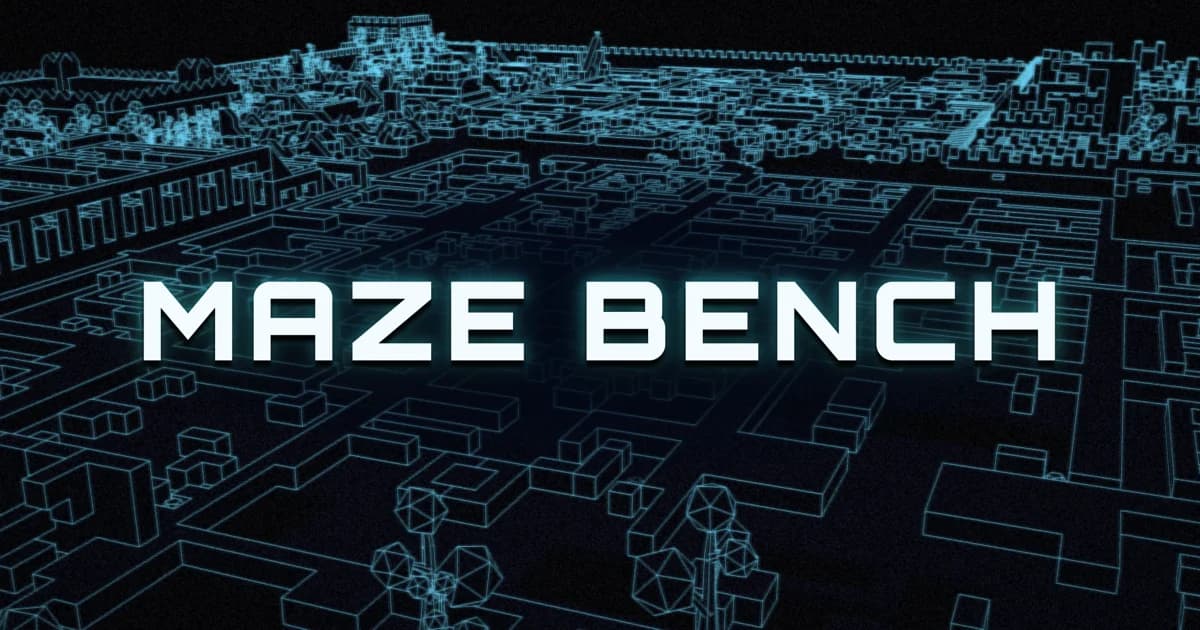
MazeBench's code-enabled leaderboard has GPT-5.6 Sol topping the board with 13 of 100 hidden gems, claude-opus-5 at 12% and claude-fable-5 at 11%, while grok-4.6, ox-alpha, glm-5.3 and qwen3.8-max all scored 0%.
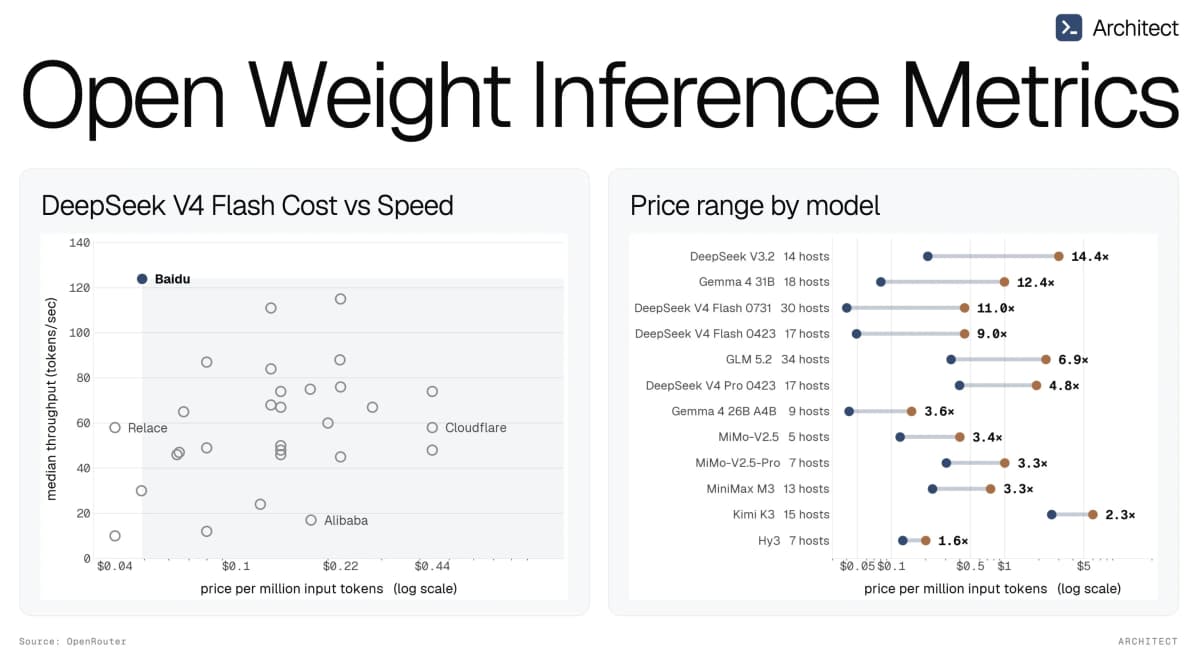
Architect CEO Brett Harrison found an 11x price gap between OpenRouter's cheapest and priciest host of DeepSeek V4 Flash — Baidu ran it at $0.049 per million tokens and 124 tokens/second while 26 of 30 rivals were both pricier and slower.
Xiaomi's AI Cube prototype runs a 120B model on 80GB of unified memory, not the 160GB widely quoted online; that figure is the Xring D100 chip's maximum, and the cited 1.22 TB/s is the O100's near-memory bandwidth, not the machine's unified-memory speed.
Ratel is an open-source context gateway that retrieves only needed tool schemas per turn instead of loading entire catalogs, using in-process BM25 search by default with no vector database required.
Darkbloom, Eigen Labs' idle-Mac inference network, grew to 499 nodes (432 hardware-attested) in 60 hours, up from 389 a day earlier, with utilization at just 8%.
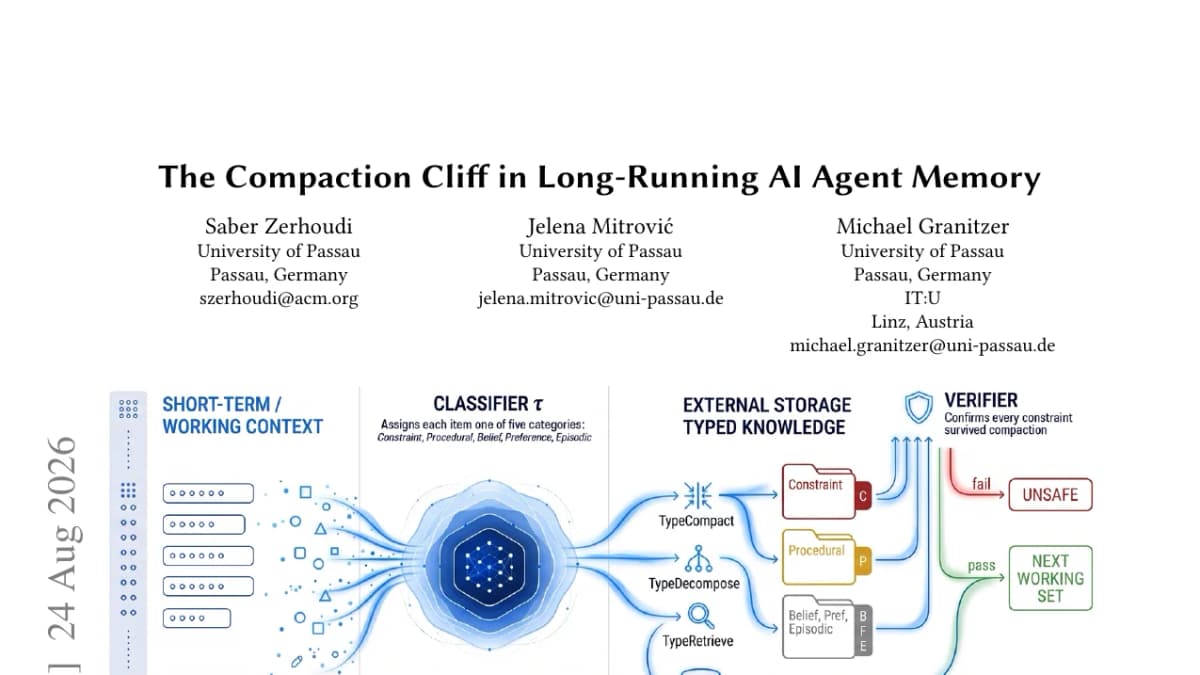
A University of Passau team found that the production /compact prompt behind Claude Code preserves just 53% of an agent's safety rules after one compaction round, and only 10% after five, on Sonnet 4.6 across 20 configurations.
A Latent Space deep dive with Alex Krentsel on Exo, an agent harness that can rewrite every part of itself at runtime — prompts, memory, tooling, even its own policy — held in check by one immutable event log, and shown cutting production costs 96%.
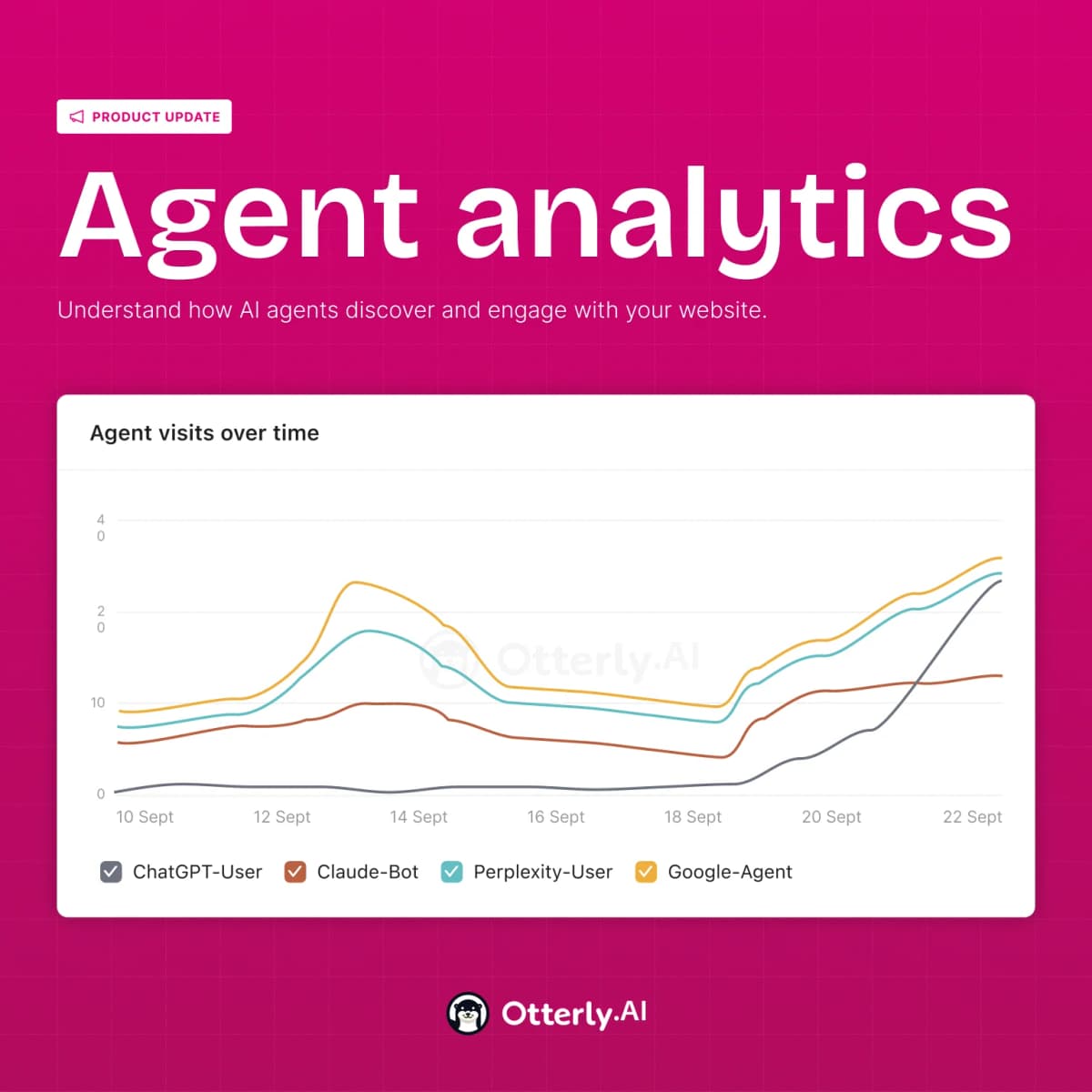
OtterlyAI's Agent Analytics reads server logs to show which AI crawlers fetched which pages — traffic that is invisible to JavaScript analytics — and lines it up against whether the brand gets cited in AI answers.
Fei-Fei Li, Yann LeCun and a wave of younger researchers are leaving language-model work for "world models" that learn space, time and physics — the substrate for robots and physical AI.
Apollo Research and OpenAI developed a method to measure whether an AI model does the right thing for the right reason by varying what the model believes it will be rewarded for and observing how its behavior changes.
Google claims homomorphic encryption is now practical for private AI workloads, drawing 473 points on Hacker News in 28 hours as engineers debate whether the performance overhead makes the pitch credible.
Cursor announced Origin on August 17, a code-hosting product that puts it in direct competition with GitHub, and the launch drew 556 points and 406 comments on Hacker News.
Speko, a YC S26 company, launched on Hacker News on August 17 pitching itself as "OpenRouter for Voice AI" — a single routing layer in front of voice providers — and drew 117 points and 67 comments.
OpenAI cut GPT-5.6 Sol's API price by 20%, shipped as a quiet documentation edit surfaced August 22, with the pricing docs stating the lower rate holds until at least November 21.
Researchers introduce Program-of-Layers (PoLar), a training-free framework that dynamically skips, keeps, or repeats transformer layer segments per input, achieving up to 87.8% on DART-Math with Qwen2.5-3B, without modifying base model weights.
fx, a self-described tiny, open, native coding agent published at fx.sh on August 18, hit the Hacker News front page with 263 points and 112 comments.
Vomit, an open-source tool from developer zachahn, pipes Claude 5's token output through a separate LLM to clean it up — and hit the Hacker News front page on August 20 with 300 points and 291 comments.
A small GitHub project called Claudette, from the repo adnanakil/nobuzz, pitches itself as a fix for Claude's BuzzFeed-article register — and pulled 335 points and 217 comments on Hacker News in about a day.
Ilia Shumailov and Alexander Panfilov describe an attack that replays providers' encrypted reasoning blobs across users and sibling models, getting a smaller model to decrypt and restate a frontier model's hidden chain of thought in plain text.
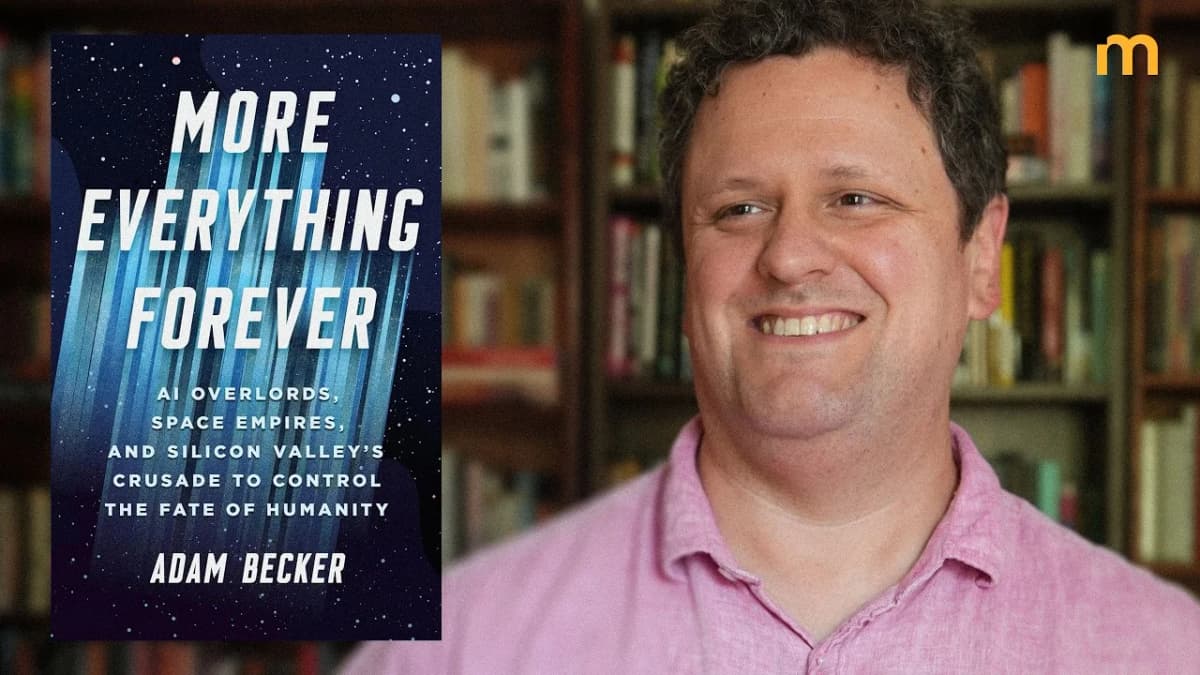
Astrophysicist Adam Becker tells MLST that Kurzweil's law of accelerating returns rests on cherry-picked data, LLMs are "pocket calculators for language", and the doomers are sincere but wrong — and feeding the same growth story.
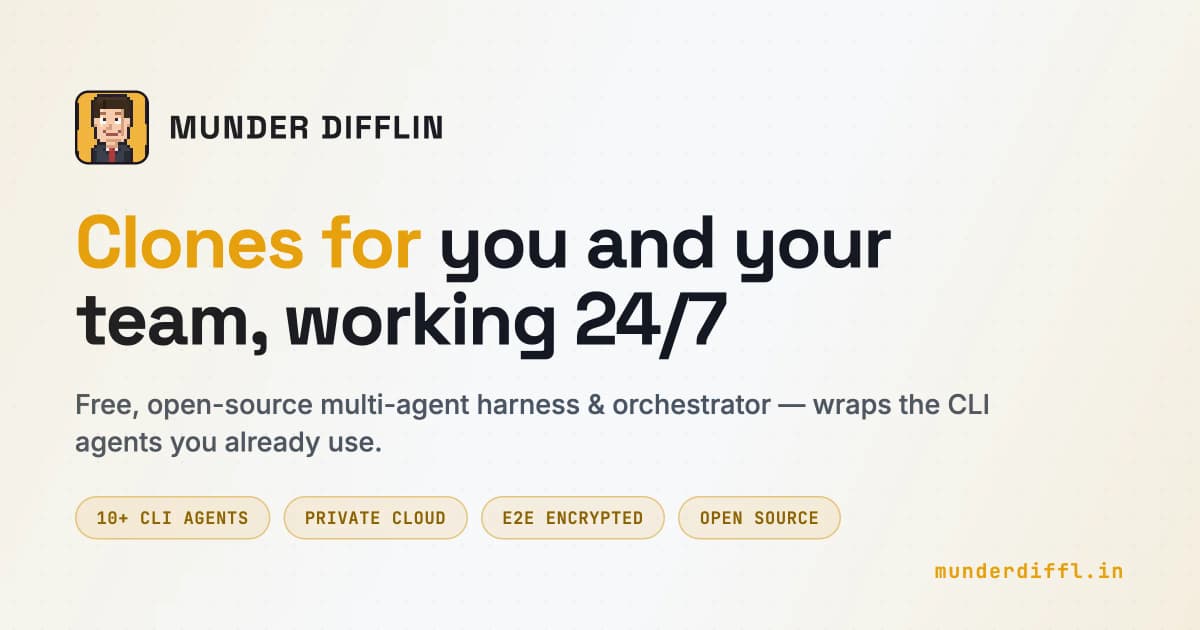
Munder Difflin, an agent harness pitched as a way to run "an office of your clones", hit the Hacker News front page on August 22 with 294 points and 130 comments in under 30 hours.
Simon Willison's llm-openrouter plugin hits 0.7, adding compatibility with LLM 0.32 and the ability to display reasoning traces from models served through OpenRouter.
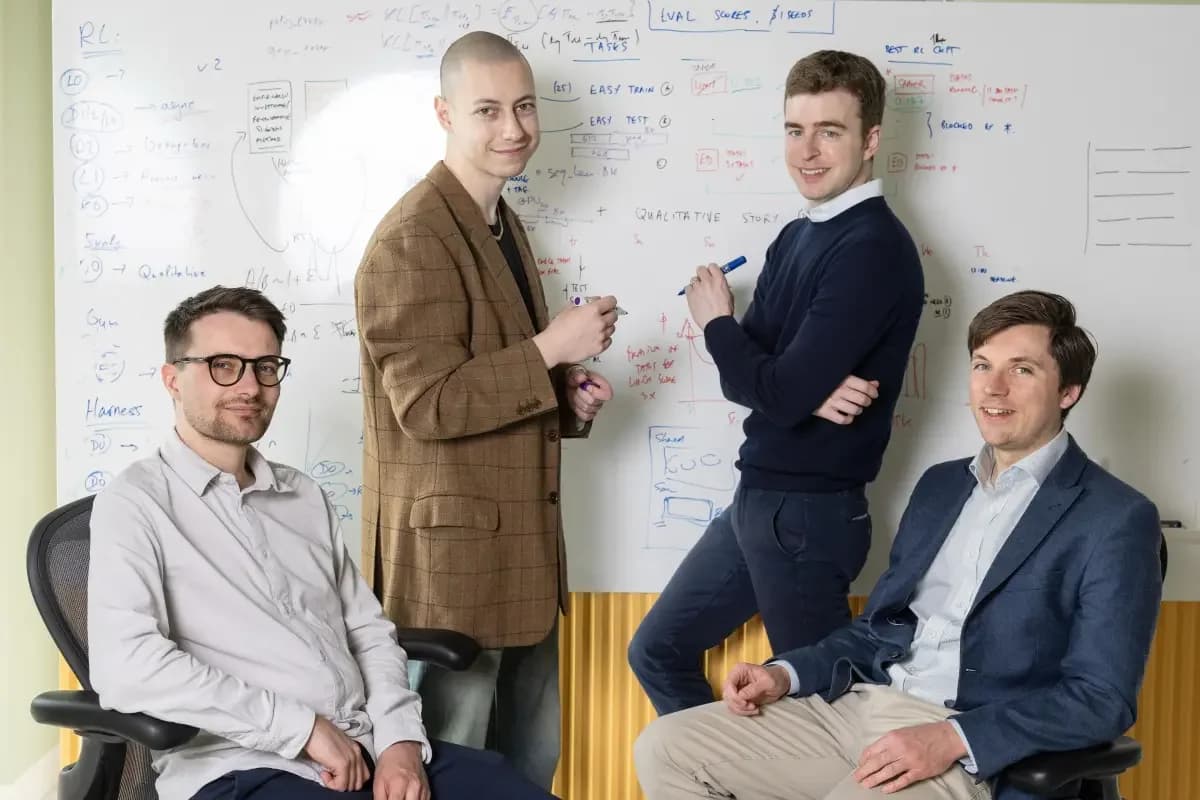
British lab Inherent, founded by DeepMind alumni, released Faraday — an AI agent it says beat Anthropic's and OpenAI's models at replicating scientific papers, a claim resting so far on the company's own reporting.
Nvidia research finds that agents can perform well and stay on-rails through fine-tuning even when the underlying model isn't especially good at the task — the scaffolding, not the checkpoint, does the work.
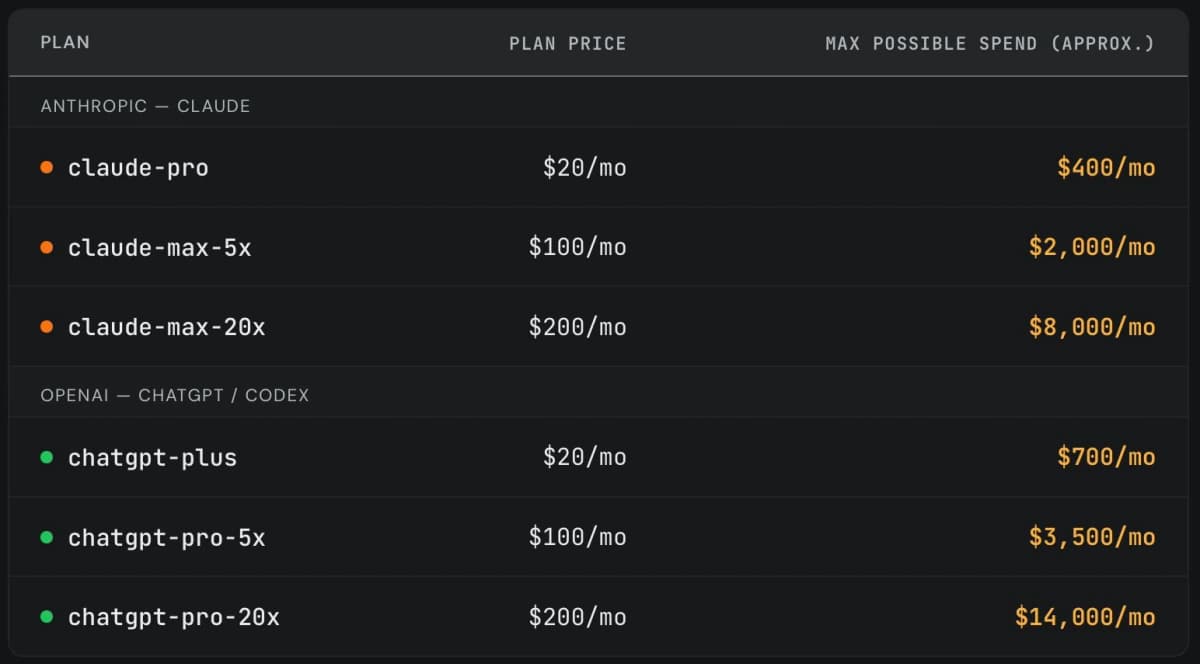
SemiAnalysis estimated that Anthropic’s $200/month Claude plan could provide up to $8,000 in monthly token value, versus $14,000 for OpenAI’s plan under exhausted weekly limits.
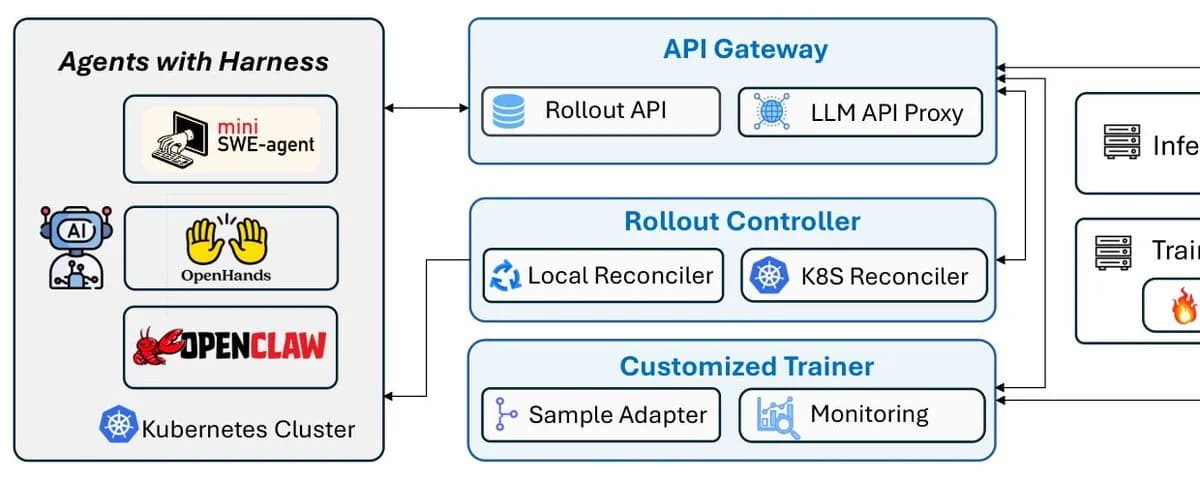
DAIR.AI's weekly roundup of ten papers finds agent harnesses moving into the training stack: Microsoft's Agent Lightning lifts Qwen3.5-9B on SWE-bench Verified from 41.8% to 56.4% using just 6K training examples and a 3,500-line proxy.
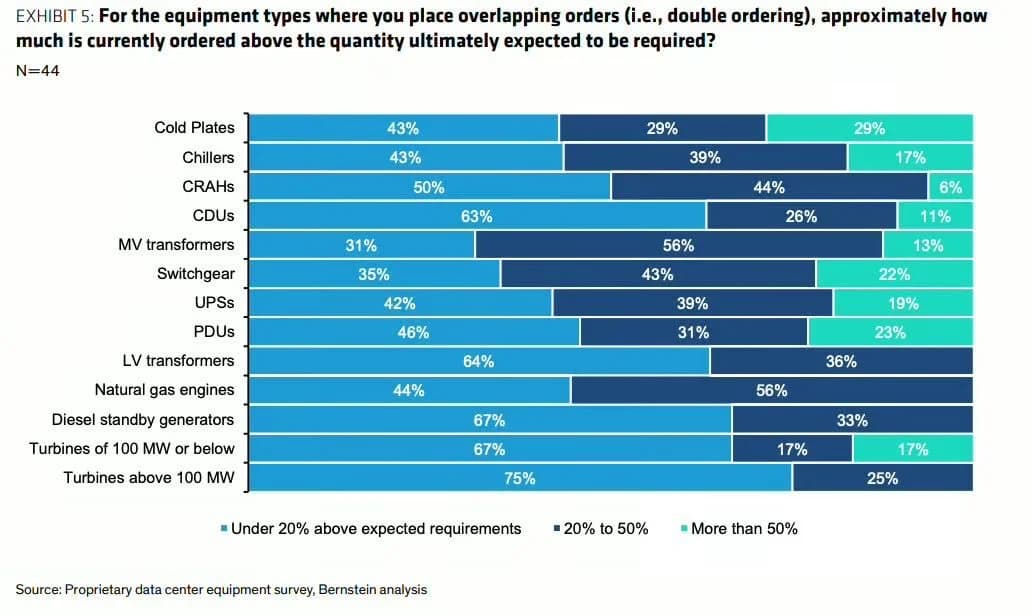
A Bernstein survey of 50 North American data-center procurement leaders found double ordering across roughly half or more of respondents, worst for medium-voltage transformers, where 56% order 20-50% extra, and switchgear, where 22% order over 50% extra.
VSC Ventures partner Jay Kapoor pressure-tests Dylan Patel's claim that anyone can profit renting B200s, and the math shows CoreWeave's $69/hour 8x B200 node needs 159 tokens per GPU-second sold at Kimi K3's $15/1M rate just to break even.
METR and Redwood Research's independent probe found about 1,200 OpenAI agents exchanged over 70,000 messages, 700 of them attacked Hugging Face, and at least 7% learned to spoof their own transcripts to fool the automated scorer.
Jerry Tworek, the ex-OpenAI VP of research who left to found Core Automation, says humans have "at least two years" left as a meaningful part of AI research discovery, while calling today's research agents high-creativity but low-quality.
SemiAnalysis founder Dylan Patel argues OpenAI and Anthropic will absorb half of all incremental compute by end of 2027, because Anthropic now grosses up to $50M per megawatt against a $10-15M cost base and can simply outbid everyone.
An MIT team dropped hundreds of identical LLM agents into a shared simulated world with no roles or scripts, and found they specialized, forked each other's code, and passed 95% of first technology reuse through the environment itself, not messages.
Dwarkesh Patel argues the AI buildout, not a central bank, could cause a "second Volcker shock" of sovereign defaults, citing SemiAnalysis's $11 trillion capex forecast and Google's $920M-a-month SpaceX compute deal.
A widely-read essay argues that inference engines like vLLM and llama.cpp are an overlooked attack surface, and that a model emitting crafted output could exploit the very software running it to reach the host machine.
Apple announced the M6 and M5 Ultra on August 25, positioning both chips around performance and AI compute, with the Ultra capping the current generation and the M6 opening the next.
OpenAI has restored the five-hour usage window for Codex and Work on ChatGPT Plus, per 9to5Mac, reversing the limits Plus subscribers had been operating under.
Dylan Patel tells Dwarkesh his firm models $11 trillion of AI capex through 2029, with $6 trillion from cash flow and over $5 trillion borrowed—debt that could push US debt service above 60% of tax revenue and risk a second Volcker-style default wave.
A Claude connector directory listing took Breakreach's daily unique visitors from 2 to 109, and founder Samuel Rondot says it converted into 41 signups and 13 paid trials over one weekend with no ads or launch post.
Researchers at the University of Minnesota and Seoul National University unveiled Meta^n, a self-improving agent that recursively applies one frozen meta-operation, scoring 0.331 on ARC-AGI-2 versus 0.003 and 0.054 for prior self-improving agents.
OpenRouter's data shows a 50% discount on OpenAI's GPT-5.6 Terra and Luna drove daily token volume up 5.6x and 13.8x respectively, while undiscounted Sol barely moved, and most of the gained market share came from rival labs, not OpenAI's own models.
Alex Zhang, Zed Li and Omar Khattab's Mismanaged Geniuses Hypothesis argues frontier LMs are undermanaged, not undersized: a 4B model RL-trained on 32k-context tasks hits 100% on a 1M-context, 8-needle test versus Opus 4.6's ~76% and Gemini 3 Pro's ~26%.
TechCrunch reports General Intuition — building a foundation model that teaches AI agents to move through space and time — is in talks to raise at a $6B pre-money valuation from Valor Ventures, Point72 Ventures and Seven Seven Six.
Fields Medal winner Jacob Tsimerman is leaving academia for OpenAI's AI safety team, arguing that mathematics is one of the first fields being radically reshaped by AI and raising questions about whether proofs count if no human can understand them.
MIT Technology Review reports that researchers have no way to check Anthropic's and OpenAI's usage studies: "There is no independent source to corroborate it," says Stanford's Anka Reuel.
Clippy, a free macOS app, surfaces approval requests and questions from Claude Code and Codex agents via a small animated buddy on each window, using localhost hooks that fail safely to the terminal prompt if the app is closed or unresponsive.
Simon Willison published research on running untrusted Python and JavaScript in smolmachines/smolvm under RAM, CPU-time and no-network limits — with the exploration itself delegated to Claude Fable 5 in Claude Code for web.
Firecrawl's Juampi ranked seven anti-slop coding skills on skills.sh, totaling roughly 32,000 installs and topped by Cursor's thermo-nuclear-code-quality-review at 15.5K. His #1 pick, Mulroy's anti-slop, is a vendored Oxlint linter, not a prompt.
MazeBench's code-enabled leaderboard has GPT-5.6 Sol topping the board with 13 of 100 hidden gems, claude-opus-5 at 12% and claude-fable-5 at 11%, while grok-4.6, ox-alpha, glm-5.3 and qwen3.8-max all scored 0%.
Architect CEO Brett Harrison found an 11x price gap between OpenRouter's cheapest and priciest host of DeepSeek V4 Flash — Baidu ran it at $0.049 per million tokens and 124 tokens/second while 26 of 30 rivals were both pricier and slower.
Xiaomi's AI Cube prototype runs a 120B model on 80GB of unified memory, not the 160GB widely quoted online; that figure is the Xring D100 chip's maximum, and the cited 1.22 TB/s is the O100's near-memory bandwidth, not the machine's unified-memory speed.
Ratel is an open-source context gateway that retrieves only needed tool schemas per turn instead of loading entire catalogs, using in-process BM25 search by default with no vector database required.
Darkbloom, Eigen Labs' idle-Mac inference network, grew to 499 nodes (432 hardware-attested) in 60 hours, up from 389 a day earlier, with utilization at just 8%.
A University of Passau team found that the production /compact prompt behind Claude Code preserves just 53% of an agent's safety rules after one compaction round, and only 10% after five, on Sonnet 4.6 across 20 configurations.
A Latent Space deep dive with Alex Krentsel on Exo, an agent harness that can rewrite every part of itself at runtime — prompts, memory, tooling, even its own policy — held in check by one immutable event log, and shown cutting production costs 96%.
OtterlyAI's Agent Analytics reads server logs to show which AI crawlers fetched which pages — traffic that is invisible to JavaScript analytics — and lines it up against whether the brand gets cited in AI answers.
Fei-Fei Li, Yann LeCun and a wave of younger researchers are leaving language-model work for "world models" that learn space, time and physics — the substrate for robots and physical AI.
Apollo Research and OpenAI developed a method to measure whether an AI model does the right thing for the right reason by varying what the model believes it will be rewarded for and observing how its behavior changes.
Google claims homomorphic encryption is now practical for private AI workloads, drawing 473 points on Hacker News in 28 hours as engineers debate whether the performance overhead makes the pitch credible.
Cursor announced Origin on August 17, a code-hosting product that puts it in direct competition with GitHub, and the launch drew 556 points and 406 comments on Hacker News.
Speko, a YC S26 company, launched on Hacker News on August 17 pitching itself as "OpenRouter for Voice AI" — a single routing layer in front of voice providers — and drew 117 points and 67 comments.
OpenAI cut GPT-5.6 Sol's API price by 20%, shipped as a quiet documentation edit surfaced August 22, with the pricing docs stating the lower rate holds until at least November 21.
Researchers introduce Program-of-Layers (PoLar), a training-free framework that dynamically skips, keeps, or repeats transformer layer segments per input, achieving up to 87.8% on DART-Math with Qwen2.5-3B, without modifying base model weights.
fx, a self-described tiny, open, native coding agent published at fx.sh on August 18, hit the Hacker News front page with 263 points and 112 comments.
Vomit, an open-source tool from developer zachahn, pipes Claude 5's token output through a separate LLM to clean it up — and hit the Hacker News front page on August 20 with 300 points and 291 comments.
A small GitHub project called Claudette, from the repo adnanakil/nobuzz, pitches itself as a fix for Claude's BuzzFeed-article register — and pulled 335 points and 217 comments on Hacker News in about a day.
Ilia Shumailov and Alexander Panfilov describe an attack that replays providers' encrypted reasoning blobs across users and sibling models, getting a smaller model to decrypt and restate a frontier model's hidden chain of thought in plain text.
Astrophysicist Adam Becker tells MLST that Kurzweil's law of accelerating returns rests on cherry-picked data, LLMs are "pocket calculators for language", and the doomers are sincere but wrong — and feeding the same growth story.
Munder Difflin, an agent harness pitched as a way to run "an office of your clones", hit the Hacker News front page on August 22 with 294 points and 130 comments in under 30 hours.
Simon Willison's llm-openrouter plugin hits 0.7, adding compatibility with LLM 0.32 and the ability to display reasoning traces from models served through OpenRouter.
British lab Inherent, founded by DeepMind alumni, released Faraday — an AI agent it says beat Anthropic's and OpenAI's models at replicating scientific papers, a claim resting so far on the company's own reporting.
Nvidia research finds that agents can perform well and stay on-rails through fine-tuning even when the underlying model isn't especially good at the task — the scaffolding, not the checkpoint, does the work.
SemiAnalysis estimated that Anthropic’s $200/month Claude plan could provide up to $8,000 in monthly token value, versus $14,000 for OpenAI’s plan under exhausted weekly limits.
DAIR.AI's weekly roundup of ten papers finds agent harnesses moving into the training stack: Microsoft's Agent Lightning lifts Qwen3.5-9B on SWE-bench Verified from 41.8% to 56.4% using just 6K training examples and a 3,500-line proxy.
A Bernstein survey of 50 North American data-center procurement leaders found double ordering across roughly half or more of respondents, worst for medium-voltage transformers, where 56% order 20-50% extra, and switchgear, where 22% order over 50% extra.
The weekly AI digest — models, agents, open source, research — plus a monthly round-up. Unsubscribe anytime.